


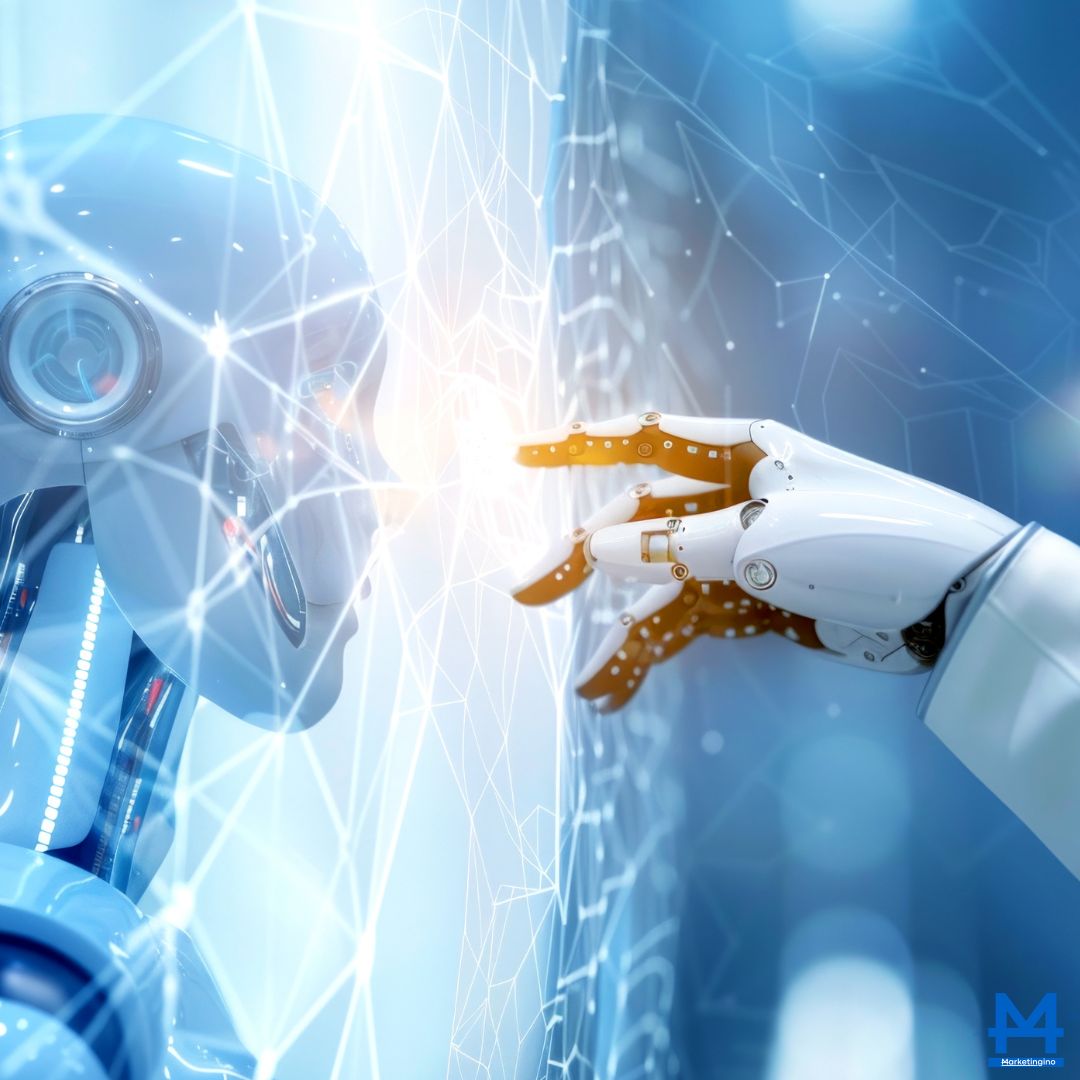
The conversation about AI and jobs has a pattern. First comes the panic: AI will replace everyone. Then comes the backlash: AI is just a tool, human creativity is irreplaceable. Then comes the silence, as people return to their routines and quietly hope the question resolves itself.
Neither the panic nor the reassurance is particularly useful. What is useful is an honest look at what AI actually does well, where human judgment remains genuinely irreplaceable, and what that means for marketers who want to stay relevant over the next decade.
What Is Already Happening
Let’s start with what is not speculation. AI is already handling tasks that used to require junior-to-mid-level marketing time:
First drafts of copy. Brief-to-content pipelines. SEO research and keyword clustering. Performance reporting and basic insight extraction. A/B test variant generation. Social media scheduling and caption writing. Email sequence drafting. Product description generation at scale.
None of this means the people who used to do these things are obsolete. It means the nature of their work is shifting. A content marketer who spent 60% of their time writing first drafts now has that capacity freed up. The question is what they do with it.
Some organizations are using that freed capacity to produce more output with the same headcount. Others are reducing headcount and maintaining output. Both are happening. Pretending otherwise is not reassuring, it is just inaccurate.
The Tasks AI Cannot Do Well (Yet)
The “yet” matters, but so does the present tense.
AI is genuinely weak at several things that sit at the core of marketing value creation.
Original strategic judgment. AI can synthesize existing information and generate plausible frameworks. It cannot tell you that your brand is positioned wrong for the market you are actually entering, or that the campaign brief is solving the wrong problem. That diagnosis requires understanding context, organizational history, competitive dynamics, and customer psychology in ways that go beyond pattern matching on training data.
Relationship-based trust. A significant portion of marketing effectiveness, particularly in B2B and in markets with complex stakeholder landscapes, runs on relationships. The media partnership negotiated over years of trust. The agency brief that works because the client and creative director have a shared shorthand built from many previous campaigns. The retail buyer who takes your call because you have consistently delivered. AI does not have relationships. Marketers do.
Cultural and emotional nuance in high-stakes contexts. AI-generated content is competent across a wide range of contexts. It tends to underperform precisely where the stakes are highest: campaigns where the brand is taking a position on something contested, communications that require genuine empathy, creative work that needs to feel unmistakably human because the audience will reject anything that doesn’t. The average is fine. The exceptional is hard.
Novel problem framing. Most AI outputs are, at some level, recombinations of patterns in training data. When a marketing problem is genuinely new, when the competitive landscape has no precedent or the brand situation has no obvious analogue, the humans who can frame the problem correctly are the ones who add disproportionate value. This is rarer than people assume, but it matters enormously when it occurs.
The Real Risk: Median Competence
Here is the honest version of the threat to marketing jobs.
AI does not threaten exceptional marketers. It threatens median ones.
If you are a content marketer whose primary value is writing fast, adequate copy, AI can replicate most of that. If you are a performance marketer whose primary value is running Google Ads campaigns according to established playbooks, automation is encroaching on that space rapidly. If you are a brand manager whose primary contribution is coordinating execution across agencies without adding strategic insight, your role is under more pressure than you might realize.
The marketers who are structurally safe are those whose value comes from judgment, relationships, creativity at the high end, and strategic thinking. These are not rare personality traits. They are skills that can be developed deliberately. But they require a different kind of investment than most marketers have historically made in themselves.
The uncomfortable truth is that many marketing careers have been built on tasks that were always somewhat mechanical, but that paid well because they required human time. That time requirement is shrinking. The careers that assumed it would stay stable are the ones most exposed.
What the Adaptation Actually Looks Like
The framing of “AI replaces marketers” is less useful than “AI raises the floor and changes where the ceiling is.”
The floor is rising. Competent first drafts, basic analysis, routine execution: all of this is becoming table stakes, producible by anyone with access to good tools. Competing on this layer is increasingly a losing proposition.
The ceiling is also changing. Marketers who can use AI as genuine leverage, who can direct it well, evaluate its outputs critically, integrate it into strategic workflows rather than just tactical ones, are producing output that would have required significantly larger teams five years ago. That is a real advantage.
Concretely, the adaptation involves a few things:
Moving up the value chain within your current role. If AI handles first drafts, your value is in the brief, the strategic framing, the editorial judgment, and the final decision about what is actually good. These need to become your core competencies, not the tasks you do after the “real work” of production.
Developing genuine expertise that is hard to replicate. The marketers who are most AI-proof are those with deep domain knowledge: specific industries, specific markets, specific customer segments they understand at a level that goes beyond what training data can capture. Broad generalism is more exposed. Deep expertise is more durable.
Getting fluent with the tools without being defined by them. The marketers who will do best in the next decade are not necessarily the most technically sophisticated AI users. They are the ones who understand what AI can and cannot do, use it where it genuinely accelerates their work, and maintain the judgment to know when human thinking is actually required.
A Note on the CEE Context
Marketing roles in Central and Eastern European markets have some specific characteristics worth naming.
Many CEE marketing functions are structured around execution: adapting global campaigns for local markets, managing local agency relationships, handling performance marketing for relatively mature product categories. A significant portion of this work is within the range of what AI-assisted workflows can now compress.
At the same time, the local market knowledge that makes CEE marketing genuinely difficult, the linguistic nuance, the cultural context, the relationships with local retailers and media, the understanding of how consumer behavior differs between Warsaw and Sofia, this is not easily replicated by tools trained predominantly on Western European and North American data.
The marketers who understand both dimensions, who can leverage AI for the compressible parts while deepening their local expertise and relationships, are in a strong position. Those who are competing primarily on execution competence in markets that are increasingly well-served by automation are in a more difficult one.
The Honest Conclusion
AI will not eliminate marketing as a discipline. It will compress the parts of marketing that were always more mechanical than they appeared, and it will raise the premium on the parts that were always genuinely hard.
That is not a comfortable message for everyone. It requires honest self-assessment about where your current value actually comes from, and deliberate investment in the capabilities that will remain scarce even as tools improve.
The marketers who approach this moment with that kind of honesty, who are willing to ask hard questions about their own positioning rather than wait for reassurance, are the ones who will navigate it well.
The ones waiting for certainty that their role is safe are doing the same thing slow thinkers do in uncertain markets. They are hoping the problem resolves itself. It won’t.