Close Menu
Marketingino.comMarketingino.com
    What's Hot

    Marcus Aurelius and Modern Leadership: What the Philosopher Emperor Can Teach Us Today

    25. 5. 2026

    EBITDA Explained: What It Is, Why It Matters, and When to Ignore It

    20. 5. 2026

    Why Most Side Businesses Never Scale (And How to Fix It)

    20. 5. 2026
    Facebook X (Twitter) Instagram
    Facebook Instagram LinkedIn YouTube Bluesky
    Marketingino.comMarketingino.com
    • Home
    • Entrepreneurship
      1. Business Models
      2. Side Hustles
      3. Small Business
      4. Venture Capital
      5. Sustainability & Impact
      6. Startups
      7. Legal & Compliance
      Featured
      Business Models

      EBITDA Explained: What It Is, Why It Matters, and When to Ignore It

      20. 5. 2026
      Recent

      EBITDA Explained: What It Is, Why It Matters, and When to Ignore It

      20. 5. 2026

      Why Most Side Businesses Never Scale (And How to Fix It)

      20. 5. 2026

      Scaling Your Side Hustle: When and How to Turn It Into a Full-Time Business

      6. 2. 2026
    • Marketing
      1. Marketing Strategy
      2. AI & Automation
      3. Social Media
      4. Branding
      5. Content Marketing
      6. SEO & GEO
      7. Growth Marketing
      8. Digital Marketing
      9. Data & Analytics
      10. Customer Experience
      11. Vocabulary
      Featured
      AI & Automation

      Agentic AI in E-commerce: How Autonomous Shopping Is Rewriting the Rules of Retail Media

      20. 5. 2026
      Recent

      Agentic AI in E-commerce: How Autonomous Shopping Is Rewriting the Rules of Retail Media

      20. 5. 2026

      GEO: What Is Generative Engine Optimization and Why It Matters in 2026

      28. 4. 2026

      How to Optimize Your Website for AI Search: A Practical Guide to Getting Cited by ChatGPT, Claude, and Perplexity

      28. 4. 2026
    • Leadership
      1. Coaching & Mentoring
      2. Conflict & Crisis Management
      3. Emotional Intelligence
      4. Executive Mindset
      5. Remote & Hybrid Teams
      6. Team Building
      7. Vision & Strategy
      Featured
      Executive Mindset

      Marcus Aurelius and Modern Leadership: What the Philosopher Emperor Can Teach Us Today

      25. 5. 2026
      Recent

      Marcus Aurelius and Modern Leadership: What the Philosopher Emperor Can Teach Us Today

      25. 5. 2026

      Emotional Intelligence Is Not a Soft Skill. It Is the Skill.

      20. 5. 2026

      Decision-Making Under Uncertainty: What Marketing Leaders Get Wrong and How to Fix It

      28. 4. 2026
    • Ecommerce
      1. Conversion Optimization
      2. Cross-Border Ecommerce
      3. Customer Retention
      4. D2C & Brands
      5. Ecommerce Marketing
      6. Marketplaces
      7. Online Stores
      8. Payments & Logistics
      Featured
      D2C & Brands

      Recommerce: Why Selling Used Is the Fastest-Growing Channel in E-Commerce

      20. 4. 2026
      Recent

      Recommerce: Why Selling Used Is the Fastest-Growing Channel in E-Commerce

      20. 4. 2026

      Agentic Commerce: How AI Is Taking Over the Shopping Cart

      20. 4. 2026

      The D2C Loyalty Playbook: 6 Tactics That Don’t Require a Single Promo Code

      11. 3. 2026
    • Life
      1. Business Stories
      2. Lifestyle
      3. Net Worth
      4. Travel
      Featured
      Lifestyle

      10 Powerful Reasons 2025 Proved Life Is Getting Better

      31. 12. 2025
      Recent

      10 Powerful Reasons 2025 Proved Life Is Getting Better

      31. 12. 2025

      12 Books to Understand Everything: A Foundation for Universal Knowledge

      3. 12. 2025

      Running in Zone 2: The Secret to Enhanced Work Performance and Productivity

      28. 11. 2025
    Marketingino.comMarketingino.com
    Home»Marketing»Social Media»Mega-Influencers: Leveraging the Power of Influencers with 1 Million+ Followers
    Social Media

    Mega-Influencers: Leveraging the Power of Influencers with 1 Million+ Followers

    25. 9. 20246 Mins Read
    Facebook Twitter Pinterest LinkedIn Tumblr Email
    OpenAI
    Share
    Facebook Twitter LinkedIn Pinterest Email

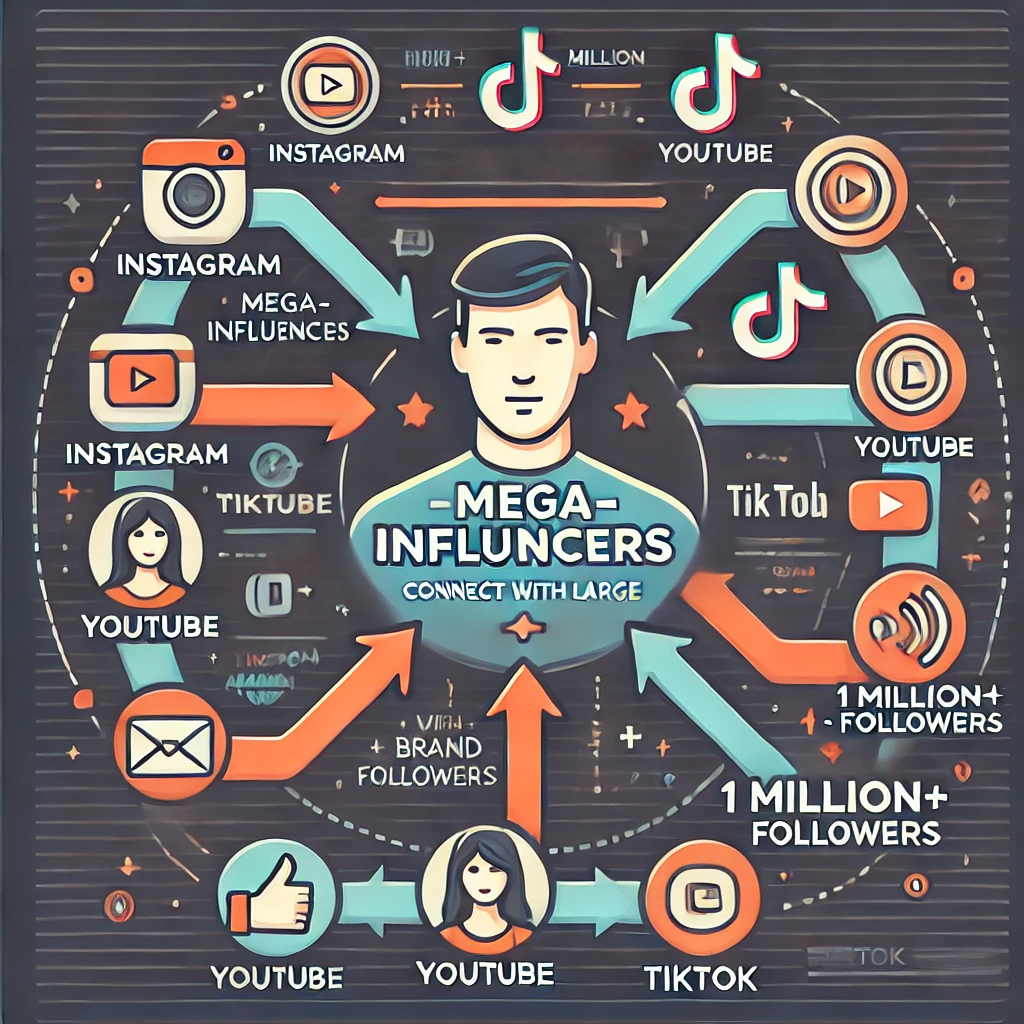
    Mega-influencers are social media personalities who have built massive audiences of 1 million or more followers. These influencers are often celebrities, well-known public figures, or individuals who have gained significant popularity in a particular niche. Because of their broad reach, mega-influencers are highly sought after by brands looking to promote products or services on a large scale. Their influence extends across multiple platforms, such as Instagram, TikTok, YouTube, and Twitter, allowing them to deliver impactful marketing campaigns to vast audiences.

    What is a Mega-Influencer?

    A mega-influencer is an individual with a follower count of 1 million or more on one or more social media platforms. Their content often reaches a diverse and global audience, making them ideal for brands looking to build awareness and reach large segments of the population.

    Mega-influencers are typically divided into two categories:

    1. Celebrities: Traditional celebrities like actors, musicians, athletes, and reality TV stars who have amassed millions of followers based on their fame.
    2. Social media-born influencers: These are individuals who gained fame through social media platforms themselves, often by creating engaging content in areas like beauty, fitness, fashion, gaming, or entertainment.

    Why Brands Work with Mega-Influencers

    Mega-influencers play a critical role in influencer marketing campaigns because of their vast reach and ability to create buzz around products or services. Here’s why brands are keen to work with mega-influencers:

    1. Massive reach: Mega-influencers have an enormous follower base, allowing brands to instantly access millions of potential customers. This makes them ideal for large-scale campaigns aimed at generating widespread awareness.
    2. Cultural impact: These influencers often set trends and influence popular culture. Partnering with a mega-influencer can give a brand credibility and help shape how products are perceived by the public.
    3. High engagement: Although engagement rates (likes, comments, shares) may be lower on average for mega-influencers than for smaller influencers, their massive follower counts mean that their posts can still generate significant interactions.
    4. Cross-platform visibility: Mega-influencers are active on multiple social media platforms, which gives brands the opportunity to engage with audiences across Instagram, YouTube, TikTok, and Twitter simultaneously.
    5. Association with fame and status: Collaborating with a mega-influencer—especially one who is a well-known celebrity—can lend prestige to a brand, enhancing its image and helping it stand out from competitors.

    Benefits of Working with Mega-Influencers

    1. Brand awareness: Mega-influencers excel at generating awareness for new product launches, events, or campaigns. Their posts can quickly reach millions of people, giving brands widespread exposure in a short amount of time.
    2. Content amplification: Mega-influencers have the ability to make content go viral. When they post about a brand, their followers are likely to share, comment, and engage, further amplifying the reach of the campaign.
    3. Celebrity appeal: If the mega-influencer is a celebrity, their endorsement can give a brand a powerful edge in the marketplace. Consumers often associate celebrity endorsements with status, luxury, or trendsetting, making it easier for brands to attract attention.
    4. Global reach: Mega-influencers often have international audiences, which makes them especially valuable for brands that want to expand their presence beyond local markets and tap into global consumer bases.

    Challenges of Working with Mega-Influencers

    Despite their advantages, there are some challenges associated with working with mega-influencers:

    1. High cost: Because of their large followings and influence, mega-influencers command high fees for partnerships. For many brands, especially smaller businesses, the cost of working with a mega-influencer may be prohibitive. Fees for a single post from a mega-influencer can range from tens of thousands to hundreds of thousands of dollars, depending on the influencer and platform.
    2. Lower engagement rates: While mega-influencers reach a large audience, their engagement rates tend to be lower than those of micro- or nano-influencers. This means that while their posts may be seen by millions, fewer followers may actively engage with the content, leading to lower conversion rates.
    3. Perceived authenticity: As mega-influencers partner with multiple brands, some followers may perceive their endorsements as less genuine or too commercial. This can sometimes lead to skepticism about whether the influencer truly believes in the product or is simply promoting it for monetary gain.
    4. Broad audience: Mega-influencers often have a very diverse follower base, which can make it harder to target specific niches. While this is great for general awareness, it may be less effective for niche marketing strategies or highly specialized products.

    Example of a Mega-Influencer Campaign

    Consider a high-end fashion brand launching a new collection. To generate buzz, they partner with a mega-influencer who is a well-known celebrity and fashion icon with 10 million Instagram followers. The influencer posts a series of professionally shot photos wearing the new collection and shares stories about the inspiration behind the designs.

    Within hours, the posts receive hundreds of thousands of likes, comments, and shares. Fashion bloggers, media outlets, and other influencers pick up the content, further amplifying the brand’s reach. As a result, the new collection sells out quickly, and the brand sees a major increase in website traffic and social media followers.

    How to Choose the Right Mega-Influencer

    1. Audience alignment: Brands should ensure that the influencer’s audience matches their target demographic. It’s important to work with mega-influencers whose followers are likely to be interested in the brand’s products or services.
    2. Brand fit: The influencer’s persona, content style, and values should align with the brand’s identity. A strong fit between the influencer and the brand helps create a more authentic and effective campaign.
    3. Platform focus: Different influencers are stronger on different platforms. For instance, some mega-influencers may excel on Instagram, while others have more influence on YouTube or TikTok. Brands should select influencers based on where their target audience spends the most time.
    4. Engagement levels: Even though mega-influencers have massive followings, it’s important to assess their engagement rates. High engagement levels show that the influencer’s audience is actively interested in their content and likely to interact with branded posts.

    Mega-influencers are a powerful force in the world of influencer marketing, offering brands the ability to reach massive audiences and create widespread visibility. While the cost of working with mega-influencers can be high, the benefits of partnering with these influential figures—such as increased brand awareness, content amplification, and celebrity appeal—can provide valuable returns for brands aiming to make a big impact. However, brands should carefully evaluate each influencer’s audience, authenticity, and fit to ensure a successful collaboration.

    Share. Facebook Twitter Pinterest LinkedIn Tumblr Email

    Related Posts

    Responding to Every Comment: Building Community Through Genuine Interactions

    4. 12. 2025

    Meta Andromeda: Why Your Facebook Ads Are Failing (And How AI Is Crushing Traditional Targeting)

    8. 11. 2025

    The Death of the Website? How Social-First Discovery Is Reshaping Digital Strategy

    1. 11. 2025

    How to Repurpose One Blog Post into 20 Pieces of Social Media Content for Service-Based Businesses

    22. 10. 2025
    Add A Comment
    Leave A Reply Cancel Reply

    Trending

    Marcus Aurelius and Modern Leadership: What the Philosopher Emperor Can Teach Us Today

    25. 5. 2026

    EBITDA Explained: What It Is, Why It Matters, and When to Ignore It

    20. 5. 2026

    Why Most Side Businesses Never Scale (And How to Fix It)

    20. 5. 2026

    Emotional Intelligence Is Not a Soft Skill. It Is the Skill.

    20. 5. 2026

    Agentic AI in E-commerce: How Autonomous Shopping Is Rewriting the Rules of Retail Media

    20. 5. 2026

    Decision-Making Under Uncertainty: What Marketing Leaders Get Wrong and How to Fix It

    28. 4. 2026
    About Us

    Marketingino is a modern business magazine for founders, marketers, e-commerce leaders, and innovators who are building what’s next.

    We cover the tools, tactics, and stories driving today’s most ambitious ventures—from early-stage startups to scaling e-shops, from breakthrough marketing strategies to the frontier of AI and automation.

    Email Us: info@marketingino.com

    Marketingino.com
    Facebook Instagram LinkedIn YouTube Bluesky
    • Home
    • Privacy Policy
    • Cookie Policy (EU)
    • Disclaimer
    © 2026 Marketingino.com, © 2026 Vision Projects, s. r. o.

    Type above and press Enter to search. Press Esc to cancel.

    Manage Consent
    To provide the best experiences, we use technologies like cookies to store and/or access device information. Consenting to these technologies will allow us to process data such as browsing behavior or unique IDs on this site. Not consenting or withdrawing consent, may adversely affect certain features and functions.
    Functional Always active
    The technical storage or access is strictly necessary for the legitimate purpose of enabling the use of a specific service explicitly requested by the subscriber or user, or for the sole purpose of carrying out the transmission of a communication over an electronic communications network.
    Preferences
    The technical storage or access is necessary for the legitimate purpose of storing preferences that are not requested by the subscriber or user.
    Statistics
    The technical storage or access that is used exclusively for statistical purposes. The technical storage or access that is used exclusively for anonymous statistical purposes. Without a subpoena, voluntary compliance on the part of your Internet Service Provider, or additional records from a third party, information stored or retrieved for this purpose alone cannot usually be used to identify you.
    Marketing
    The technical storage or access is required to create user profiles to send advertising, or to track the user on a website or across several websites for similar marketing purposes.
    • Manage options
    • Manage services
    • Manage {vendor_count} vendors
    • Read more about these purposes
    View preferences
    • {title}
    • {title}
    • {title}