Close Menu
Marketingino.comMarketingino.com
    What's Hot

    Marcus Aurelius and Modern Leadership: What the Philosopher Emperor Can Teach Us Today

    25. 5. 2026

    EBITDA Explained: What It Is, Why It Matters, and When to Ignore It

    20. 5. 2026

    Why Most Side Businesses Never Scale (And How to Fix It)

    20. 5. 2026
    Facebook X (Twitter) Instagram
    Facebook Instagram LinkedIn YouTube Bluesky
    Marketingino.comMarketingino.com
    • Home
    • Entrepreneurship
      1. Business Models
      2. Side Hustles
      3. Small Business
      4. Venture Capital
      5. Sustainability & Impact
      6. Startups
      7. Legal & Compliance
      Featured
      Business Models

      EBITDA Explained: What It Is, Why It Matters, and When to Ignore It

      20. 5. 2026
      Recent

      EBITDA Explained: What It Is, Why It Matters, and When to Ignore It

      20. 5. 2026

      Why Most Side Businesses Never Scale (And How to Fix It)

      20. 5. 2026

      Scaling Your Side Hustle: When and How to Turn It Into a Full-Time Business

      6. 2. 2026
    • Marketing
      1. Marketing Strategy
      2. AI & Automation
      3. Social Media
      4. Branding
      5. Content Marketing
      6. SEO & GEO
      7. Growth Marketing
      8. Digital Marketing
      9. Data & Analytics
      10. Customer Experience
      11. Vocabulary
      Featured
      AI & Automation

      Agentic AI in E-commerce: How Autonomous Shopping Is Rewriting the Rules of Retail Media

      20. 5. 2026
      Recent

      Agentic AI in E-commerce: How Autonomous Shopping Is Rewriting the Rules of Retail Media

      20. 5. 2026

      GEO: What Is Generative Engine Optimization and Why It Matters in 2026

      28. 4. 2026

      How to Optimize Your Website for AI Search: A Practical Guide to Getting Cited by ChatGPT, Claude, and Perplexity

      28. 4. 2026
    • Leadership
      1. Coaching & Mentoring
      2. Conflict & Crisis Management
      3. Emotional Intelligence
      4. Executive Mindset
      5. Remote & Hybrid Teams
      6. Team Building
      7. Vision & Strategy
      Featured
      Executive Mindset

      Marcus Aurelius and Modern Leadership: What the Philosopher Emperor Can Teach Us Today

      25. 5. 2026
      Recent

      Marcus Aurelius and Modern Leadership: What the Philosopher Emperor Can Teach Us Today

      25. 5. 2026

      Emotional Intelligence Is Not a Soft Skill. It Is the Skill.

      20. 5. 2026

      Decision-Making Under Uncertainty: What Marketing Leaders Get Wrong and How to Fix It

      28. 4. 2026
    • Ecommerce
      1. Conversion Optimization
      2. Cross-Border Ecommerce
      3. Customer Retention
      4. D2C & Brands
      5. Ecommerce Marketing
      6. Marketplaces
      7. Online Stores
      8. Payments & Logistics
      Featured
      D2C & Brands

      Recommerce: Why Selling Used Is the Fastest-Growing Channel in E-Commerce

      20. 4. 2026
      Recent

      Recommerce: Why Selling Used Is the Fastest-Growing Channel in E-Commerce

      20. 4. 2026

      Agentic Commerce: How AI Is Taking Over the Shopping Cart

      20. 4. 2026

      The D2C Loyalty Playbook: 6 Tactics That Don’t Require a Single Promo Code

      11. 3. 2026
    • Life
      1. Business Stories
      2. Lifestyle
      3. Net Worth
      4. Travel
      Featured
      Lifestyle

      10 Powerful Reasons 2025 Proved Life Is Getting Better

      31. 12. 2025
      Recent

      10 Powerful Reasons 2025 Proved Life Is Getting Better

      31. 12. 2025

      12 Books to Understand Everything: A Foundation for Universal Knowledge

      3. 12. 2025

      Running in Zone 2: The Secret to Enhanced Work Performance and Productivity

      28. 11. 2025
    Marketingino.comMarketingino.com
    Home»Marketing»Digital Marketing»Micro Conversion: Key Steps on the Path to a Completed Purchase
    Digital Marketing

    Micro Conversion: Key Steps on the Path to a Completed Purchase

    25. 9. 20246 Mins Read
    Facebook Twitter Pinterest LinkedIn Tumblr Email
    OpenAI
    Share
    Facebook Twitter LinkedIn Pinterest Email

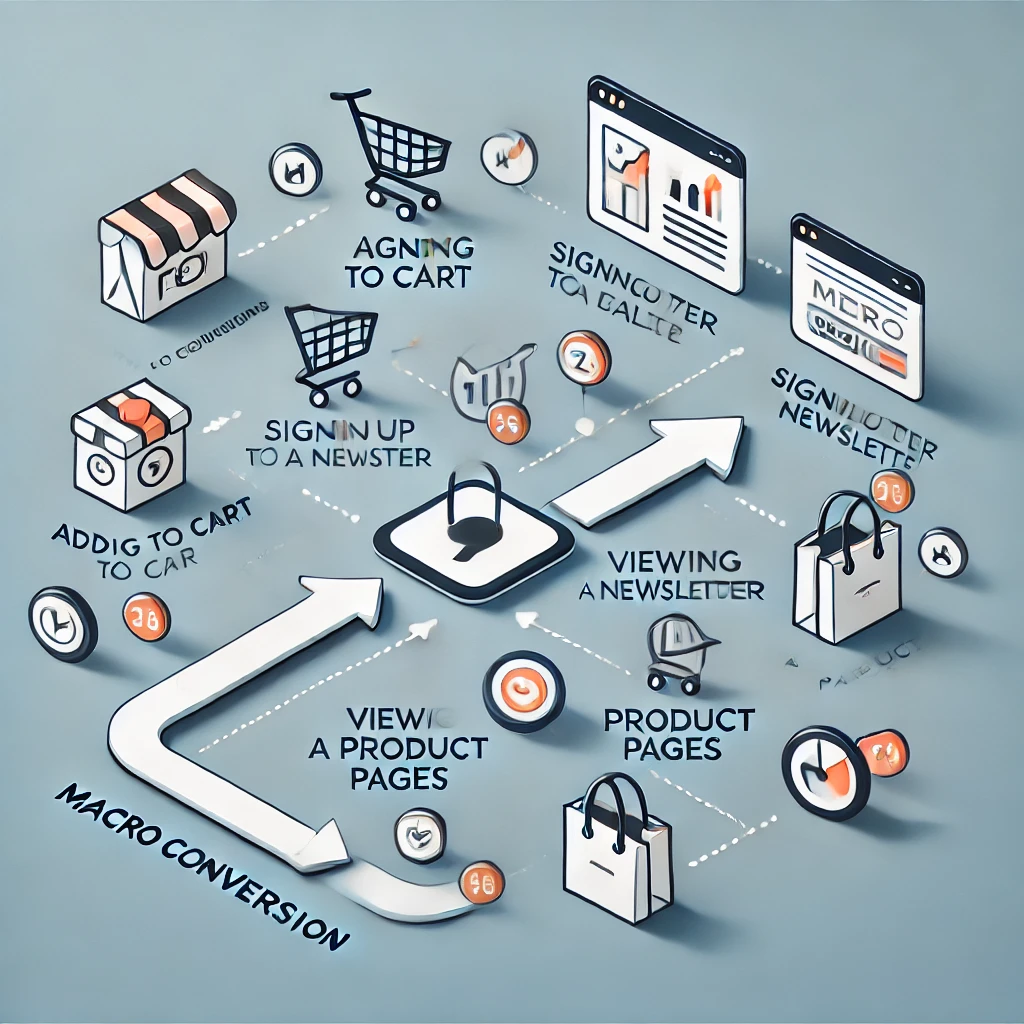
    A micro conversion is a small, measurable action that indicates a user is progressing toward a larger goal, such as completing a purchase. These actions, while not representing a final conversion (like a sale or lead form submission), are essential markers of user engagement and intent. Micro conversions help marketers understand how users are interacting with their website or app, providing insights into the steps leading up to a final conversion, or macro conversion.

    By tracking and analyzing micro conversions, businesses can optimize their marketing and sales funnels, identify areas of improvement, and encourage more users to complete their journey toward the final transaction.

    What is a Micro Conversion?

    A micro conversion is any action that signals user interest or engagement with a brand, product, or service, but does not yet complete the primary goal (a sale, sign-up, or inquiry). Micro conversions are often categorized into two types:

    1. Process milestones: Actions that indicate the user is moving closer to a macro conversion. Examples include adding a product to a shopping cart, starting the checkout process, or signing up for a newsletter.
    2. Secondary actions: These are non-essential but still valuable interactions that show a user’s engagement with the website or brand. Examples include downloading a resource, watching a video, or clicking through product pages.

    Examples of Micro Conversions

    Micro conversions vary depending on the type of website, app, or business model. Some common examples include:

    • E-commerce:
      • Adding items to a shopping cart.
      • Creating a customer account.
      • Using a product comparison tool.
      • Viewing specific product pages.
    • SaaS (Software as a Service):
      • Signing up for a free trial.
      • Downloading an e-book or white paper.
      • Subscribing to a newsletter.
      • Completing a survey or feedback form.
    • Content-driven sites:
      • Reading an article or blog post.
      • Subscribing to updates or email lists.
      • Sharing content on social media.
      • Watching a video or interacting with multimedia.

    Each of these micro conversions signals user interest and progression along the path to a larger, more significant goal (the macro conversion). For example, on an e-commerce site, a micro conversion like adding an item to the cart shows a clear intent to purchase, even if the user hasn’t yet completed the checkout process.

    Importance of Tracking Micro Conversions

    Tracking micro conversions is essential for understanding user behavior and optimizing the overall customer journey. Here are some key reasons why businesses should pay attention to these smaller actions:

    1. Insight into user behavior: Micro conversions provide valuable insights into how users interact with a website or app. By tracking these smaller actions, businesses can see where users drop off in the funnel or where they need additional encouragement.
    2. Funnel optimization: Micro conversions highlight where users are most engaged, allowing marketers to focus on optimizing specific parts of the sales funnel. For instance, if many users are adding items to the cart but abandoning the checkout process, this can signal the need to improve the checkout experience or reduce friction.
    3. Measure intent: Micro conversions are a good indicator of user intent. Users who engage in micro conversions are more likely to complete the final conversion. This data can be used to retarget or nurture those users through personalized marketing messages.
    4. Lead qualification: Micro conversions help businesses qualify leads based on their engagement levels. Users who download a resource or sign up for a free trial are demonstrating interest, and these leads can be targeted with more direct messaging or sales efforts.
    5. Identify bottlenecks: By analyzing where users are completing micro conversions but failing to move forward, businesses can identify bottlenecks or friction points in the user experience. Addressing these areas can improve the overall conversion rate.

    How to Track Micro Conversions

    Tracking micro conversions involves setting up goals or events in analytics tools like Google Analytics, Adobe Analytics, or a dedicated conversion tracking platform. Here’s how businesses can track and measure micro conversions:

    1. Define key micro conversions: The first step is identifying which actions are important to track. This will depend on the business goals and the type of website or app. For example, a SaaS company may prioritize tracking free trial sign-ups and white paper downloads, while an e-commerce site might track add-to-cart actions and product page views.
    2. Set up goals in analytics: In Google Analytics, businesses can create specific goals that track when users complete micro conversions. For example, a goal might be set up for when a user completes a newsletter sign-up form or starts the checkout process.
    3. Monitor user behavior: Use analytics tools to track how users move through the funnel, from initial interactions to final conversion. By tracking micro conversions, businesses can understand where users are engaged and where they drop off.
    4. Analyze drop-off points: Identify any stages in the customer journey where users frequently complete a micro conversion but fail to move forward. For example, if a large percentage of users add items to their cart but don’t check out, this may indicate a problem with the checkout process.
    5. Optimize the user journey: Based on the data collected from micro conversions, businesses can make adjustments to their website or marketing strategy. This could include streamlining the checkout process, improving page load times, or offering targeted promotions to users who abandon their carts.

    Example of Micro Conversions in Action

    Consider an e-commerce store selling fashion accessories. The final goal (macro conversion) is for users to complete a purchase, but before they reach that point, they may go through several micro conversions:

    1. Browsing product pages: Users visit different product pages, indicating interest in specific items.
    2. Adding to cart: Users add products to their cart, signaling intent to purchase.
    3. Creating an account: Users create an account, showing a commitment to the brand.
    4. Signing up for a newsletter: Users sign up for the newsletter, indicating an interest in receiving future communications.

    Each of these micro conversions shows increasing levels of engagement, bringing users closer to completing the macro conversion (purchasing an item). By tracking these actions, the store can identify where users may be dropping off and optimize the journey to encourage more sales.

    Micro Conversions and Retargeting

    Micro conversions are also valuable for retargeting campaigns. Users who engage in micro conversions but don’t complete the final conversion can be targeted with personalized ads to bring them back to the site. For example:

    • Cart abandonment retargeting: Users who added items to their cart but didn’t check out can receive targeted ads with reminders or special discounts to encourage them to complete the purchase.
    • Lead nurturing campaigns: Users who downloaded a white paper or signed up for a newsletter can be nurtured with follow-up emails, guiding them toward a purchase or further engagement.

    Micro conversions are key indicators of user intent and engagement, providing critical insights into the customer journey. By tracking these smaller actions, businesses can better understand how users interact with their site, identify potential friction points, and optimize the path to the final conversion. While they may not represent the ultimate goal, micro conversions are vital steps that move users closer to completing a transaction, making them an essential part of any successful marketing strategy.

    Share. Facebook Twitter Pinterest LinkedIn Tumblr Email

    Related Posts

    AI and PPC: Why Artificial Intelligence Is Rewriting the Rules of Paid Media

    28. 4. 2026

    Google Ads in 2026: Key Trends That Will Change the Way You Advertise

    24. 2. 2026

    What It Takes to Be Successful with Andromeda on Meta: The Complete Guide

    21. 1. 2026

    Product Listing Ads (PLAs) for E-commerce: Your Secret Weapon on Google Shopping

    21. 1. 2026
    Add A Comment
    Leave A Reply Cancel Reply

    Trending

    Marcus Aurelius and Modern Leadership: What the Philosopher Emperor Can Teach Us Today

    25. 5. 2026

    EBITDA Explained: What It Is, Why It Matters, and When to Ignore It

    20. 5. 2026

    Why Most Side Businesses Never Scale (And How to Fix It)

    20. 5. 2026

    Emotional Intelligence Is Not a Soft Skill. It Is the Skill.

    20. 5. 2026

    Agentic AI in E-commerce: How Autonomous Shopping Is Rewriting the Rules of Retail Media

    20. 5. 2026

    Decision-Making Under Uncertainty: What Marketing Leaders Get Wrong and How to Fix It

    28. 4. 2026
    About Us

    Marketingino is a modern business magazine for founders, marketers, e-commerce leaders, and innovators who are building what’s next.

    We cover the tools, tactics, and stories driving today’s most ambitious ventures—from early-stage startups to scaling e-shops, from breakthrough marketing strategies to the frontier of AI and automation.

    Email Us: info@marketingino.com

    Marketingino.com
    Facebook Instagram LinkedIn YouTube Bluesky
    • Home
    • Privacy Policy
    • Cookie Policy (EU)
    • Disclaimer
    © 2026 Marketingino.com, © 2026 Vision Projects, s. r. o.

    Type above and press Enter to search. Press Esc to cancel.

    Manage Consent
    To provide the best experiences, we use technologies like cookies to store and/or access device information. Consenting to these technologies will allow us to process data such as browsing behavior or unique IDs on this site. Not consenting or withdrawing consent, may adversely affect certain features and functions.
    Functional Always active
    The technical storage or access is strictly necessary for the legitimate purpose of enabling the use of a specific service explicitly requested by the subscriber or user, or for the sole purpose of carrying out the transmission of a communication over an electronic communications network.
    Preferences
    The technical storage or access is necessary for the legitimate purpose of storing preferences that are not requested by the subscriber or user.
    Statistics
    The technical storage or access that is used exclusively for statistical purposes. The technical storage or access that is used exclusively for anonymous statistical purposes. Without a subpoena, voluntary compliance on the part of your Internet Service Provider, or additional records from a third party, information stored or retrieved for this purpose alone cannot usually be used to identify you.
    Marketing
    The technical storage or access is required to create user profiles to send advertising, or to track the user on a website or across several websites for similar marketing purposes.
    • Manage options
    • Manage services
    • Manage {vendor_count} vendors
    • Read more about these purposes
    View preferences
    • {title}
    • {title}
    • {title}