Close Menu
Marketingino.comMarketingino.com
    What's Hot

    Leading a Marketing Team Through AI Disruption

    19. 8. 2026

    From Individual Contributor to CMO: A Leadership Roadmap for Marketers

    19. 8. 2026

    Remote Leadership: Why Every Manager Should Hold Open Office Hours

    17. 7. 2026
    Facebook X (Twitter) Instagram
    Facebook Instagram LinkedIn YouTube Bluesky
    Marketingino.comMarketingino.com
    • Home
    • Entrepreneurship
      1. Business Models
      2. Side Hustles
      3. Small Business
      4. Venture Capital
      5. Sustainability & Impact
      6. Startups
      7. Legal & Compliance
      Featured
      Side Hustles

      How to Build a YouTube Channel as a Business: The Monetization Models That Actually Work

      5. 6. 2026
      Recent

      How to Build a YouTube Channel as a Business: The Monetization Models That Actually Work

      5. 6. 2026

      The Unsexy Truth About Bootstrapping: What Nobody Tells You Before You Start

      5. 6. 2026

      EBITDA Explained: What It Is, Why It Matters, and When to Ignore It

      20. 5. 2026
    • Marketing
      1. Marketing Strategy
      2. AI & Automation
      3. Social Media
      4. Branding
      5. Content Marketing
      6. SEO & GEO
      7. Growth Marketing
      8. Digital Marketing
      9. Data & Analytics
      10. Customer Experience
      11. Vocabulary
      Featured
      AI & Automation

      Leading a Marketing Team Through AI Disruption

      19. 8. 2026
      Recent

      Leading a Marketing Team Through AI Disruption

      19. 8. 2026

      9 AI Marketing Tools Every Marketer Should Know in 2026

      17. 7. 2026

      AI and the Future of Marketing Jobs: What’s Actually at Risk, What Isn’t, and What You Should Do About It

      5. 6. 2026
    • Leadership
      1. Coaching & Mentoring
      2. Conflict & Crisis Management
      3. Emotional Intelligence
      4. Executive Mindset
      5. Remote & Hybrid Teams
      6. Team Building
      7. Vision & Strategy
      Featured
      Vision & Strategy

      From Individual Contributor to CMO: A Leadership Roadmap for Marketers

      19. 8. 2026
      Recent

      From Individual Contributor to CMO: A Leadership Roadmap for Marketers

      19. 8. 2026

      Remote Leadership: Why Every Manager Should Hold Open Office Hours

      17. 7. 2026

      Slow Thinking in a Fast World: Why the Best Leaders Deliberately Pump the Brakes

      5. 6. 2026
    • Ecommerce
      1. Conversion Optimization
      2. Cross-Border Ecommerce
      3. Customer Retention
      4. D2C & Brands
      5. Ecommerce Marketing
      6. Marketplaces
      7. Online Stores
      8. Payments & Logistics
      Featured
      D2C & Brands

      Recommerce: Why Selling Used Is the Fastest-Growing Channel in E-Commerce

      20. 4. 2026
      Recent

      Recommerce: Why Selling Used Is the Fastest-Growing Channel in E-Commerce

      20. 4. 2026

      Agentic Commerce: How AI Is Taking Over the Shopping Cart

      20. 4. 2026

      The D2C Loyalty Playbook: 6 Tactics That Don’t Require a Single Promo Code

      11. 3. 2026
    • Life
      1. Business Stories
      2. Lifestyle
      3. Net Worth
      4. Travel
      Featured
      Lifestyle

      5 Self-Development Books Worth Reading This Summer (And What You Will Actually Take Away From Each)

      5. 6. 2026
      Recent

      5 Self-Development Books Worth Reading This Summer (And What You Will Actually Take Away From Each)

      5. 6. 2026

      24 Hours in Vienna: The Honest Guide for People Who Hate Wasting Time

      5. 6. 2026

      10 Powerful Reasons 2025 Proved Life Is Getting Better

      31. 12. 2025
    Marketingino.comMarketingino.com
    Home»Vocabulary»Understanding Porter’s Five Forces: A Tool for Strategic Business Analysis
    Vocabulary

    Understanding Porter’s Five Forces: A Tool for Strategic Business Analysis

    16. 6. 20244 Mins Read
    Facebook Twitter Pinterest LinkedIn Tumblr Email
    Source: ChatGPT
    Share
    Facebook Twitter LinkedIn Pinterest Email

    Porter’s Five Forces is a powerful framework for analyzing the competitive environment of an industry. Developed by Michael E. Porter, a renowned Harvard Business School professor, this model helps businesses understand the dynamics that affect profitability and develop effective strategies. This article explores the history, components, benefits, and practical applications of Porter’s Five Forces in strategic business analysis.

    History of Porter’s Five Forces

    Michael E. Porter introduced the Five Forces model in his seminal 1979 article “How Competitive Forces Shape Strategy,” published in the Harvard Business Review. Porter developed this framework to help companies assess the competitive intensity and attractiveness of an industry, moving beyond the traditional focus on direct competition. The Five Forces model has since become a cornerstone of strategic management.

    Components of Porter’s Five Forces

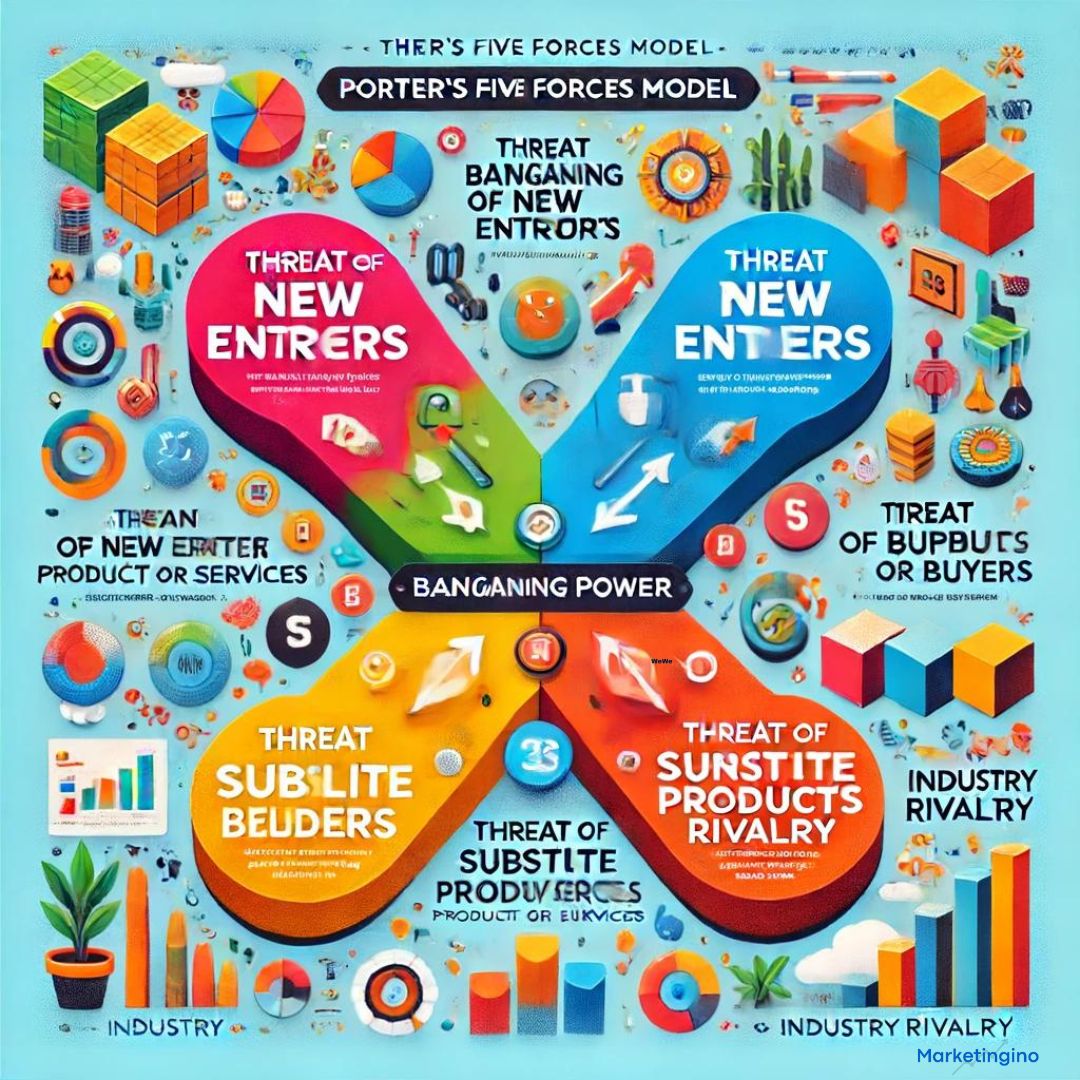
    Porter’s Five Forces framework consists of five key components that shape the competitive landscape of an industry:

    1. Threat of New Entrants: The ease with which new competitors can enter the market affects industry profitability. Factors such as economies of scale, brand loyalty, capital requirements, and regulatory barriers influence this threat.
    2. Bargaining Power of Suppliers: The power of suppliers to drive up prices or reduce the quality of goods and services affects the industry. Fewer suppliers or unique products increase their bargaining power.
    3. Bargaining Power of Buyers: The ability of customers to influence prices and demand higher quality or more services impacts industry profitability. When buyers are concentrated or have many alternatives, their power increases.
    4. Threat of Substitute Products or Services: The presence of alternative products or services that fulfill the same need can limit industry profitability. The availability and attractiveness of substitutes determine this threat.
    5. Industry Rivalry: The intensity of competition among existing firms affects industry profitability. High rivalry, influenced by factors such as the number of competitors, rate of industry growth, and product differentiation, can reduce profit margins.

    Benefits of Using Porter’s Five Forces

    1. Comprehensive Industry Analysis: Porter’s Five Forces provides a thorough understanding of the competitive forces that influence industry profitability, beyond just direct competition.
    2. Strategic Planning: By identifying and analyzing these forces, businesses can develop strategies to enhance their competitive position and profitability.
    3. Market Entry Decisions: The framework helps businesses assess the attractiveness of entering a new market or industry based on the competitive dynamics.
    4. Risk Management: Understanding the competitive forces allows businesses to anticipate potential threats and develop strategies to mitigate them.
    5. Investment Decisions: Investors use Porter’s Five Forces to evaluate the potential profitability and risks associated with investing in a particular industry.

    Practical Applications

    Porter’s Five Forces is used across various industries and strategic decisions:

    1. Corporate Strategy: Companies use the framework to formulate strategies that improve their competitive position within an industry.
    2. Market Analysis: Businesses conduct industry analysis to understand market dynamics and identify opportunities and threats.
    3. Product Development: Understanding competitive forces helps businesses develop products that meet market needs and withstand competitive pressures.
    4. Competitive Benchmarking: Companies use the Five Forces to benchmark their performance against competitors and identify areas for improvement.
    5. Regulatory Strategy: Businesses assess how regulatory changes might impact the competitive dynamics of their industry.

    Applying Porter’s Five Forces

    Applying Porter’s Five Forces involves several steps:

    1. Identify the Industry: Clearly define the industry to be analyzed.
    2. Analyze Each Force: Assess the impact of each of the five forces on the industry.
    3. Evaluate Industry Structure: Determine how the forces interact to shape the industry’s competitive environment.
    4. Develop Strategic Responses: Formulate strategies to enhance the business’s competitive position based on the analysis.
    5. Monitor Changes: Continuously monitor changes in the industry and update the analysis as needed.

    Porter’s Five Forces is a vital tool for strategic business analysis, providing deep insights into the competitive forces that shape industry profitability. By understanding and applying this framework, businesses can develop robust strategies to navigate competitive pressures, enhance their market position, and achieve long-term success. Whether you are an entrepreneur, manager, or investor, incorporating Porter’s Five Forces into your strategic planning process can significantly improve your decision-making and business outcomes.

    Share. Facebook Twitter Pinterest LinkedIn Tumblr Email

    Related Posts

    What is “Autonomous Campaigns”?

    29. 5. 2025

    What is “Prompt Engineering”?

    29. 5. 2025

    What is “Ethical AI Marketing”?

    29. 5. 2025

    What are “Synthetic Data”?

    29. 5. 2025
    Add A Comment
    Leave A Reply Cancel Reply

    Trending

    Leading a Marketing Team Through AI Disruption

    19. 8. 2026

    From Individual Contributor to CMO: A Leadership Roadmap for Marketers

    19. 8. 2026

    Remote Leadership: Why Every Manager Should Hold Open Office Hours

    17. 7. 2026

    9 AI Marketing Tools Every Marketer Should Know in 2026

    17. 7. 2026

    5 Self-Development Books Worth Reading This Summer (And What You Will Actually Take Away From Each)

    5. 6. 2026

    24 Hours in Vienna: The Honest Guide for People Who Hate Wasting Time

    5. 6. 2026
    About Us

    Marketingino is a modern business magazine for founders, marketers, e-commerce leaders, and innovators who are building what’s next.

    We cover the tools, tactics, and stories driving today’s most ambitious ventures—from early-stage startups to scaling e-shops, from breakthrough marketing strategies to the frontier of AI and automation.

    Email Us: info@marketingino.com

    Marketingino.com
    Facebook Instagram LinkedIn YouTube Bluesky
    • Home
    • Privacy Policy
    • Cookie Policy (EU)
    • Disclaimer
    © 2026 Marketingino.com, © 2026 Vision Projects, s. r. o.

    Type above and press Enter to search. Press Esc to cancel.