


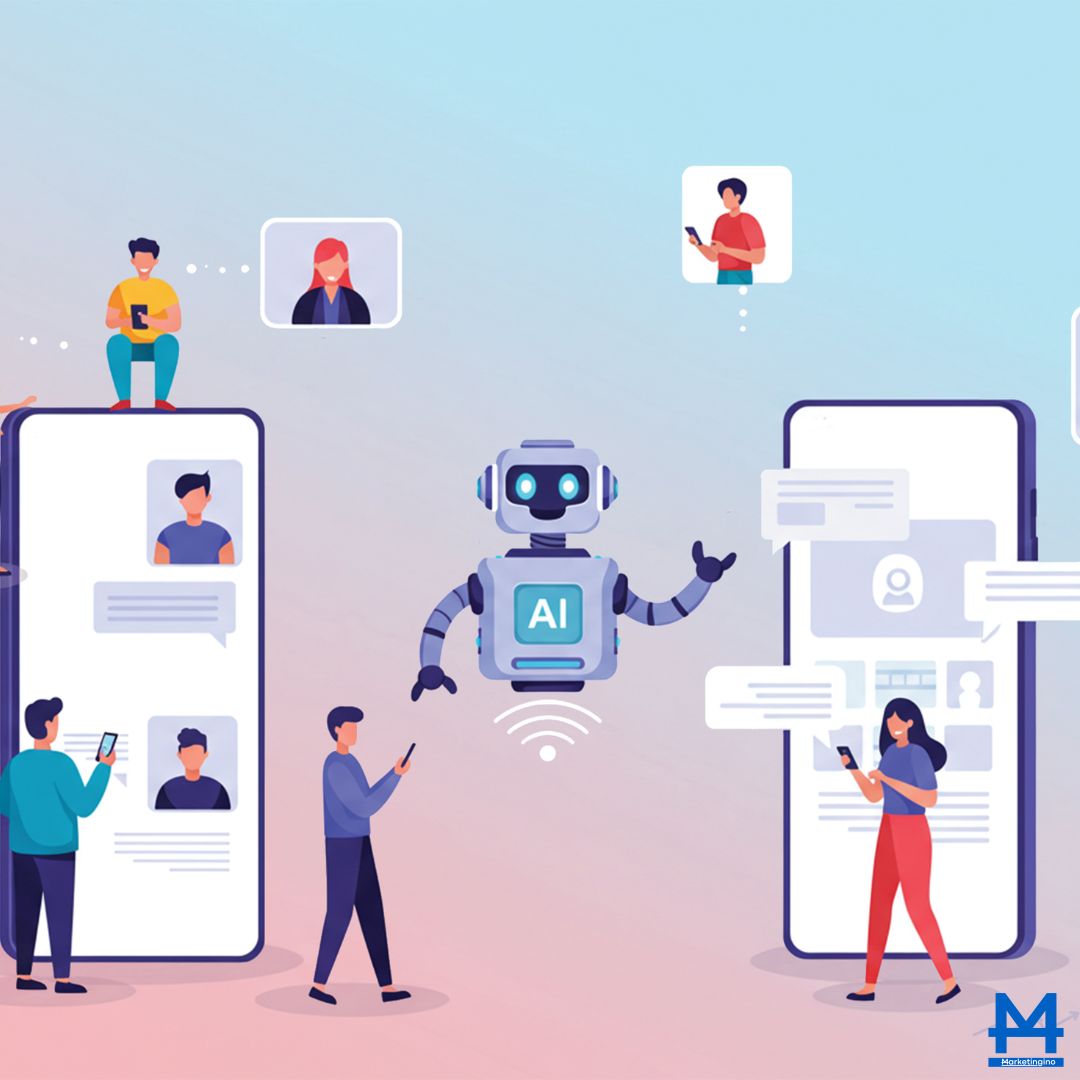
Forget chatbots. The new wave of AI doesn’t shop with your customers — it shops for them.
After years of promises about “personalization” and “smart shopping,” 2026 brings a trend that genuinely changes the rules. It’s not called generative AI or conversational commerce. It’s called agentic commerce — and if you sell online, it’s probably the biggest shift you’re not yet prepared for.
What is agentic commerce?
Agentic AI refers to autonomous software agents capable of performing multi-step tasks without human intervention. In e-commerce terms, this means an AI assistant doesn’t just recommend a product — it handles the entire purchasing process from search to checkout on the user’s behalf.
Picture this: a customer tells their AI assistant, “I need a birthday gift for my dad, under $50, he loves gardening.” The assistant instantly pulls options from verified retailers, checks availability and delivery dates, and completes the purchase — all while you sip your coffee.
This isn’t a distant future scenario. In Europe, agentic commerce hasn’t yet translated into fully autonomous purchasing, but its influence is already growing in the search, compare, and select stages — gradually redefining the rules of e-commerce visibility.
Why this is a genuine break, not just another trend
Traditional e-commerce ran on a simple principle: customers search, you persuade. SEO, PPC ads, product listings, reviews — everything was optimized for a human user actively browsing results.
Agentic commerce flips this model. A growing number of customers are beginning their purchase journey with an AI agent conversation or a language model recommendation — rather than through a traditional search engine or marketplace listing. This means AI decides which products get shown to users at all, based on product data quality, not sales history or advertising budgets. Alsendo
In other words, your Google Ads campaigns may soon simply not reach a portion of your audience. Not because those customers aren’t interested — but because their AI agent doesn’t “see” your product in the first place.
How agentic commerce changes the rules of visibility
Traditional SEO and PPC optimize for search engine algorithms. Agentic commerce requires optimization for language models — and different rules apply there.
Language models don’t rely on keyword matching. They interpret products by constructing context, use cases, and alignment with user intent. This process increasingly resembles data quality assessment rather than copy quality evaluation.
What does this mean practically for online stores?
Structured product data is the new advertising. Precise attributes, categorization, technical specs, reviews — these form the raw material from which AI agents build recommendations. Missing or inaccurate data means invisibility.
Context beats keywords. It’s not enough to say you sell “garden gloves.” An AI agent needs to know who they’re suitable for, what material they’re made of, what temperature range they handle, what type of work they’re designed for. The richer the context, the higher the chance of being recommended.
Reviews and UGC take on new meaning. In an AI-flooded web, verified reviews and user-generated content are the only trust signals that genuinely matter. AI agents actively use them when making decisions.
Zero-click commerce: the end of the funnel
Agentic commerce also brings a concept marketers won’t love: zero-click commerce. Transactions happen in context — a user watches a TikTok video and buys there, chats with a support agent and buys there. The traditional purchase funnel simply stops existing.
For brands, the implication is significant. The classic customer journey from awareness through consideration to purchase is either collapsing or disappearing entirely. If an AI agent recommends your product, the customer may never visit your website at all. They’ll never see your landing page, your brand story, your promotional offer.
The winner in agentic commerce therefore isn’t whoever has the best website. It’s whoever has product data, reputation, and data infrastructure strong enough that AI agents consistently reach for their products first.
What to do now: practical steps for online stores
Start with a product data audit. Go through your catalog from an AI perspective — are your product descriptions rich in context and use cases? Do you have structured attributes covering material, size, age group, compatibility? Are they current and consistent across channels?
Consider investing in PXM (Product Experience Management). PXM platforms help centralize and manage product information in one place, making it easy to distribute across every channel where customers might find you — including AI tools.
Build your reputation systematically. Reviews, video UGC, Q&A sections — all of this is data that AI agents read. Having it isn’t enough; you need to actively collect and structure it.
Track AI-driven discovery channels. Google AI Overviews, ChatGPT Shopping, Perplexity — each has different visibility rules. Test how your product surfaces when relevant queries are entered.
Don’t underestimate the post-purchase phase. In 2026, e-commerce trends don’t stop at the moment of payment. Post-purchase is becoming a new area of differentiation, with transparency, control, and simplicity being the key expectations customers hold. A good post-purchase experience generates the reviews that AI agents will use next time.
Optimize for agents, not just people
Agentic commerce isn’t a technological curiosity. It’s a structural shift in who — or what — actually drives purchase decisions. Brands that understand their primary “customer” in the discovery phase will soon no longer be a human but an AI agent acting on their behalf will gain a decisive edge.
The question isn’t whether this happens. It’s how quickly you adapt.