


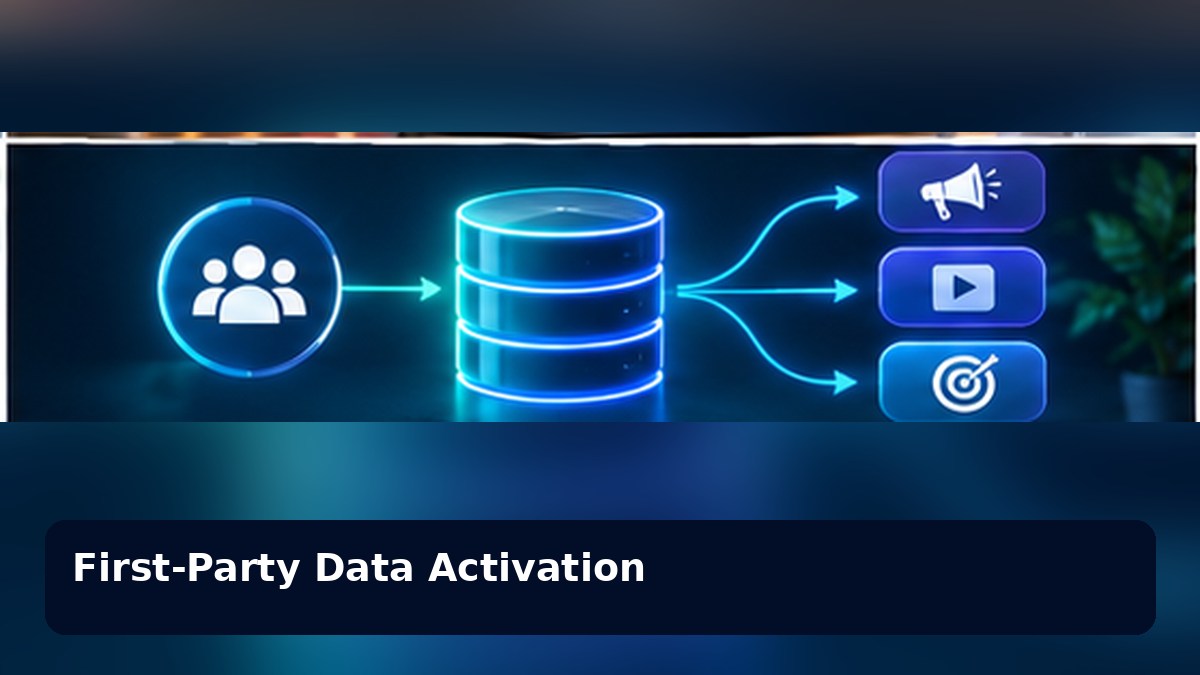
First-party data is valuable only when it is accurate, permissioned and connected to decisions. A larger database is not necessarily a better activation system; quality and lawful purpose determine its utility.
This guide is designed for practitioners who need an actionable framework, not a list of fashionable claims. It distinguishes observations from assumptions and emphasizes customer outcomes, operational constraints and financial consequences. Whenever a metric is used, its definition should be documented so that comparisons remain meaningful across teams and periods.
Define useful customer signals
Email addresses alone are not a strategy. Purchase recency, frequency, category interest, support interactions and customer value often provide a richer picture.
A practical starting point is to convert that principle into a single observable decision rather than a large program. Inventory each field, its origin, permitted purpose and refresh frequency before sending anything to marketing platforms.
For a team using this approach, assign an owner, write down the current baseline and decide in advance what an acceptable result would look like. Measure missing-field rates, duplicates and consent eligibility.
The main limitation is interpretability: multiple changes at once, a short observation period and differences between customer groups can make a result appear stronger than it is. Never assume that collecting data for fulfillment automatically permits every advertising use.
A useful review asks four questions: what did we expect, what actually happened, what other explanation is plausible, and what decision follows? Record both the evidence and its limitations so the next team member can improve on the work.
Create segments tied to decisions
Broad segments can blur business needs. A first-time buyer, repeat customer and lapsed loyalist may need different communications.
A practical starting point is to convert that principle into a single observable decision rather than a large program. Start with a few interpretable cohorts and map one business objective to each.
For a team using this approach, assign an owner, write down the current baseline and decide in advance what an acceptable result would look like. Monitor cohort sizes, response, unsubscribe rates and repeat purchase behavior.
The main limitation is interpretability: multiple changes at once, a short observation period and differences between customer groups can make a result appear stronger than it is. Excessive micro-segmentation can create unstable audiences and privacy risks.
A useful review asks four questions: what did we expect, what actually happened, what other explanation is plausible, and what decision follows? Record both the evidence and its limitations so the next team member can improve on the work.
Implement secure activation
Server-side and CRM integrations can improve signal continuity, but only when data collection is lawful and implementations are tested.
A practical starting point is to convert that principle into a single observable decision rather than a large program. Use documented consent controls, restricted access and hashed identifiers where required by the receiving platform.
For a team using this approach, assign an owner, write down the current baseline and decide in advance what an acceptable result would look like. Audit match quality and event accuracy without exposing personal records in reports.
The main limitation is interpretability: multiple changes at once, a short observation period and differences between customer groups can make a result appear stronger than it is. Do not present hashing as a substitute for a lawful basis.
A useful review asks four questions: what did we expect, what actually happened, what other explanation is plausible, and what decision follows? Record both the evidence and its limitations so the next team member can improve on the work.
Connect signals to real outcomes
Optimizing for a cheap lead or any order can train automated bidding toward low-value activity.
A practical starting point is to convert that principle into a single observable decision rather than a large program. Where data quality allows, send qualified conversions or meaningful revenue signals back to the platform.
For a team using this approach, assign an owner, write down the current baseline and decide in advance what an acceptable result would look like. Compare predicted and realized value by acquisition cohort.
The main limitation is interpretability: multiple changes at once, a short observation period and differences between customer groups can make a result appear stronger than it is. Avoid making high-value optimization depend on noisy or stale CRM labels.
A useful review asks four questions: what did we expect, what actually happened, what other explanation is plausible, and what decision follows? Record both the evidence and its limitations so the next team member can improve on the work.
Establish governance
Activation needs more than an initial technical setup. People must own retention policies, access and incident handling.
A practical starting point is to convert that principle into a single observable decision rather than a large program. Document ownership, data retention and a periodic quality review.
For a team using this approach, assign an owner, write down the current baseline and decide in advance what an acceptable result would look like. Record processing errors, data deletion requests and time to resolve discrepancies.
The main limitation is interpretability: multiple changes at once, a short observation period and differences between customer groups can make a result appear stronger than it is. A data pipeline that is powerful but unauditable is a liability.
A useful review asks four questions: what did we expect, what actually happened, what other explanation is plausible, and what decision follows? Record both the evidence and its limitations so the next team member can improve on the work.
Implementation checklist
• Define the business decision that first-party data activation should inform. • Document the baseline, the accountable owner, and what would count as sufficient evidence. • Separate platform-reported activity from net business outcomes and customer experience. • Capture the limitations, unintended consequences and open questions before expanding. • Assign a review date and record one specific next action.
Final takeaway
The best next step is deliberately small: select one decision you can improve, record a credible baseline, and run a reviewable intervention. Keep the outcome connected to customer value and contribution rather than only platform-level activity. If the evidence is weak, state that clearly and design a better test instead of claiming success. This is how the topic becomes part of an operating system rather than another one-off marketing initiative.
Frequently asked questions
Where should a smaller team begin? Start with the highest-impact decision that has enough reliable data to evaluate. Avoid simultaneously rebuilding every tool or process.
How soon should results be judged? Use a review period consistent with customer behavior, conversion lag and sample size rather than a universal number of days.
Which metric matters most? Choose the metric closest to the intended business outcome and pair it with guardrails for quality, customer experience and cost.
What if results are inconclusive? Document what is known, keep the decision reversible if possible, and improve the experiment design or measurement before making stronger claims.