Close Menu
Marketingino.comMarketingino.com
    What's Hot

    Decision-Making Under Uncertainty: What Marketing Leaders Get Wrong and How to Fix It

    28. 4. 2026

    GEO: What Is Generative Engine Optimization and Why It Matters in 2026

    28. 4. 2026

    How to Optimize Your Website for AI Search: A Practical Guide to Getting Cited by ChatGPT, Claude, and Perplexity

    28. 4. 2026
    Facebook X (Twitter) Instagram
    Facebook Instagram LinkedIn YouTube Bluesky
    Marketingino.comMarketingino.com
    • Home
    • Entrepreneurship
      1. Business Models
      2. Side Hustles
      3. Small Business
      4. Venture Capital
      5. Sustainability & Impact
      6. Startups
      7. Legal & Compliance
      Featured
      Side Hustles

      Scaling Your Side Hustle: When and How to Turn It Into a Full-Time Business

      6. 2. 2026
      Recent

      Scaling Your Side Hustle: When and How to Turn It Into a Full-Time Business

      6. 2. 2026

      From Freelance to Founder: Turning Services into a Scalable Product

      18. 12. 2025

      Don’t Skip the Fine Print: The Most Important Clauses in Business Contracts

      15. 12. 2025
    • Marketing
      1. Marketing Strategy
      2. AI & Automation
      3. Social Media
      4. Branding
      5. Content Marketing
      6. SEO & GEO
      7. Growth Marketing
      8. Digital Marketing
      9. Data & Analytics
      10. Customer Experience
      11. Vocabulary
      Featured
      SEO & GEO

      GEO: What Is Generative Engine Optimization and Why It Matters in 2026

      28. 4. 2026
      Recent

      GEO: What Is Generative Engine Optimization and Why It Matters in 2026

      28. 4. 2026

      How to Optimize Your Website for AI Search: A Practical Guide to Getting Cited by ChatGPT, Claude, and Perplexity

      28. 4. 2026

      AI and PPC: Why Artificial Intelligence Is Rewriting the Rules of Paid Media

      28. 4. 2026
    • Leadership
      1. Coaching & Mentoring
      2. Conflict & Crisis Management
      3. Emotional Intelligence
      4. Executive Mindset
      5. Remote & Hybrid Teams
      6. Team Building
      7. Vision & Strategy
      Featured
      Conflict & Crisis Management

      Decision-Making Under Uncertainty: What Marketing Leaders Get Wrong and How to Fix It

      28. 4. 2026
      Recent

      Decision-Making Under Uncertainty: What Marketing Leaders Get Wrong and How to Fix It

      28. 4. 2026

      Stay Interviews: Proactively Addressing Employee Needs Before They Leave

      19. 2. 2026

      Internship Programs: A Pipeline for Future Talent at Your E-commerce Business

      19. 2. 2026
    • Ecommerce
      1. Conversion Optimization
      2. Cross-Border Ecommerce
      3. Customer Retention
      4. D2C & Brands
      5. Ecommerce Marketing
      6. Marketplaces
      7. Online Stores
      8. Payments & Logistics
      Featured
      D2C & Brands

      Recommerce: Why Selling Used Is the Fastest-Growing Channel in E-Commerce

      20. 4. 2026
      Recent

      Recommerce: Why Selling Used Is the Fastest-Growing Channel in E-Commerce

      20. 4. 2026

      Agentic Commerce: How AI Is Taking Over the Shopping Cart

      20. 4. 2026

      The D2C Loyalty Playbook: 6 Tactics That Don’t Require a Single Promo Code

      11. 3. 2026
    • Life
      1. Business Stories
      2. Lifestyle
      3. Net Worth
      4. Travel
      Featured
      Lifestyle

      10 Powerful Reasons 2025 Proved Life Is Getting Better

      31. 12. 2025
      Recent

      10 Powerful Reasons 2025 Proved Life Is Getting Better

      31. 12. 2025

      12 Books to Understand Everything: A Foundation for Universal Knowledge

      3. 12. 2025

      Running in Zone 2: The Secret to Enhanced Work Performance and Productivity

      28. 11. 2025
    Marketingino.comMarketingino.com
    Home»Vocabulary»Mastering Bidding Strategy in Digital Advertising
    Vocabulary

    Mastering Bidding Strategy in Digital Advertising

    14. 6. 20244 Mins Read
    Facebook Twitter Pinterest LinkedIn Tumblr Email
    Source: ChatGPT
    Share
    Facebook Twitter LinkedIn Pinterest Email

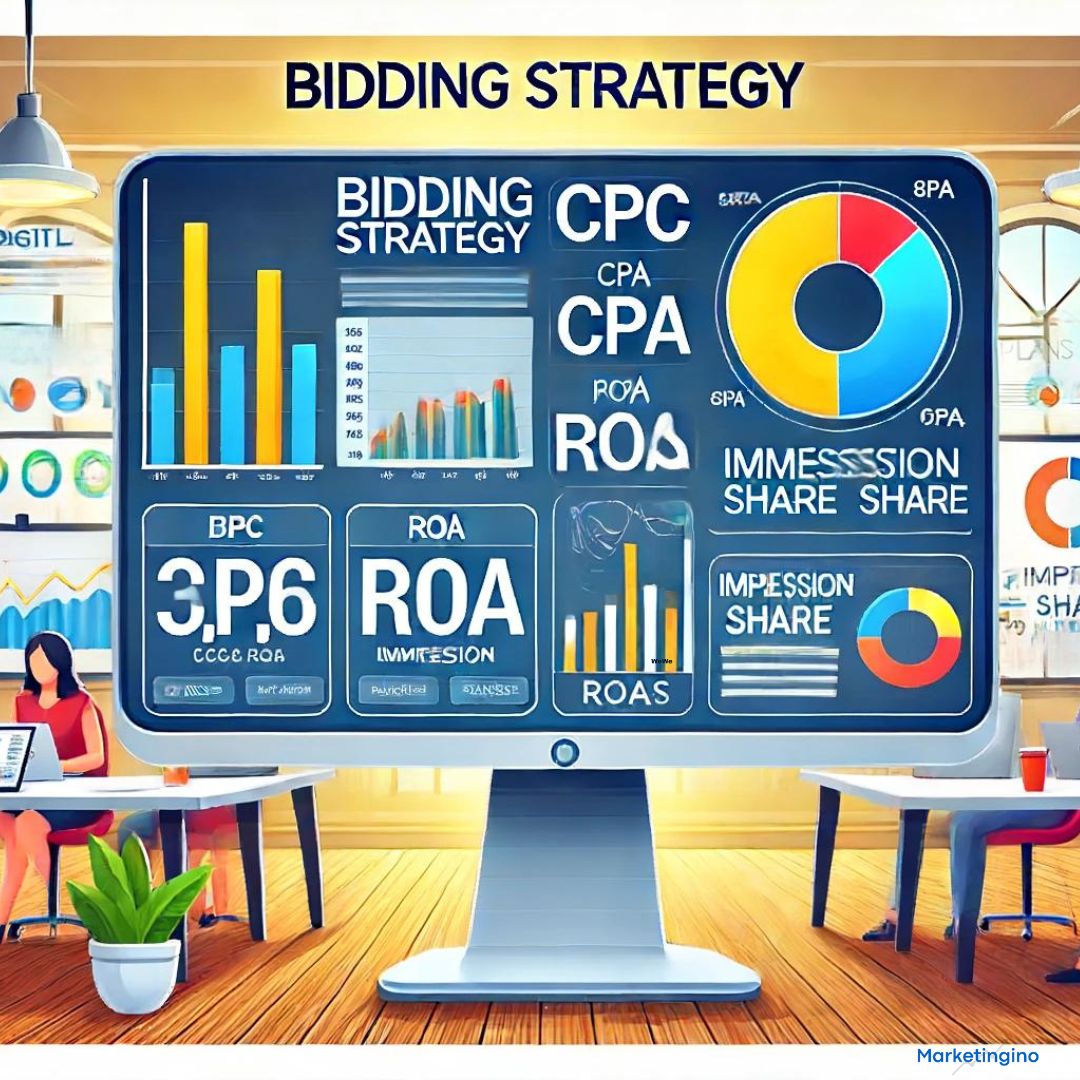
    In the ever-evolving landscape of digital advertising, a well-crafted bidding strategy is crucial for achieving optimal performance and maximizing return on investment (ROI). Bidding strategy guides advertisers on how much to pay for each user action related to their ads, such as clicks, impressions, or conversions. This article delves into the concept of bidding strategy, its importance, various types, and how to implement an effective strategy to enhance your advertising efforts.

    What is a Bidding Strategy?

    A bidding strategy in digital advertising determines the amount an advertiser is willing to pay for specific user actions. These actions can include clicks on ads, impressions (views), or conversions (such as purchases or sign-ups). The right bidding strategy ensures that advertisers spend their budget efficiently, targeting the right audience and achieving their campaign goals.

    Types of Bidding Strategies

    1. Manual CPC (Cost-Per-Click): Advertisers set a maximum CPC bid for their ads. This strategy offers control over bids but requires regular monitoring and adjustments.
    2. Enhanced CPC (ECPC): This semi-automated strategy adjusts manual bids to maximize conversions while keeping the average CPC within the set limit. It uses historical data to predict and adjust bids in real-time.
    3. Target CPA (Cost-Per-Acquisition): Automated bidding strategy where you set a target CPA. Google Ads automatically sets bids to help get as many conversions as possible at or below the target cost.
    4. Target ROAS (Return on Ad Spend): This strategy focuses on maximizing the revenue generated from ad spend. Google Ads adjusts bids to achieve a specific ROAS, aiming to get the most value from the budget.
    5. Maximize Clicks: Automated strategy that sets bids to help get as many clicks as possible within the specified budget. It’s ideal for driving traffic to your website.
    6. Maximize Conversions: Automated strategy that sets bids to help get as many conversions as possible within the budget. This strategy leverages machine learning to optimize bids for conversions.
    7. Maximize Conversion Value: Similar to Maximize Conversions, but focuses on the total conversion value, optimizing for higher-value conversions.
    8. Target Impression Share: This strategy sets bids with the goal of showing your ads at the top of the page or in the absolute top position a certain percentage of the time.

    Importance of a Bidding Strategy

    1. Budget Efficiency: A well-defined bidding strategy ensures your budget is spent effectively, targeting the right audience and achieving desired outcomes without overspending.
    2. Goal Alignment: Different strategies align with different campaign goals, whether it’s driving traffic, generating leads, or increasing sales. Choosing the right strategy helps meet these objectives.
    3. Performance Optimization: Bidding strategies use data and machine learning to optimize performance, ensuring better ROI and improved ad placement.
    4. Competitive Advantage: An effective strategy helps you stay competitive in ad auctions, securing prime ad placements and reaching potential customers more effectively.

    How to Implement an Effective Bidding Strategy

    1. Set Clear Goals: Define what you want to achieve with your campaign, such as increasing website traffic, generating leads, or boosting sales. Your goals will guide your choice of bidding strategy.
    2. Analyze Historical Data: Use past campaign data to inform your strategy. Identify which strategies have performed well and adjust based on these insights.
    3. Choose the Right Strategy: Select a bidding strategy that aligns with your campaign goals. For example, if your goal is to increase conversions, consider using Target CPA or Maximize Conversions.
    4. Monitor and Adjust: Continuously monitor campaign performance and make necessary adjustments. Use real-time data to tweak bids and improve results.
    5. Leverage Automation: Utilize automated bidding strategies to save time and enhance performance. These strategies use machine learning to optimize bids based on real-time data.
    6. Test and Optimize: Conduct A/B tests to compare different bidding strategies and identify the most effective approach. Regular optimization ensures sustained performance.

    Best Practices for Bidding Strategy

    1. Start with Manual Bidding: For beginners, starting with manual CPC allows for greater control and understanding of how bids impact performance.
    2. Gradually Incorporate Automation: As you become more comfortable, gradually incorporate automated bidding strategies to enhance efficiency and results.
    3. Stay Updated on Trends: Keep up with industry trends and updates from ad platforms to ensure your strategy remains relevant and effective.
    4. Focus on High-Impact Metrics: Prioritize strategies that impact your most important metrics, whether it’s conversions, clicks, or impression share.
    5. Use Bid Modifiers: Adjust bids based on device, location, and time to further refine your strategy and target specific segments more effectively.

    A robust bidding strategy is essential for the success of digital advertising campaigns. By understanding different bidding strategies and how to implement them effectively, advertisers can optimize their ad spend, achieve their campaign goals, and stay competitive in the digital marketplace. Regular monitoring, analysis, and optimization are key to ensuring your bidding strategy continues to deliver the best possible results.

    Share. Facebook Twitter Pinterest LinkedIn Tumblr Email

    Related Posts

    What is “Autonomous Campaigns”?

    29. 5. 2025

    What is “Prompt Engineering”?

    29. 5. 2025

    What is “Ethical AI Marketing”?

    29. 5. 2025

    What are “Synthetic Data”?

    29. 5. 2025
    Add A Comment
    Leave A Reply Cancel Reply

    Trending

    Decision-Making Under Uncertainty: What Marketing Leaders Get Wrong and How to Fix It

    28. 4. 2026

    GEO: What Is Generative Engine Optimization and Why It Matters in 2026

    28. 4. 2026

    How to Optimize Your Website for AI Search: A Practical Guide to Getting Cited by ChatGPT, Claude, and Perplexity

    28. 4. 2026

    AI and PPC: Why Artificial Intelligence Is Rewriting the Rules of Paid Media

    28. 4. 2026

    Recommerce: Why Selling Used Is the Fastest-Growing Channel in E-Commerce

    20. 4. 2026

    Agentic Commerce: How AI Is Taking Over the Shopping Cart

    20. 4. 2026
    About Us

    Marketingino is a modern business magazine for founders, marketers, e-commerce leaders, and innovators who are building what’s next.

    We cover the tools, tactics, and stories driving today’s most ambitious ventures—from early-stage startups to scaling e-shops, from breakthrough marketing strategies to the frontier of AI and automation.

    Email Us: info@marketingino.com

    Marketingino.com
    Facebook Instagram LinkedIn YouTube Bluesky
    • Home
    • Privacy Policy
    • Cookie Policy (EU)
    • Disclaimer
    © 2026 Marketingino.com, © 2026 Vision Projects, s. r. o.

    Type above and press Enter to search. Press Esc to cancel.

    Manage Consent
    To provide the best experiences, we use technologies like cookies to store and/or access device information. Consenting to these technologies will allow us to process data such as browsing behavior or unique IDs on this site. Not consenting or withdrawing consent, may adversely affect certain features and functions.
    Functional Always active
    The technical storage or access is strictly necessary for the legitimate purpose of enabling the use of a specific service explicitly requested by the subscriber or user, or for the sole purpose of carrying out the transmission of a communication over an electronic communications network.
    Preferences
    The technical storage or access is necessary for the legitimate purpose of storing preferences that are not requested by the subscriber or user.
    Statistics
    The technical storage or access that is used exclusively for statistical purposes. The technical storage or access that is used exclusively for anonymous statistical purposes. Without a subpoena, voluntary compliance on the part of your Internet Service Provider, or additional records from a third party, information stored or retrieved for this purpose alone cannot usually be used to identify you.
    Marketing
    The technical storage or access is required to create user profiles to send advertising, or to track the user on a website or across several websites for similar marketing purposes.
    • Manage options
    • Manage services
    • Manage {vendor_count} vendors
    • Read more about these purposes
    View preferences
    • {title}
    • {title}
    • {title}