Close Menu
Marketingino.comMarketingino.com
    What's Hot

    Decision-Making Under Uncertainty: What Marketing Leaders Get Wrong and How to Fix It

    28. 4. 2026

    GEO: What Is Generative Engine Optimization and Why It Matters in 2026

    28. 4. 2026

    How to Optimize Your Website for AI Search: A Practical Guide to Getting Cited by ChatGPT, Claude, and Perplexity

    28. 4. 2026
    Facebook X (Twitter) Instagram
    Facebook Instagram LinkedIn YouTube Bluesky
    Marketingino.comMarketingino.com
    • Home
    • Entrepreneurship
      1. Business Models
      2. Side Hustles
      3. Small Business
      4. Venture Capital
      5. Sustainability & Impact
      6. Startups
      7. Legal & Compliance
      Featured
      Side Hustles

      Scaling Your Side Hustle: When and How to Turn It Into a Full-Time Business

      6. 2. 2026
      Recent

      Scaling Your Side Hustle: When and How to Turn It Into a Full-Time Business

      6. 2. 2026

      From Freelance to Founder: Turning Services into a Scalable Product

      18. 12. 2025

      Don’t Skip the Fine Print: The Most Important Clauses in Business Contracts

      15. 12. 2025
    • Marketing
      1. Marketing Strategy
      2. AI & Automation
      3. Social Media
      4. Branding
      5. Content Marketing
      6. SEO & GEO
      7. Growth Marketing
      8. Digital Marketing
      9. Data & Analytics
      10. Customer Experience
      11. Vocabulary
      Featured
      SEO & GEO

      GEO: What Is Generative Engine Optimization and Why It Matters in 2026

      28. 4. 2026
      Recent

      GEO: What Is Generative Engine Optimization and Why It Matters in 2026

      28. 4. 2026

      How to Optimize Your Website for AI Search: A Practical Guide to Getting Cited by ChatGPT, Claude, and Perplexity

      28. 4. 2026

      AI and PPC: Why Artificial Intelligence Is Rewriting the Rules of Paid Media

      28. 4. 2026
    • Leadership
      1. Coaching & Mentoring
      2. Conflict & Crisis Management
      3. Emotional Intelligence
      4. Executive Mindset
      5. Remote & Hybrid Teams
      6. Team Building
      7. Vision & Strategy
      Featured
      Conflict & Crisis Management

      Decision-Making Under Uncertainty: What Marketing Leaders Get Wrong and How to Fix It

      28. 4. 2026
      Recent

      Decision-Making Under Uncertainty: What Marketing Leaders Get Wrong and How to Fix It

      28. 4. 2026

      Stay Interviews: Proactively Addressing Employee Needs Before They Leave

      19. 2. 2026

      Internship Programs: A Pipeline for Future Talent at Your E-commerce Business

      19. 2. 2026
    • Ecommerce
      1. Conversion Optimization
      2. Cross-Border Ecommerce
      3. Customer Retention
      4. D2C & Brands
      5. Ecommerce Marketing
      6. Marketplaces
      7. Online Stores
      8. Payments & Logistics
      Featured
      D2C & Brands

      Recommerce: Why Selling Used Is the Fastest-Growing Channel in E-Commerce

      20. 4. 2026
      Recent

      Recommerce: Why Selling Used Is the Fastest-Growing Channel in E-Commerce

      20. 4. 2026

      Agentic Commerce: How AI Is Taking Over the Shopping Cart

      20. 4. 2026

      The D2C Loyalty Playbook: 6 Tactics That Don’t Require a Single Promo Code

      11. 3. 2026
    • Life
      1. Business Stories
      2. Lifestyle
      3. Net Worth
      4. Travel
      Featured
      Lifestyle

      10 Powerful Reasons 2025 Proved Life Is Getting Better

      31. 12. 2025
      Recent

      10 Powerful Reasons 2025 Proved Life Is Getting Better

      31. 12. 2025

      12 Books to Understand Everything: A Foundation for Universal Knowledge

      3. 12. 2025

      Running in Zone 2: The Secret to Enhanced Work Performance and Productivity

      28. 11. 2025
    Marketingino.comMarketingino.com
    Home»Marketing»Data & Analytics»Data Bias: Human Error that Skews Data Collection and Interpretation
    Data & Analytics

    Data Bias: Human Error that Skews Data Collection and Interpretation

    8. 7. 20244 Mins Read
    Facebook Twitter Pinterest LinkedIn Tumblr Email
    OpenAI
    Share
    Facebook Twitter LinkedIn Pinterest Email

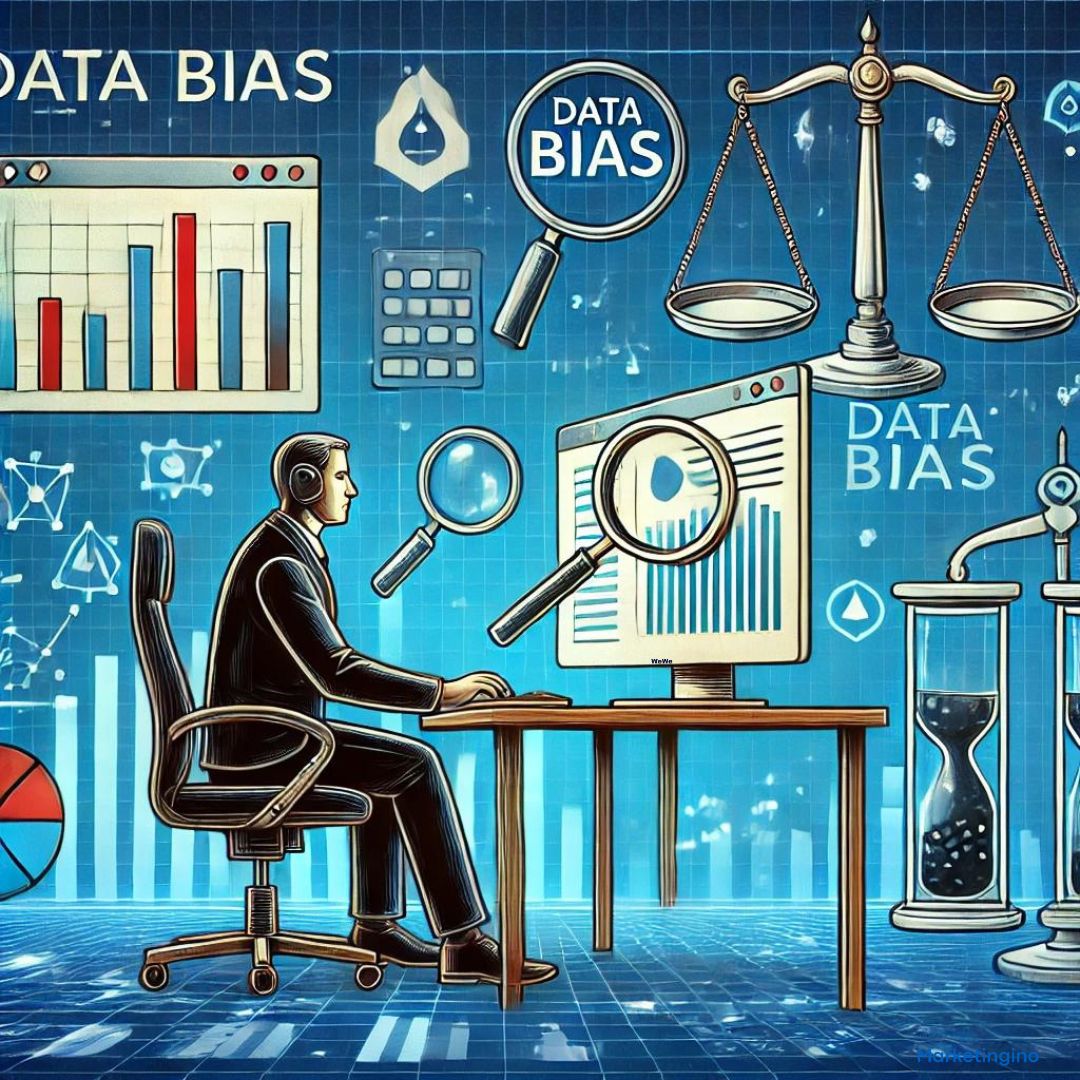
    Data bias is a critical issue in the realm of data science and analytics. It refers to human errors or prejudices that skew data collection or interpretation, leading to results that are not representative or accurate. Recognizing and mitigating data bias is essential for ensuring that decisions based on data are fair, reliable, and valid.

    What is Data Bias?

    Data bias occurs when data is collected, processed, or interpreted in a way that systematically favors certain outcomes over others. This bias can arise from various sources, including sampling errors, measurement errors, and subjective judgments. The result is a distortion of reality, which can lead to incorrect conclusions and potentially harmful decisions.

    Types of Data Bias

    1. Sampling Bias: This occurs when the data sample is not representative of the population being studied. It can happen if certain groups are overrepresented or underrepresented in the data collection process.
    2. Measurement Bias: This type of bias arises when the data collection instruments or procedures systematically favor certain outcomes. For example, a survey question that is leading or confusing can result in biased responses.
    3. Confirmation Bias: This happens when data analysts give more weight to data that supports their preconceived notions or hypotheses, while disregarding data that contradicts them.
    4. Selection Bias: This occurs when the process of selecting data or participants introduces a bias. For instance, using a voluntary response sample can lead to bias, as those who choose to respond may differ significantly from those who do not.
    5. Observer Bias: This type of bias occurs when the expectations or beliefs of the person collecting or analyzing the data influence the outcomes. It is common in studies where subjective judgments are required.

    Importance of Addressing Data Bias

    1. Accuracy: Mitigating data bias is essential for ensuring the accuracy of data analysis. Biased data can lead to incorrect conclusions and poor decision-making.
    2. Fairness: Addressing bias is crucial for ensuring that data-driven decisions are fair and equitable. Biased data can perpetuate existing inequalities and lead to discriminatory outcomes.
    3. Credibility: Reducing bias enhances the credibility and reliability of data analysis. It ensures that the insights derived from data are trusted and valid.
    4. Regulatory Compliance: Many industries are subject to regulations that require unbiased data collection and analysis. Ensuring compliance with these regulations is essential for avoiding legal repercussions.

    Identifying and Mitigating Data Bias

    1. Diverse Data Collection: Ensure that data samples are representative of the entire population. Use diverse data sources and avoid over-relying on any single type of data.
    2. Transparent Methodologies: Clearly document the data collection and analysis methods. Transparency helps identify potential sources of bias and allows for corrective measures.
    3. Bias Detection Tools: Utilize statistical tools and techniques to detect bias in data sets. Techniques such as stratified sampling and cross-validation can help identify and correct biases.
    4. Awareness and Training: Educate data analysts and researchers about the different types of bias and their implications. Training can help in recognizing and mitigating bias during data collection and analysis.
    5. Continuous Monitoring: Regularly review and audit data processes to identify and address biases. Continuous monitoring ensures that bias is detected early and corrected promptly.

    Challenges in Addressing Data Bias

    1. Complexity: Bias can be subtle and complex, making it difficult to identify and address. It often requires sophisticated analytical techniques and domain expertise.
    2. Resource Intensive: Implementing measures to detect and correct bias can be resource-intensive. It requires time, effort, and often significant investment in tools and training.
    3. Human Factors: Human judgment and subjectivity are inherent in many data processes. Eliminating bias entirely is challenging, but minimizing it as much as possible is essential.
    4. Evolving Nature: As data sources and methodologies evolve, new types of bias can emerge. Staying ahead of these changes requires continuous learning and adaptation.

    Data bias is a significant challenge in the field of data science and analytics. By recognizing the various types of bias and implementing strategies to mitigate them, organizations can ensure that their data-driven decisions are accurate, fair, and reliable. Addressing data bias is not only a technical challenge but also an ethical imperative. As we continue to rely on data to inform decisions and shape policies, ensuring the integrity and fairness of our data processes is more important than ever.

    Share. Facebook Twitter Pinterest LinkedIn Tumblr Email

    Related Posts

    Why First-Party Data Is the Secret Weapon of Successful D2C Brands

    4. 12. 2025

    How the “Context of Decision-Making” Shapes Our Choices

    16. 7. 2025

    Beyond the Score: How to Measure the Right NPS and Truly Understand Your Customers

    22. 5. 2025

    Is the Pet Industry Outpacing the Kids’ Market in Profitability?

    18. 5. 2025
    Add A Comment
    Leave A Reply Cancel Reply

    Trending

    Decision-Making Under Uncertainty: What Marketing Leaders Get Wrong and How to Fix It

    28. 4. 2026

    GEO: What Is Generative Engine Optimization and Why It Matters in 2026

    28. 4. 2026

    How to Optimize Your Website for AI Search: A Practical Guide to Getting Cited by ChatGPT, Claude, and Perplexity

    28. 4. 2026

    AI and PPC: Why Artificial Intelligence Is Rewriting the Rules of Paid Media

    28. 4. 2026

    Recommerce: Why Selling Used Is the Fastest-Growing Channel in E-Commerce

    20. 4. 2026

    Agentic Commerce: How AI Is Taking Over the Shopping Cart

    20. 4. 2026
    About Us

    Marketingino is a modern business magazine for founders, marketers, e-commerce leaders, and innovators who are building what’s next.

    We cover the tools, tactics, and stories driving today’s most ambitious ventures—from early-stage startups to scaling e-shops, from breakthrough marketing strategies to the frontier of AI and automation.

    Email Us: info@marketingino.com

    Marketingino.com
    Facebook Instagram LinkedIn YouTube Bluesky
    • Home
    • Privacy Policy
    • Cookie Policy (EU)
    • Disclaimer
    © 2026 Marketingino.com, © 2026 Vision Projects, s. r. o.

    Type above and press Enter to search. Press Esc to cancel.

    Manage Consent
    To provide the best experiences, we use technologies like cookies to store and/or access device information. Consenting to these technologies will allow us to process data such as browsing behavior or unique IDs on this site. Not consenting or withdrawing consent, may adversely affect certain features and functions.
    Functional Always active
    The technical storage or access is strictly necessary for the legitimate purpose of enabling the use of a specific service explicitly requested by the subscriber or user, or for the sole purpose of carrying out the transmission of a communication over an electronic communications network.
    Preferences
    The technical storage or access is necessary for the legitimate purpose of storing preferences that are not requested by the subscriber or user.
    Statistics
    The technical storage or access that is used exclusively for statistical purposes. The technical storage or access that is used exclusively for anonymous statistical purposes. Without a subpoena, voluntary compliance on the part of your Internet Service Provider, or additional records from a third party, information stored or retrieved for this purpose alone cannot usually be used to identify you.
    Marketing
    The technical storage or access is required to create user profiles to send advertising, or to track the user on a website or across several websites for similar marketing purposes.
    • Manage options
    • Manage services
    • Manage {vendor_count} vendors
    • Read more about these purposes
    View preferences
    • {title}
    • {title}
    • {title}