


Cartier, a name synonymous with luxury, elegance, and timeless design, has established itself as one of the most prestigious brands in the world. To maintain its position at the pinnacle of the luxury industry, Cartier employs a meticulously crafted marketing strategy that blends its rich heritage with contemporary appeal. This strategy ensures that Cartier remains relevant to both its traditional clientele and a new generation of luxury consumers. This article explores the key elements of Cartier’s marketing strategy, highlighting how the brand continues to captivate and expand its global audience.
1. Leveraging Heritage and Brand Legacy
Cartier’s marketing strategy heavily emphasizes its rich history and heritage, which spans over 175 years. The brand is often referred to as the “Jeweler of Kings and the King of Jewelers,” a title earned through its long-standing association with royalty and aristocracy. Cartier’s marketing campaigns frequently highlight its historical connections, showcasing iconic pieces worn by royalty and celebrities throughout the decades.
This focus on heritage allows Cartier to differentiate itself from other luxury brands by positioning its products as timeless investments rather than mere fashion accessories. By continually referencing its storied past, Cartier reinforces its identity as a brand that embodies tradition, sophistication, and enduring value.
2. Exclusive Product Offerings and Limited Editions
Cartier’s product strategy is closely tied to its marketing efforts, with a focus on exclusivity and limited editions. The brand regularly releases special collections and high-jewelry pieces that are only available to a select clientele. These limited-edition items are often marketed through private viewings and exclusive events, creating a sense of rarity and desirability around Cartier products.
For instance, Cartier’s high-jewelry collections, such as the Magnitude and Sixième Sens collections, are showcased in exclusive events and by invitation-only showrooms. This approach not only enhances the brand’s luxury image but also creates an aura of exclusivity that appeals to the ultra-high-net-worth individuals who are a key target audience for Cartier.
Additionally, Cartier’s watches, such as the limited-edition Santos or Tank models, are often marketed as collectible items, emphasizing their value as long-term investments. This strategy appeals to watch enthusiasts and collectors who view Cartier timepieces as both a status symbol and a store of value.
3. Celebrity Endorsements and High-Profile Partnerships
Cartier has long understood the power of celebrity endorsements and high-profile partnerships in building its brand image. The brand collaborates with a select group of celebrities, influencers, and cultural icons who embody Cartier’s values of elegance, sophistication, and timeless style.
These partnerships are carefully curated to maintain Cartier’s image of exclusivity and prestige. For example, Cartier has worked with Hollywood stars like Jake Gyllenhaal, who has been the face of the Santos de Cartier campaign, and Rami Malek, who has featured in campaigns for the Pasha de Cartier. These ambassadors are chosen not only for their fame but also for their alignment with Cartier’s brand values, ensuring that the brand’s image remains consistent and aspirational.
In addition to individual endorsements, Cartier partners with high-profile events and institutions that resonate with its brand identity. The brand has a long-standing association with the Cannes Film Festival, where it often showcases its latest high-jewelry collections on the red carpet. Cartier’s involvement in prestigious cultural events reinforces its image as a brand that is deeply connected to the world of art, cinema, and culture.
4. Targeting Diverse Audiences: Expanding the Brand’s Appeal
While Cartier is traditionally associated with a mature, affluent clientele, the brand has strategically expanded its appeal to younger audiences and women through targeted marketing initiatives. Cartier has introduced more accessible product lines, such as the Juste un Clou and Love collections, which are designed to appeal to younger consumers who are new to the brand.
Cartier’s marketing campaigns for these collections often feature younger models and influencers who resonate with millennial and Gen Z audiences. The brand uses social media platforms like Instagram and YouTube to reach these demographics, creating content that is visually engaging and shareable. Cartier’s social media presence is characterized by high-quality imagery, storytelling, and behind-the-scenes content that showcases the craftsmanship and artistry behind its products.
In addition to targeting younger consumers, Cartier has also focused on expanding its offerings for women. The brand’s Panthère de Cartier collection, for example, is heavily marketed towards female consumers, with campaigns that emphasize the collection’s elegance, femininity, and versatility. Cartier’s approach to marketing its women’s collections often highlights the brand’s heritage of empowering women, a narrative that resonates with modern consumers.
5. Digital Marketing and E-Commerce
In response to the growing importance of digital channels, Cartier has significantly invested in its online presence and e-commerce capabilities. The brand’s digital marketing strategy is centered around providing a seamless and luxurious online shopping experience that mirrors the exclusivity of its physical boutiques.
Cartier’s website is designed to be an extension of its brand identity, offering a curated selection of products, personalized services, and detailed product information. The site also features virtual consultations, allowing customers to interact with Cartier’s experts from the comfort of their homes. This emphasis on personalized service extends to Cartier’s e-commerce platform, where customers can access exclusive products, request bespoke services, and enjoy a high level of customer care.
Cartier also utilizes digital advertising and retargeting campaigns to reach potential customers across various online platforms. The brand’s digital ads often focus on its most iconic products, such as the Love bracelet or the Tank watch, using striking visuals and compelling narratives to capture attention.
Social media plays a crucial role in Cartier’s digital marketing strategy. The brand maintains a strong presence on platforms like Instagram, Facebook, and WeChat (for the Chinese market), where it engages with followers through a mix of product showcases, brand stories, and influencer collaborations. Cartier’s social media strategy is designed to build brand loyalty and create a sense of community among its followers.
6. Boutiques and Experiential Marketing
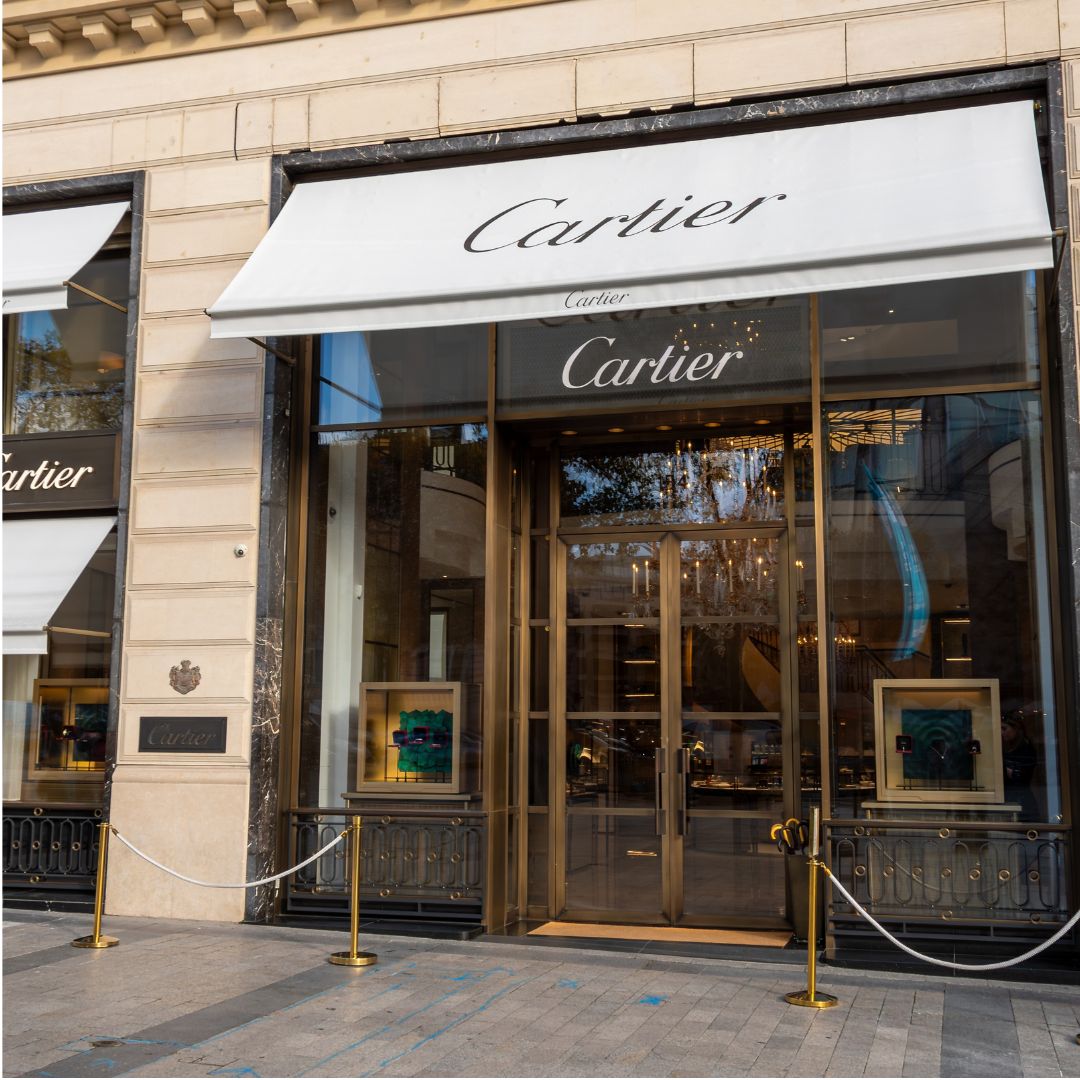
Cartier’s physical boutiques are an integral part of its marketing strategy, serving as both retail spaces and brand ambassadors. The design of Cartier’s boutiques reflects the brand’s heritage, with elegant interiors that evoke a sense of luxury and exclusivity. Each boutique is carefully curated to provide a personalized shopping experience, with private salons for high-net-worth clients and dedicated spaces for viewing high-jewelry collections.
Cartier also employs experiential marketing strategies to deepen its connection with customers. The brand hosts exclusive events, such as high-jewelry exhibitions, private dinners, and product launches, which are designed to offer a unique and memorable experience. These events often take place in luxurious settings, reinforcing Cartier’s image as a purveyor of the finest goods and experiences.
One of Cartier’s most notable experiential marketing initiatives is the traveling exhibition “Cartier in Motion,” which showcases the brand’s history, iconic designs, and contributions to watchmaking. This exhibition has been held in major cities around the world, allowing Cartier to connect with a global audience while celebrating its heritage and craftsmanship.
7. Commitment to Sustainability and Ethical Practices
In recent years, Cartier has increasingly emphasized its commitment to sustainability and ethical practices in its marketing. The brand has adopted measures to ensure that its sourcing of materials, particularly diamonds and gold, adheres to the highest ethical standards. Cartier is a member of the Responsible Jewellery Council, which promotes responsible practices in the jewelry supply chain.
Cartier’s sustainability efforts are highlighted in its marketing campaigns, where the brand showcases its dedication to environmental stewardship and social responsibility. For example, the brand’s partnerships with conservation organizations and its initiatives to reduce its carbon footprint are prominently featured in its communications. This focus on sustainability not only aligns with the values of modern consumers but also enhances Cartier’s reputation as a responsible luxury brand.
Cartier’s marketing strategy is a masterful blend of heritage, exclusivity, and modern appeal. By leveraging its rich history, creating exclusive and desirable products, and embracing digital innovation, Cartier has maintained its position as one of the world’s leading luxury brands. The brand’s commitment to sustainability, its strategic use of celebrity endorsements, and its focus on delivering a personalized and luxurious customer experience further reinforce its status in the competitive luxury market. As Cartier continues to evolve, its marketing strategy will undoubtedly play a crucial role in sustaining its legacy and expanding its global influence.