Close Menu
Marketingino.comMarketingino.com
    What's Hot

    EBITDA Explained: What It Is, Why It Matters, and When to Ignore It

    20. 5. 2026

    Why Most Side Businesses Never Scale (And How to Fix It)

    20. 5. 2026

    Emotional Intelligence Is Not a Soft Skill. It Is the Skill.

    20. 5. 2026
    Facebook X (Twitter) Instagram
    Facebook Instagram LinkedIn YouTube Bluesky
    Marketingino.comMarketingino.com
    • Home
    • Entrepreneurship
      1. Business Models
      2. Side Hustles
      3. Small Business
      4. Venture Capital
      5. Sustainability & Impact
      6. Startups
      7. Legal & Compliance
      Featured
      Business Models

      EBITDA Explained: What It Is, Why It Matters, and When to Ignore It

      20. 5. 2026
      Recent

      EBITDA Explained: What It Is, Why It Matters, and When to Ignore It

      20. 5. 2026

      Why Most Side Businesses Never Scale (And How to Fix It)

      20. 5. 2026

      Scaling Your Side Hustle: When and How to Turn It Into a Full-Time Business

      6. 2. 2026
    • Marketing
      1. Marketing Strategy
      2. AI & Automation
      3. Social Media
      4. Branding
      5. Content Marketing
      6. SEO & GEO
      7. Growth Marketing
      8. Digital Marketing
      9. Data & Analytics
      10. Customer Experience
      11. Vocabulary
      Featured
      AI & Automation

      Agentic AI in E-commerce: How Autonomous Shopping Is Rewriting the Rules of Retail Media

      20. 5. 2026
      Recent

      Agentic AI in E-commerce: How Autonomous Shopping Is Rewriting the Rules of Retail Media

      20. 5. 2026

      GEO: What Is Generative Engine Optimization and Why It Matters in 2026

      28. 4. 2026

      How to Optimize Your Website for AI Search: A Practical Guide to Getting Cited by ChatGPT, Claude, and Perplexity

      28. 4. 2026
    • Leadership
      1. Coaching & Mentoring
      2. Conflict & Crisis Management
      3. Emotional Intelligence
      4. Executive Mindset
      5. Remote & Hybrid Teams
      6. Team Building
      7. Vision & Strategy
      Featured
      Emotional Intelligence

      Emotional Intelligence Is Not a Soft Skill. It Is the Skill.

      20. 5. 2026
      Recent

      Emotional Intelligence Is Not a Soft Skill. It Is the Skill.

      20. 5. 2026

      Decision-Making Under Uncertainty: What Marketing Leaders Get Wrong and How to Fix It

      28. 4. 2026

      Stay Interviews: Proactively Addressing Employee Needs Before They Leave

      19. 2. 2026
    • Ecommerce
      1. Conversion Optimization
      2. Cross-Border Ecommerce
      3. Customer Retention
      4. D2C & Brands
      5. Ecommerce Marketing
      6. Marketplaces
      7. Online Stores
      8. Payments & Logistics
      Featured
      D2C & Brands

      Recommerce: Why Selling Used Is the Fastest-Growing Channel in E-Commerce

      20. 4. 2026
      Recent

      Recommerce: Why Selling Used Is the Fastest-Growing Channel in E-Commerce

      20. 4. 2026

      Agentic Commerce: How AI Is Taking Over the Shopping Cart

      20. 4. 2026

      The D2C Loyalty Playbook: 6 Tactics That Don’t Require a Single Promo Code

      11. 3. 2026
    • Life
      1. Business Stories
      2. Lifestyle
      3. Net Worth
      4. Travel
      Featured
      Lifestyle

      10 Powerful Reasons 2025 Proved Life Is Getting Better

      31. 12. 2025
      Recent

      10 Powerful Reasons 2025 Proved Life Is Getting Better

      31. 12. 2025

      12 Books to Understand Everything: A Foundation for Universal Knowledge

      3. 12. 2025

      Running in Zone 2: The Secret to Enhanced Work Performance and Productivity

      28. 11. 2025
    Marketingino.comMarketingino.com
    Home»Marketing»Branding»Brand Equity: The Value Consumers Attribute to One Brand’s Offerings Compared to Similar Products
    Branding

    Brand Equity: The Value Consumers Attribute to One Brand’s Offerings Compared to Similar Products

    18. 6. 20244 Mins Read
    Facebook Twitter Pinterest LinkedIn Tumblr Email
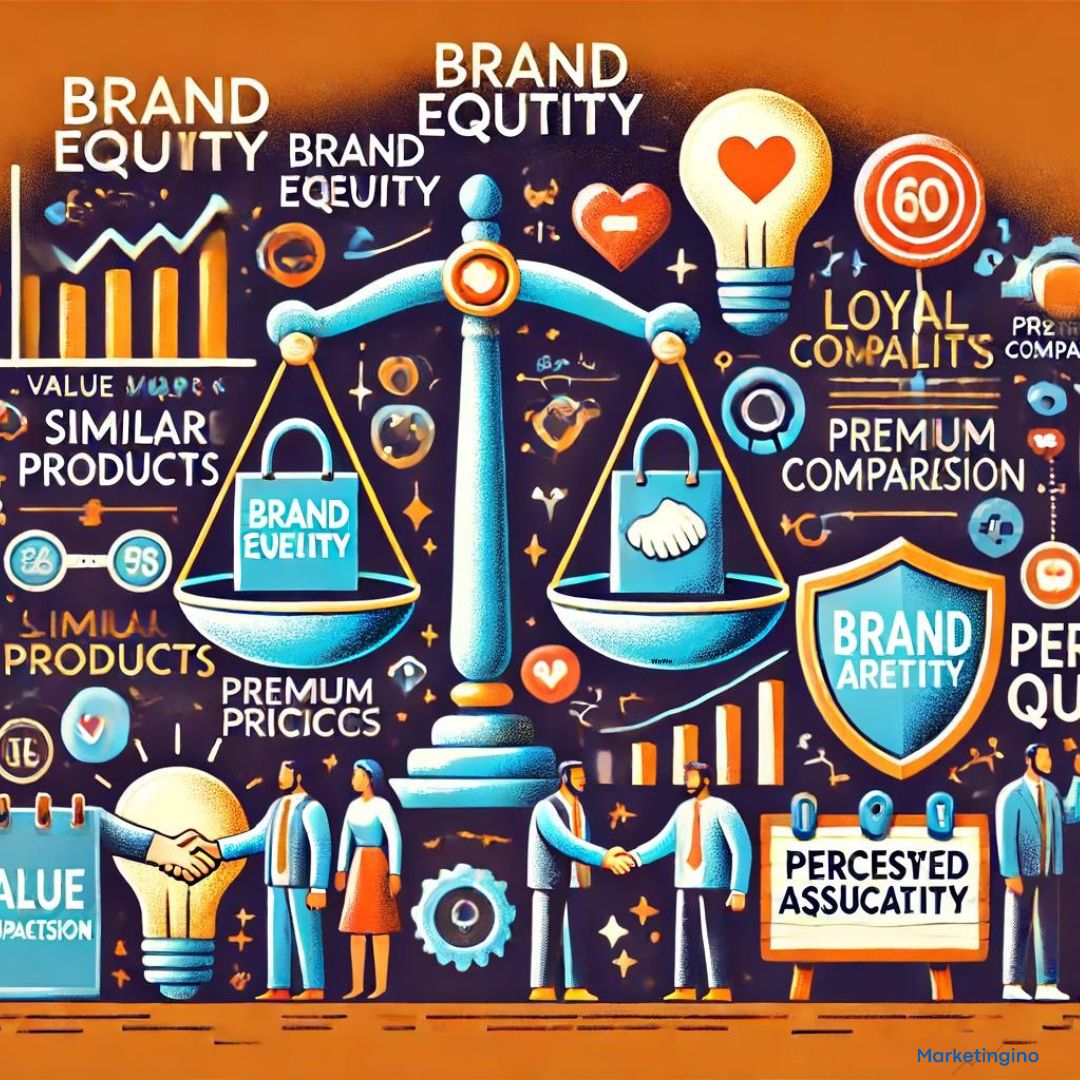
    Source: DALLE
    Share
    Facebook Twitter LinkedIn Pinterest Email

    Brand equity is a critical concept in marketing and business strategy. It represents the value that consumers attribute to a brand’s offerings compared to similar products from other brands. This value is not just about the tangible aspects of a product, but also encompasses the emotional and psychological associations consumers have with the brand. Strong brand equity can lead to customer loyalty, premium pricing, and competitive advantage. This article explores the components of brand equity, its importance, how it is measured, and strategies to build and maintain it.

    Components of Brand Equity

    1. Brand Awareness: The foundation of brand equity is awareness. Consumers must first know a brand exists before they can develop any positive associations with it. High brand awareness ensures that the brand is top-of-mind when consumers are considering purchasing a product.
    2. Brand Associations: These are the attributes, qualities, and emotions that consumers connect with a brand. Positive associations can be driven by effective marketing, quality products, and customer experiences.
    3. Perceived Quality: This refers to the consumer’s perception of the overall quality and reliability of a brand’s products or services. Perceived quality can significantly influence purchasing decisions and brand preference.
    4. Brand Loyalty: Loyal customers are those who consistently choose a specific brand over others. Brand loyalty reduces the likelihood of switching to competitors and encourages repeat purchases.
    5. Proprietary Brand Assets: These include patents, trademarks, and channel relationships that contribute to a brand’s market position and offer competitive protection.

    The Importance of Brand Equity

    1. Customer Loyalty: Strong brand equity fosters customer loyalty, leading to repeat purchases and long-term customer relationships. Loyal customers are less price-sensitive and more likely to recommend the brand to others.
    2. Premium Pricing: Brands with high equity can often command higher prices for their products. Consumers are willing to pay a premium for brands they perceive as offering superior value or quality.
    3. Market Differentiation: Brand equity helps differentiate a brand from its competitors. Unique brand attributes and strong associations can make a brand stand out in a crowded marketplace.
    4. Enhanced Market Share: Positive brand equity can lead to increased market share. As more consumers prefer and choose the brand, its presence in the market grows.
    5. Financial Performance: Brands with high equity often experience better financial performance. This includes higher revenues, profitability, and shareholder value.

    Measuring Brand Equity

    1. Brand Valuation: This involves estimating the financial value of a brand. Various models, such as the Interbrand model, calculate brand value based on factors like financial performance, brand strength, and the role of the brand in purchasing decisions.
    2. Customer-Based Brand Equity (CBBE) Model: Developed by Kevin Lane Keller, this model focuses on consumer perceptions. It assesses brand equity through brand knowledge, comprising brand awareness and brand image.
    3. Net Promoter Score (NPS): NPS measures customer loyalty and satisfaction by asking customers how likely they are to recommend the brand to others. A high NPS indicates strong brand equity.
    4. Brand Equity Index: This index combines multiple indicators, such as market share, price premium, and customer loyalty, to provide a comprehensive measure of brand equity.
    5. Surveys and Focus Groups: Direct feedback from consumers through surveys and focus groups can provide insights into their perceptions, attitudes, and associations with the brand.

    Strategies to Build and Maintain Brand Equity

    1. Consistent Brand Messaging: Ensure that all communications and marketing efforts consistently reflect the brand’s values, mission, and unique selling propositions. Consistency helps reinforce brand identity and trust.
    2. High-Quality Products and Services: Continuously delivering high-quality products or services is crucial for maintaining positive perceptions and brand loyalty.
    3. Customer Engagement: Engage with customers through various channels, such as social media, email, and customer service. Building a strong relationship with customers enhances their emotional connection to the brand.
    4. Innovative Marketing Campaigns: Creative and memorable marketing campaigns can boost brand awareness and create positive associations. Use storytelling and emotional appeal to connect with consumers.
    5. Leveraging Customer Feedback: Actively seek and act on customer feedback to improve products and services. Showing that the brand values customer input can strengthen loyalty and trust.
    6. Corporate Social Responsibility (CSR): Engage in socially responsible activities and communicate these efforts to consumers. CSR initiatives can enhance brand reputation and create positive associations.

    Brand equity is a multifaceted concept that encompasses the value consumers attribute to a brand compared to its competitors. Strong brand equity can lead to customer loyalty, premium pricing, market differentiation, and improved financial performance. By understanding and measuring brand equity, and implementing strategies to build and maintain it, businesses can create lasting value and a competitive edge in the marketplace.

    Share. Facebook Twitter Pinterest LinkedIn Tumblr Email

    Related Posts

    From “What We Sell?” to “Why We Do It?”: The Fundamentals of Brand Storytelling

    30. 1. 2026

    Why Brand Identity is Crucial in 2026: More Than Just a Logo

    18. 12. 2025

    Internal Branding: Why Your Employees are Your Best Brand Ambassadors

    29. 10. 2025

    One Brand, One Voice: A Deep Dive into Cross-Channel Consistency

    5. 10. 2025
    Add A Comment
    Leave A Reply Cancel Reply

    Trending

    EBITDA Explained: What It Is, Why It Matters, and When to Ignore It

    20. 5. 2026

    Why Most Side Businesses Never Scale (And How to Fix It)

    20. 5. 2026

    Emotional Intelligence Is Not a Soft Skill. It Is the Skill.

    20. 5. 2026

    Agentic AI in E-commerce: How Autonomous Shopping Is Rewriting the Rules of Retail Media

    20. 5. 2026

    Decision-Making Under Uncertainty: What Marketing Leaders Get Wrong and How to Fix It

    28. 4. 2026

    GEO: What Is Generative Engine Optimization and Why It Matters in 2026

    28. 4. 2026
    About Us

    Marketingino is a modern business magazine for founders, marketers, e-commerce leaders, and innovators who are building what’s next.

    We cover the tools, tactics, and stories driving today’s most ambitious ventures—from early-stage startups to scaling e-shops, from breakthrough marketing strategies to the frontier of AI and automation.

    Email Us: info@marketingino.com

    Marketingino.com
    Facebook Instagram LinkedIn YouTube Bluesky
    • Home
    • Privacy Policy
    • Cookie Policy (EU)
    • Disclaimer
    © 2026 Marketingino.com, © 2026 Vision Projects, s. r. o.

    Type above and press Enter to search. Press Esc to cancel.

    Manage Consent
    To provide the best experiences, we use technologies like cookies to store and/or access device information. Consenting to these technologies will allow us to process data such as browsing behavior or unique IDs on this site. Not consenting or withdrawing consent, may adversely affect certain features and functions.
    Functional Always active
    The technical storage or access is strictly necessary for the legitimate purpose of enabling the use of a specific service explicitly requested by the subscriber or user, or for the sole purpose of carrying out the transmission of a communication over an electronic communications network.
    Preferences
    The technical storage or access is necessary for the legitimate purpose of storing preferences that are not requested by the subscriber or user.
    Statistics
    The technical storage or access that is used exclusively for statistical purposes. The technical storage or access that is used exclusively for anonymous statistical purposes. Without a subpoena, voluntary compliance on the part of your Internet Service Provider, or additional records from a third party, information stored or retrieved for this purpose alone cannot usually be used to identify you.
    Marketing
    The technical storage or access is required to create user profiles to send advertising, or to track the user on a website or across several websites for similar marketing purposes.
    • Manage options
    • Manage services
    • Manage {vendor_count} vendors
    • Read more about these purposes
    View preferences
    • {title}
    • {title}
    • {title}