Close Menu
Marketingino.comMarketingino.com
    What's Hot

    5 Self-Development Books Worth Reading This Summer (And What You Will Actually Take Away From Each)

    5. 6. 2026

    24 Hours in Vienna: The Honest Guide for People Who Hate Wasting Time

    5. 6. 2026

    How to Build a YouTube Channel as a Business: The Monetization Models That Actually Work

    5. 6. 2026
    Facebook X (Twitter) Instagram
    Facebook Instagram LinkedIn YouTube Bluesky
    Marketingino.comMarketingino.com
    • Home
    • Entrepreneurship
      1. Business Models
      2. Side Hustles
      3. Small Business
      4. Venture Capital
      5. Sustainability & Impact
      6. Startups
      7. Legal & Compliance
      Featured
      Side Hustles

      How to Build a YouTube Channel as a Business: The Monetization Models That Actually Work

      5. 6. 2026
      Recent

      How to Build a YouTube Channel as a Business: The Monetization Models That Actually Work

      5. 6. 2026

      The Unsexy Truth About Bootstrapping: What Nobody Tells You Before You Start

      5. 6. 2026

      EBITDA Explained: What It Is, Why It Matters, and When to Ignore It

      20. 5. 2026
    • Marketing
      1. Marketing Strategy
      2. AI & Automation
      3. Social Media
      4. Branding
      5. Content Marketing
      6. SEO & GEO
      7. Growth Marketing
      8. Digital Marketing
      9. Data & Analytics
      10. Customer Experience
      11. Vocabulary
      Featured
      AI & Automation

      AI and the Future of Marketing Jobs: What’s Actually at Risk, What Isn’t, and What You Should Do About It

      5. 6. 2026
      Recent

      AI and the Future of Marketing Jobs: What’s Actually at Risk, What Isn’t, and What You Should Do About It

      5. 6. 2026

      Agentic AI in E-commerce: How Autonomous Shopping Is Rewriting the Rules of Retail Media

      20. 5. 2026

      GEO: What Is Generative Engine Optimization and Why It Matters in 2026

      28. 4. 2026
    • Leadership
      1. Coaching & Mentoring
      2. Conflict & Crisis Management
      3. Emotional Intelligence
      4. Executive Mindset
      5. Remote & Hybrid Teams
      6. Team Building
      7. Vision & Strategy
      Featured
      Emotional Intelligence

      Slow Thinking in a Fast World: Why the Best Leaders Deliberately Pump the Brakes

      5. 6. 2026
      Recent

      Slow Thinking in a Fast World: Why the Best Leaders Deliberately Pump the Brakes

      5. 6. 2026

      Leading Through Uncertainty: What History’s Toughest Commanders Knew That Most Managers Don’t

      5. 6. 2026

      Marcus Aurelius and Modern Leadership: What the Philosopher Emperor Can Teach Us Today

      25. 5. 2026
    • Ecommerce
      1. Conversion Optimization
      2. Cross-Border Ecommerce
      3. Customer Retention
      4. D2C & Brands
      5. Ecommerce Marketing
      6. Marketplaces
      7. Online Stores
      8. Payments & Logistics
      Featured
      D2C & Brands

      Recommerce: Why Selling Used Is the Fastest-Growing Channel in E-Commerce

      20. 4. 2026
      Recent

      Recommerce: Why Selling Used Is the Fastest-Growing Channel in E-Commerce

      20. 4. 2026

      Agentic Commerce: How AI Is Taking Over the Shopping Cart

      20. 4. 2026

      The D2C Loyalty Playbook: 6 Tactics That Don’t Require a Single Promo Code

      11. 3. 2026
    • Life
      1. Business Stories
      2. Lifestyle
      3. Net Worth
      4. Travel
      Featured
      Lifestyle

      5 Self-Development Books Worth Reading This Summer (And What You Will Actually Take Away From Each)

      5. 6. 2026
      Recent

      5 Self-Development Books Worth Reading This Summer (And What You Will Actually Take Away From Each)

      5. 6. 2026

      24 Hours in Vienna: The Honest Guide for People Who Hate Wasting Time

      5. 6. 2026

      10 Powerful Reasons 2025 Proved Life Is Getting Better

      31. 12. 2025
    Marketingino.comMarketingino.com
    Home»Marketing»Digital Marketing»E-commerce Point-of-Sale (POS) Systems: A Comprehensive Guide
    Digital Marketing

    E-commerce Point-of-Sale (POS) Systems: A Comprehensive Guide

    7. 8. 20245 Mins Read
    Facebook Twitter Pinterest LinkedIn Tumblr Email
    OpenAI
    Share
    Facebook Twitter LinkedIn Pinterest Email

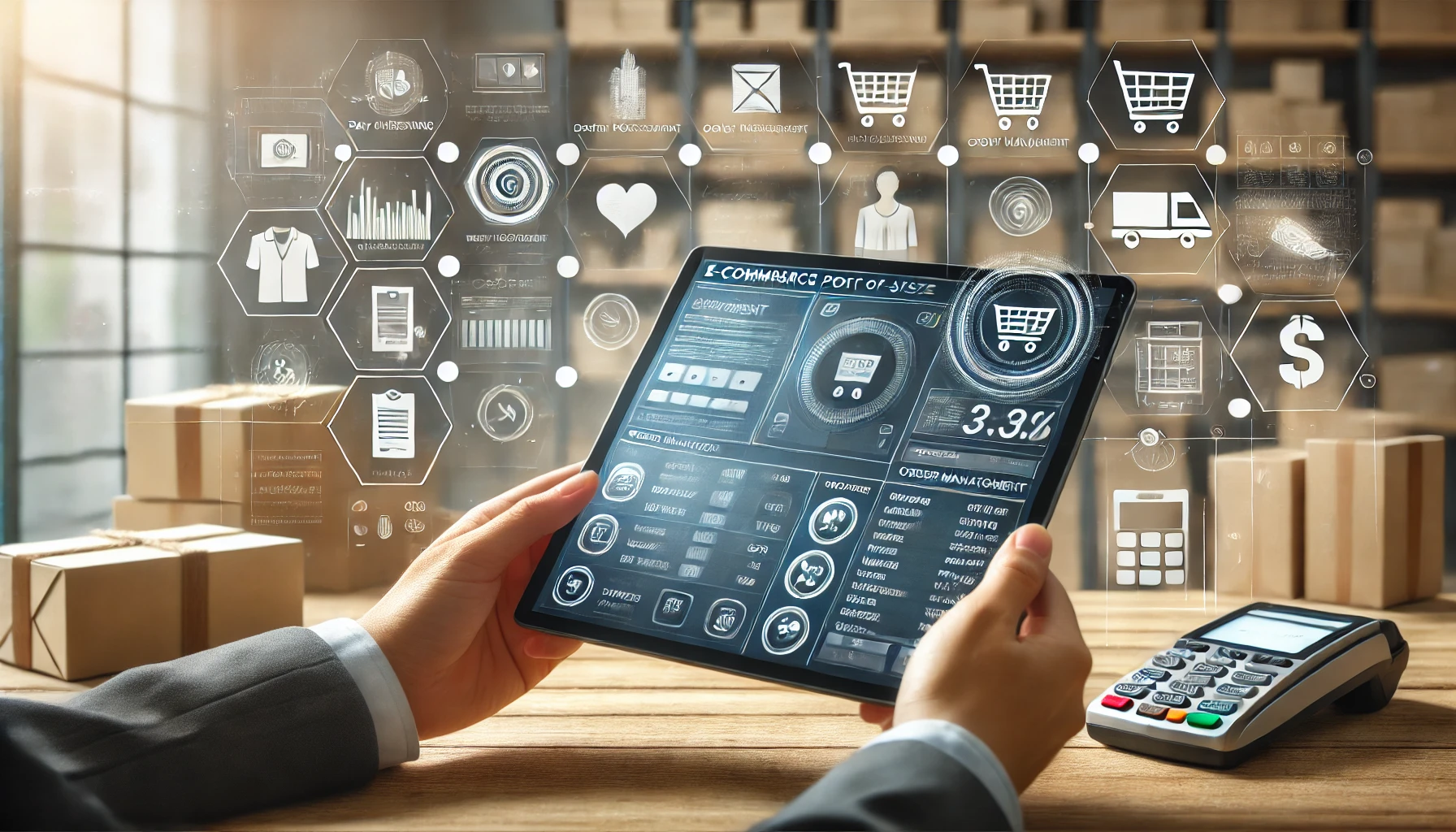
    An e-commerce point-of-sale (POS) system is a software solution that enables businesses to process payment transactions from customers online. Unlike traditional POS systems used in physical stores, e-commerce POS systems are designed to handle digital transactions, integrate with online storefronts, and manage the complete sales process from product selection to payment confirmation.

    Key Features of E-commerce POS Systems

    An effective e-commerce POS system typically includes the following features:

    1. Payment Processing: Securely processes various forms of payment, including credit/debit cards, digital wallets (such as Apple Pay and Google Pay), and bank transfers. This feature ensures that transactions are encrypted and compliant with industry standards.
    2. Shopping Cart Integration: Seamlessly integrates with the shopping cart on an e-commerce website, allowing customers to add products, review their selections, and proceed to checkout.
    3. Order Management: Manages the entire order lifecycle, from receipt to fulfillment. It tracks order status, updates inventory levels, and handles shipping and delivery logistics.
    4. Customer Management: Stores customer data, purchase history, and preferences. This information can be used to personalize the shopping experience and support marketing efforts.
    5. Inventory Management: Monitors stock levels in real-time, automatically updates inventory after each sale, and provides alerts for low-stock items. This feature helps businesses manage their supply chain more effectively.
    6. Reporting and Analytics: Provides insights into sales performance, customer behavior, and inventory turnover. Detailed reports help businesses make data-driven decisions and optimize their operations.
    7. Integration Capabilities: Connects with other business systems such as accounting software, CRM platforms, and marketing tools to streamline operations and ensure data consistency.
    8. Multi-channel Support: Allows businesses to manage sales across multiple channels, including their website, mobile app, social media platforms, and marketplaces like Amazon and eBay.

    Popular E-commerce POS Systems

    1. Shopify POS: Integrated with Shopify’s e-commerce platform, this POS system allows businesses to unify their online and in-store sales. It offers features like mobile checkout, customer profiles, and inventory management, making it ideal for omnichannel retail.
    2. Square for E-commerce: Square provides a robust POS system with seamless e-commerce integration. It supports various payment methods, offers powerful analytics, and integrates with popular e-commerce platforms like WooCommerce and BigCommerce.
    3. Lightspeed eCom: Designed for retail and hospitality businesses, Lightspeed eCom combines a comprehensive POS system with powerful e-commerce capabilities. It includes inventory management, multi-channel selling, and advanced reporting tools.
    4. Clover: Clover’s POS system integrates with its online store capabilities, providing a unified solution for payment processing, inventory management, and customer engagement. It’s suitable for businesses of all sizes, offering flexibility and ease of use.
    5. Vend: Vend’s POS system integrates with e-commerce platforms like Shopify and WooCommerce, allowing businesses to manage their sales from a single interface. It offers features like real-time inventory updates, customer loyalty programs, and detailed analytics.

    Advantages of E-commerce POS Systems

    1. Streamlined Operations: E-commerce POS systems centralize sales and inventory data, reducing manual work and minimizing errors. This integration improves operational efficiency and accuracy.
    2. Enhanced Customer Experience: By storing customer data and purchase history, e-commerce POS systems enable personalized shopping experiences. Features like saved payment information and order tracking enhance convenience for customers.
    3. Real-time Insights: Access to real-time data on sales, inventory, and customer behavior helps businesses make informed decisions. Detailed analytics support strategic planning and operational adjustments.
    4. Scalability: E-commerce POS systems can grow with a business, handling increased transaction volumes and expanding to new sales channels without compromising performance.
    5. Security and Compliance: These systems ensure secure transactions through encryption and compliance with industry standards such as PCI DSS (Payment Card Industry Data Security Standard).

    Challenges and Considerations

    1. Integration Complexity: Integrating an e-commerce POS system with existing business systems can be complex and may require technical expertise. Ensuring seamless data flow between systems is critical for efficient operations.
    2. Cost: While e-commerce POS systems can be cost-effective in the long run, the initial setup and subscription fees may be significant, especially for small businesses.
    3. Data Security: Protecting customer data and payment information is paramount. Businesses must ensure their POS system provider implements robust security measures and complies with relevant regulations.
    4. User Training: Employees may need training to effectively use the e-commerce POS system. Ensuring that staff are proficient with the system’s features is essential for maximizing its benefits.

    The Future of E-commerce POS Systems

    The future of e-commerce POS systems is influenced by advancements in technology and evolving consumer expectations:

    1. Artificial Intelligence (AI): AI is enhancing POS systems through features like predictive analytics, personalized recommendations, and automated customer service. AI-driven insights help businesses optimize their operations and improve customer engagement.
    2. Mobile POS: The shift towards mobile POS systems is enabling businesses to process transactions anywhere, enhancing flexibility and customer convenience. Mobile POS systems are particularly beneficial for pop-up shops, markets, and on-the-go sales.
    3. Contactless Payments: The rise of contactless payment methods, accelerated by the COVID-19 pandemic, is driving the adoption of POS systems that support NFC (Near Field Communication) and QR code payments.
    4. Blockchain Technology: Blockchain is being explored for secure and transparent payment processing. It offers potential benefits in reducing fraud, enhancing traceability, and streamlining cross-border transactions.
    5. Omnichannel Integration: E-commerce POS systems are increasingly focusing on providing seamless omnichannel experiences. Integrating online and offline sales channels ensures consistent customer experiences and unified inventory management.

    In conclusion, e-commerce POS systems are vital tools for businesses looking to streamline their payment processing and enhance their online sales operations. As technology continues to evolve, these systems will offer even more advanced features and capabilities, helping businesses stay competitive in the digital marketplace.

    Share. Facebook Twitter Pinterest LinkedIn Tumblr Email

    Related Posts

    AI and PPC: Why Artificial Intelligence Is Rewriting the Rules of Paid Media

    28. 4. 2026

    Google Ads in 2026: Key Trends That Will Change the Way You Advertise

    24. 2. 2026

    What It Takes to Be Successful with Andromeda on Meta: The Complete Guide

    21. 1. 2026

    Product Listing Ads (PLAs) for E-commerce: Your Secret Weapon on Google Shopping

    21. 1. 2026
    Add A Comment
    Leave A Reply Cancel Reply

    Trending

    5 Self-Development Books Worth Reading This Summer (And What You Will Actually Take Away From Each)

    5. 6. 2026

    24 Hours in Vienna: The Honest Guide for People Who Hate Wasting Time

    5. 6. 2026

    How to Build a YouTube Channel as a Business: The Monetization Models That Actually Work

    5. 6. 2026

    The Unsexy Truth About Bootstrapping: What Nobody Tells You Before You Start

    5. 6. 2026

    AI and the Future of Marketing Jobs: What’s Actually at Risk, What Isn’t, and What You Should Do About It

    5. 6. 2026

    Slow Thinking in a Fast World: Why the Best Leaders Deliberately Pump the Brakes

    5. 6. 2026
    About Us

    Marketingino is a modern business magazine for founders, marketers, e-commerce leaders, and innovators who are building what’s next.

    We cover the tools, tactics, and stories driving today’s most ambitious ventures—from early-stage startups to scaling e-shops, from breakthrough marketing strategies to the frontier of AI and automation.

    Email Us: info@marketingino.com

    Marketingino.com
    Facebook Instagram LinkedIn YouTube Bluesky
    • Home
    • Privacy Policy
    • Cookie Policy (EU)
    • Disclaimer
    © 2026 Marketingino.com, © 2026 Vision Projects, s. r. o.

    Type above and press Enter to search. Press Esc to cancel.

    Manage Consent
    To provide the best experiences, we use technologies like cookies to store and/or access device information. Consenting to these technologies will allow us to process data such as browsing behavior or unique IDs on this site. Not consenting or withdrawing consent, may adversely affect certain features and functions.
    Functional Always active
    The technical storage or access is strictly necessary for the legitimate purpose of enabling the use of a specific service explicitly requested by the subscriber or user, or for the sole purpose of carrying out the transmission of a communication over an electronic communications network.
    Preferences
    The technical storage or access is necessary for the legitimate purpose of storing preferences that are not requested by the subscriber or user.
    Statistics
    The technical storage or access that is used exclusively for statistical purposes. The technical storage or access that is used exclusively for anonymous statistical purposes. Without a subpoena, voluntary compliance on the part of your Internet Service Provider, or additional records from a third party, information stored or retrieved for this purpose alone cannot usually be used to identify you.
    Marketing
    The technical storage or access is required to create user profiles to send advertising, or to track the user on a website or across several websites for similar marketing purposes.
    • Manage options
    • Manage services
    • Manage {vendor_count} vendors
    • Read more about these purposes
    View preferences
    • {title}
    • {title}
    • {title}