Close Menu
Marketingino.comMarketingino.com
    What's Hot

    5 Self-Development Books Worth Reading This Summer (And What You Will Actually Take Away From Each)

    5. 6. 2026

    24 Hours in Vienna: The Honest Guide for People Who Hate Wasting Time

    5. 6. 2026

    How to Build a YouTube Channel as a Business: The Monetization Models That Actually Work

    5. 6. 2026
    Facebook X (Twitter) Instagram
    Facebook Instagram LinkedIn YouTube Bluesky
    Marketingino.comMarketingino.com
    • Home
    • Entrepreneurship
      1. Business Models
      2. Side Hustles
      3. Small Business
      4. Venture Capital
      5. Sustainability & Impact
      6. Startups
      7. Legal & Compliance
      Featured
      Side Hustles

      How to Build a YouTube Channel as a Business: The Monetization Models That Actually Work

      5. 6. 2026
      Recent

      How to Build a YouTube Channel as a Business: The Monetization Models That Actually Work

      5. 6. 2026

      The Unsexy Truth About Bootstrapping: What Nobody Tells You Before You Start

      5. 6. 2026

      EBITDA Explained: What It Is, Why It Matters, and When to Ignore It

      20. 5. 2026
    • Marketing
      1. Marketing Strategy
      2. AI & Automation
      3. Social Media
      4. Branding
      5. Content Marketing
      6. SEO & GEO
      7. Growth Marketing
      8. Digital Marketing
      9. Data & Analytics
      10. Customer Experience
      11. Vocabulary
      Featured
      AI & Automation

      AI and the Future of Marketing Jobs: What’s Actually at Risk, What Isn’t, and What You Should Do About It

      5. 6. 2026
      Recent

      AI and the Future of Marketing Jobs: What’s Actually at Risk, What Isn’t, and What You Should Do About It

      5. 6. 2026

      Agentic AI in E-commerce: How Autonomous Shopping Is Rewriting the Rules of Retail Media

      20. 5. 2026

      GEO: What Is Generative Engine Optimization and Why It Matters in 2026

      28. 4. 2026
    • Leadership
      1. Coaching & Mentoring
      2. Conflict & Crisis Management
      3. Emotional Intelligence
      4. Executive Mindset
      5. Remote & Hybrid Teams
      6. Team Building
      7. Vision & Strategy
      Featured
      Emotional Intelligence

      Slow Thinking in a Fast World: Why the Best Leaders Deliberately Pump the Brakes

      5. 6. 2026
      Recent

      Slow Thinking in a Fast World: Why the Best Leaders Deliberately Pump the Brakes

      5. 6. 2026

      Leading Through Uncertainty: What History’s Toughest Commanders Knew That Most Managers Don’t

      5. 6. 2026

      Marcus Aurelius and Modern Leadership: What the Philosopher Emperor Can Teach Us Today

      25. 5. 2026
    • Ecommerce
      1. Conversion Optimization
      2. Cross-Border Ecommerce
      3. Customer Retention
      4. D2C & Brands
      5. Ecommerce Marketing
      6. Marketplaces
      7. Online Stores
      8. Payments & Logistics
      Featured
      D2C & Brands

      Recommerce: Why Selling Used Is the Fastest-Growing Channel in E-Commerce

      20. 4. 2026
      Recent

      Recommerce: Why Selling Used Is the Fastest-Growing Channel in E-Commerce

      20. 4. 2026

      Agentic Commerce: How AI Is Taking Over the Shopping Cart

      20. 4. 2026

      The D2C Loyalty Playbook: 6 Tactics That Don’t Require a Single Promo Code

      11. 3. 2026
    • Life
      1. Business Stories
      2. Lifestyle
      3. Net Worth
      4. Travel
      Featured
      Lifestyle

      5 Self-Development Books Worth Reading This Summer (And What You Will Actually Take Away From Each)

      5. 6. 2026
      Recent

      5 Self-Development Books Worth Reading This Summer (And What You Will Actually Take Away From Each)

      5. 6. 2026

      24 Hours in Vienna: The Honest Guide for People Who Hate Wasting Time

      5. 6. 2026

      10 Powerful Reasons 2025 Proved Life Is Getting Better

      31. 12. 2025
    Marketingino.comMarketingino.com
    Home»Marketing»Digital Marketing»E-commerce Strategy: A Comprehensive Plan to Promote an Online Store and Increase Sales
    Digital Marketing

    E-commerce Strategy: A Comprehensive Plan to Promote an Online Store and Increase Sales

    7. 8. 20246 Mins Read
    Facebook Twitter Pinterest LinkedIn Tumblr Email
    OpenAI
    Share
    Facebook Twitter LinkedIn Pinterest Email

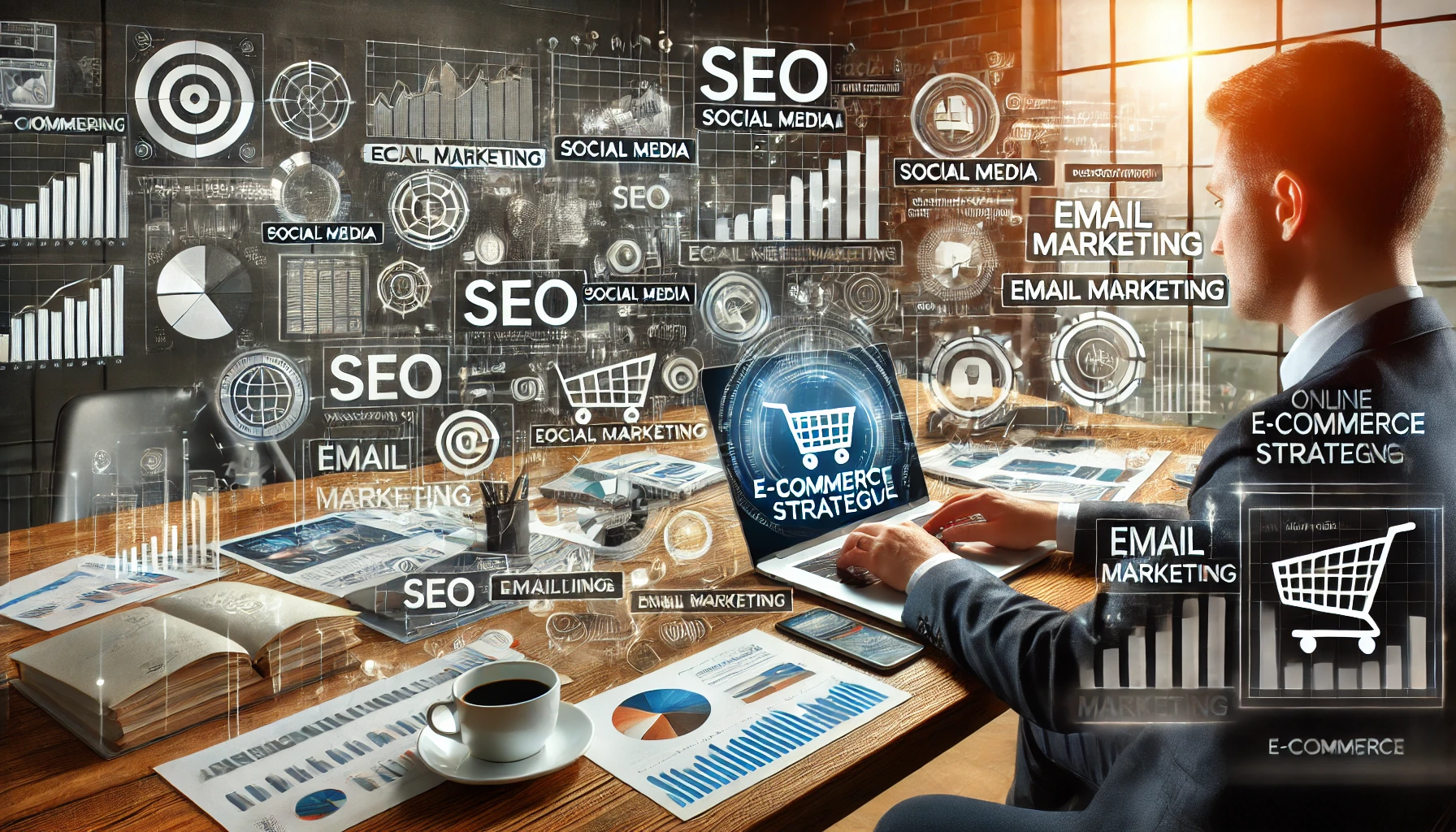
    An e-commerce strategy is a comprehensive plan designed to promote an online store, attract potential customers, and increase sales. It involves a combination of marketing tactics, technology, customer service, and business processes tailored to create a competitive edge in the digital marketplace. Implementing a well-crafted e-commerce strategy can significantly enhance a business’s online presence, drive traffic, and convert visitors into loyal customers.

    Key Components of an E-commerce Strategy

    1. Market Research and Analysis
      • Target Audience: Identify and understand your target audience’s demographics, preferences, and buying behavior. This information helps in tailoring marketing messages and product offerings to meet their needs.
      • Competitive Analysis: Analyze competitors’ strengths and weaknesses. Understand their strategies, product offerings, pricing, and customer reviews to identify opportunities and threats in the market.
    2. Branding and Positioning
      • Brand Identity: Develop a strong brand identity that resonates with your target audience. This includes creating a memorable logo, consistent color schemes, and a unique brand voice.
      • Value Proposition: Clearly articulate the unique value your products or services offer. Highlight what sets your brand apart from competitors and why customers should choose you.
    3. Website Optimization
      • User Experience (UX): Design a user-friendly website that is easy to navigate. Ensure fast loading times, mobile responsiveness, and intuitive design to enhance the user experience.
      • Search Engine Optimization (SEO): Optimize your website for search engines to improve organic visibility. Use relevant keywords, meta tags, and high-quality content to rank higher in search results.
    4. Content Marketing
      • Blogging: Create informative and engaging blog posts that address your audience’s pain points and interests. Blogging helps in driving organic traffic and establishing your brand as an authority in the industry.
      • Social Media: Leverage social media platforms to share content, engage with followers, and promote products. Consistent posting and interaction can build a loyal community around your brand.
      • Email Marketing: Develop email campaigns to nurture leads and retain customers. Personalized emails, newsletters, and promotional offers can drive repeat sales and customer loyalty.
    5. Paid Advertising
      • Pay-Per-Click (PPC) Advertising: Use platforms like Google Ads and Bing Ads to run targeted ad campaigns. PPC helps in driving immediate traffic and reaching potential customers actively searching for your products.
      • Social Media Ads: Utilize social media advertising on platforms like Facebook, Instagram, and LinkedIn to target specific demographics and interests. These ads can boost brand awareness and generate leads.
    6. Conversion Rate Optimization (CRO)
      • A/B Testing: Continuously test different elements of your website, such as headlines, images, and call-to-action buttons, to determine what drives the highest conversions.
      • Simplified Checkout Process: Streamline the checkout process by minimizing steps, offering multiple payment options, and providing clear instructions. A smooth checkout experience reduces cart abandonment rates.
    7. Customer Service and Support
      • Live Chat and Chatbots: Implement live chat and chatbot features to provide instant assistance to customers. This can improve customer satisfaction and address queries in real-time.
      • After-Sales Support: Offer excellent after-sales support, including easy returns, refunds, and responsive customer service. Happy customers are more likely to become repeat buyers and brand advocates.
    8. Analytics and Reporting
      • Web Analytics: Use tools like Google Analytics to track website performance, user behavior, and conversion rates. Analyze this data to identify areas for improvement and make data-driven decisions.
      • Sales and Marketing Metrics: Monitor key performance indicators (KPIs) such as sales revenue, customer acquisition cost (CAC), customer lifetime value (CLV), and return on investment (ROI) to measure the effectiveness of your strategy.

    Steps to Develop an E-commerce Strategy

    1. Define Your Goals
      • Set clear, measurable, and achievable goals for your e-commerce business. These could include increasing website traffic, boosting sales, expanding the customer base, or enhancing brand awareness.
    2. Identify Your Target Market
      • Conduct market research to understand your target audience’s needs, preferences, and buying behavior. Create detailed buyer personas to guide your marketing efforts.
    3. Choose the Right E-commerce Platform
      • Select an e-commerce platform that aligns with your business needs and goals. Consider factors such as ease of use, scalability, customization options, and integration capabilities.
    4. Develop a Marketing Plan
      • Create a comprehensive marketing plan that outlines your strategies for SEO, content marketing, social media, email campaigns, and paid advertising. Allocate a budget for each channel and set timelines for implementation.
    5. Optimize Your Website
      • Ensure your website is user-friendly, mobile-responsive, and optimized for search engines. Focus on providing a seamless shopping experience, from product discovery to checkout.
    6. Implement and Monitor Your Strategy
      • Launch your e-commerce strategy and continuously monitor its performance. Use analytics tools to track progress, measure results, and make necessary adjustments to improve outcomes.

    Challenges and Considerations

    1. Competition: The e-commerce landscape is highly competitive. Staying ahead requires continuous innovation, differentiation, and adaptation to market trends.
    2. Technology: Keeping up with technological advancements and integrating new tools can be challenging. Businesses need to invest in the right technology to enhance their e-commerce operations.
    3. Customer Expectations: Meeting and exceeding customer expectations is crucial. Providing a seamless and personalized shopping experience is key to retaining customers and building loyalty.
    4. Security: Ensuring the security of customer data and payment information is paramount. Businesses must implement robust security measures to protect against cyber threats and comply with regulations.

    The Future of E-commerce Strategy

    The future of e-commerce strategy is shaped by emerging technologies and changing consumer behaviors:

    1. Artificial Intelligence (AI) and Machine Learning: AI and machine learning are transforming e-commerce by enabling personalized shopping experiences, predictive analytics, and automated customer service.
    2. Voice Commerce: The rise of voice-activated devices is driving the adoption of voice commerce. Businesses need to optimize their websites and product listings for voice search to stay competitive.
    3. Augmented Reality (AR): AR technology is enhancing the online shopping experience by allowing customers to visualize products in their real-world environment. This can reduce returns and increase customer satisfaction.
    4. Sustainability: Consumers are increasingly prioritizing sustainability. Businesses need to adopt eco-friendly practices, such as sustainable packaging and ethical sourcing, to meet consumer demands.
    5. Social Commerce: The integration of e-commerce with social media platforms is creating new opportunities for businesses. Leveraging social commerce can enhance brand visibility and drive sales.

    In conclusion, an effective e-commerce strategy is essential for businesses looking to thrive in the digital marketplace. By combining market research, branding, website optimization, content marketing, paid advertising, and excellent customer service, businesses can create a compelling online presence, attract potential customers, and increase sales.

    Share. Facebook Twitter Pinterest LinkedIn Tumblr Email

    Related Posts

    AI and PPC: Why Artificial Intelligence Is Rewriting the Rules of Paid Media

    28. 4. 2026

    Google Ads in 2026: Key Trends That Will Change the Way You Advertise

    24. 2. 2026

    What It Takes to Be Successful with Andromeda on Meta: The Complete Guide

    21. 1. 2026

    Product Listing Ads (PLAs) for E-commerce: Your Secret Weapon on Google Shopping

    21. 1. 2026
    Add A Comment
    Leave A Reply Cancel Reply

    Trending

    5 Self-Development Books Worth Reading This Summer (And What You Will Actually Take Away From Each)

    5. 6. 2026

    24 Hours in Vienna: The Honest Guide for People Who Hate Wasting Time

    5. 6. 2026

    How to Build a YouTube Channel as a Business: The Monetization Models That Actually Work

    5. 6. 2026

    The Unsexy Truth About Bootstrapping: What Nobody Tells You Before You Start

    5. 6. 2026

    AI and the Future of Marketing Jobs: What’s Actually at Risk, What Isn’t, and What You Should Do About It

    5. 6. 2026

    Slow Thinking in a Fast World: Why the Best Leaders Deliberately Pump the Brakes

    5. 6. 2026
    About Us

    Marketingino is a modern business magazine for founders, marketers, e-commerce leaders, and innovators who are building what’s next.

    We cover the tools, tactics, and stories driving today’s most ambitious ventures—from early-stage startups to scaling e-shops, from breakthrough marketing strategies to the frontier of AI and automation.

    Email Us: info@marketingino.com

    Marketingino.com
    Facebook Instagram LinkedIn YouTube Bluesky
    • Home
    • Privacy Policy
    • Cookie Policy (EU)
    • Disclaimer
    © 2026 Marketingino.com, © 2026 Vision Projects, s. r. o.

    Type above and press Enter to search. Press Esc to cancel.

    Manage Consent
    To provide the best experiences, we use technologies like cookies to store and/or access device information. Consenting to these technologies will allow us to process data such as browsing behavior or unique IDs on this site. Not consenting or withdrawing consent, may adversely affect certain features and functions.
    Functional Always active
    The technical storage or access is strictly necessary for the legitimate purpose of enabling the use of a specific service explicitly requested by the subscriber or user, or for the sole purpose of carrying out the transmission of a communication over an electronic communications network.
    Preferences
    The technical storage or access is necessary for the legitimate purpose of storing preferences that are not requested by the subscriber or user.
    Statistics
    The technical storage or access that is used exclusively for statistical purposes. The technical storage or access that is used exclusively for anonymous statistical purposes. Without a subpoena, voluntary compliance on the part of your Internet Service Provider, or additional records from a third party, information stored or retrieved for this purpose alone cannot usually be used to identify you.
    Marketing
    The technical storage or access is required to create user profiles to send advertising, or to track the user on a website or across several websites for similar marketing purposes.
    • Manage options
    • Manage services
    • Manage {vendor_count} vendors
    • Read more about these purposes
    View preferences
    • {title}
    • {title}
    • {title}