Close Menu
Marketingino.comMarketingino.com
    What's Hot

    Decision-Making Under Uncertainty: What Marketing Leaders Get Wrong and How to Fix It

    28. 4. 2026

    GEO: What Is Generative Engine Optimization and Why It Matters in 2026

    28. 4. 2026

    How to Optimize Your Website for AI Search: A Practical Guide to Getting Cited by ChatGPT, Claude, and Perplexity

    28. 4. 2026
    Facebook X (Twitter) Instagram
    Facebook Instagram LinkedIn YouTube Bluesky
    Marketingino.comMarketingino.com
    • Home
    • Entrepreneurship
      1. Business Models
      2. Side Hustles
      3. Small Business
      4. Venture Capital
      5. Sustainability & Impact
      6. Startups
      7. Legal & Compliance
      Featured
      Side Hustles

      Scaling Your Side Hustle: When and How to Turn It Into a Full-Time Business

      6. 2. 2026
      Recent

      Scaling Your Side Hustle: When and How to Turn It Into a Full-Time Business

      6. 2. 2026

      From Freelance to Founder: Turning Services into a Scalable Product

      18. 12. 2025

      Don’t Skip the Fine Print: The Most Important Clauses in Business Contracts

      15. 12. 2025
    • Marketing
      1. Marketing Strategy
      2. AI & Automation
      3. Social Media
      4. Branding
      5. Content Marketing
      6. SEO & GEO
      7. Growth Marketing
      8. Digital Marketing
      9. Data & Analytics
      10. Customer Experience
      11. Vocabulary
      Featured
      SEO & GEO

      GEO: What Is Generative Engine Optimization and Why It Matters in 2026

      28. 4. 2026
      Recent

      GEO: What Is Generative Engine Optimization and Why It Matters in 2026

      28. 4. 2026

      How to Optimize Your Website for AI Search: A Practical Guide to Getting Cited by ChatGPT, Claude, and Perplexity

      28. 4. 2026

      AI and PPC: Why Artificial Intelligence Is Rewriting the Rules of Paid Media

      28. 4. 2026
    • Leadership
      1. Coaching & Mentoring
      2. Conflict & Crisis Management
      3. Emotional Intelligence
      4. Executive Mindset
      5. Remote & Hybrid Teams
      6. Team Building
      7. Vision & Strategy
      Featured
      Conflict & Crisis Management

      Decision-Making Under Uncertainty: What Marketing Leaders Get Wrong and How to Fix It

      28. 4. 2026
      Recent

      Decision-Making Under Uncertainty: What Marketing Leaders Get Wrong and How to Fix It

      28. 4. 2026

      Stay Interviews: Proactively Addressing Employee Needs Before They Leave

      19. 2. 2026

      Internship Programs: A Pipeline for Future Talent at Your E-commerce Business

      19. 2. 2026
    • Ecommerce
      1. Conversion Optimization
      2. Cross-Border Ecommerce
      3. Customer Retention
      4. D2C & Brands
      5. Ecommerce Marketing
      6. Marketplaces
      7. Online Stores
      8. Payments & Logistics
      Featured
      D2C & Brands

      Recommerce: Why Selling Used Is the Fastest-Growing Channel in E-Commerce

      20. 4. 2026
      Recent

      Recommerce: Why Selling Used Is the Fastest-Growing Channel in E-Commerce

      20. 4. 2026

      Agentic Commerce: How AI Is Taking Over the Shopping Cart

      20. 4. 2026

      The D2C Loyalty Playbook: 6 Tactics That Don’t Require a Single Promo Code

      11. 3. 2026
    • Life
      1. Business Stories
      2. Lifestyle
      3. Net Worth
      4. Travel
      Featured
      Lifestyle

      10 Powerful Reasons 2025 Proved Life Is Getting Better

      31. 12. 2025
      Recent

      10 Powerful Reasons 2025 Proved Life Is Getting Better

      31. 12. 2025

      12 Books to Understand Everything: A Foundation for Universal Knowledge

      3. 12. 2025

      Running in Zone 2: The Secret to Enhanced Work Performance and Productivity

      28. 11. 2025
    Marketingino.comMarketingino.com
    Home»Marketing»Digital Marketing»E-commerce: The Buying and Selling of Goods or Services Using the Internet
    Digital Marketing

    E-commerce: The Buying and Selling of Goods or Services Using the Internet

    7. 8. 20246 Mins Read
    Facebook Twitter Pinterest LinkedIn Tumblr Email
    OpenAI
    Share
    Facebook Twitter LinkedIn Pinterest Email

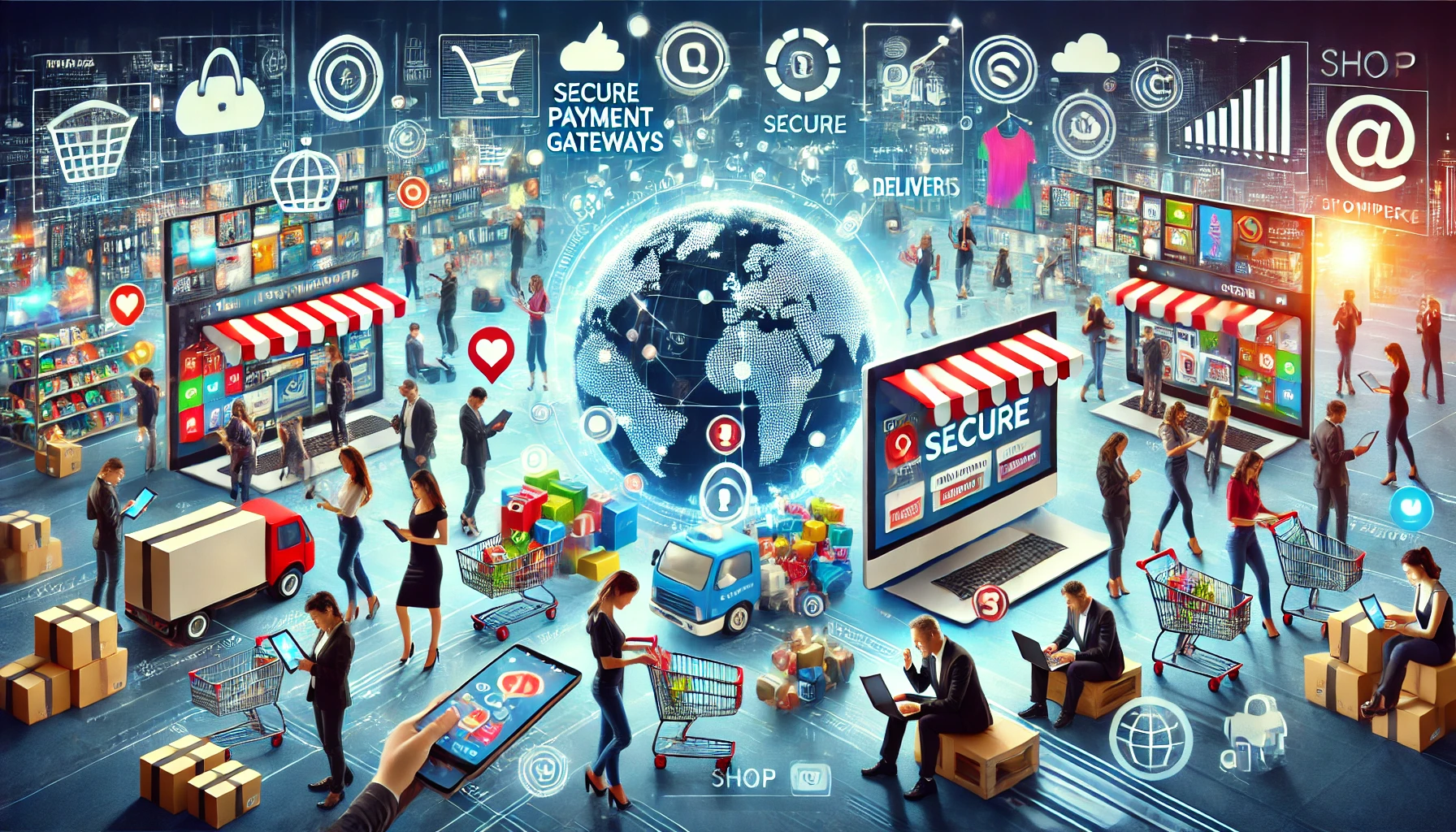
    E-commerce, short for electronic commerce, refers to the buying and selling of goods or services using the internet, and the transfer of money and data to execute these transactions. It encompasses a wide range of business types, from consumer-based retail sites to auction or music sites, to business exchanges trading goods and services between corporations. Over the past few decades, e-commerce has transformed the retail landscape, revolutionizing the way businesses and consumers interact.

    History and Evolution

    The origins of e-commerce can be traced back to the early 1960s with the advent of electronic data interchange (EDI). This technology allowed companies to transfer documents and business data electronically, laying the groundwork for future e-commerce systems. The 1970s saw the development of electronic funds transfer (EFT), further enabling electronic transactions between businesses.

    However, the true genesis of e-commerce as we know it today began in the 1990s with the commercialization of the internet. In 1991, the internet was opened to commercial use, and the first online transactions soon followed. Amazon, founded by Jeff Bezos in 1994, and eBay, launched by Pierre Omidyar in 1995, were among the pioneering platforms that demonstrated the potential of online marketplaces.

    Types of E-commerce

    E-commerce can be broadly categorized into several types based on the nature of the transactions and the parties involved:

    1. Business-to-Consumer (B2C): This is the most common form of e-commerce, where businesses sell products or services directly to consumers. Examples include online retailers like Amazon, Walmart, and Alibaba.
    2. Business-to-Business (B2B): In this model, transactions occur between businesses. Companies sell products or services to other businesses, such as manufacturers selling to wholesalers or wholesalers selling to retailers. Platforms like Alibaba and ThomasNet are prominent examples.
    3. Consumer-to-Consumer (C2C): This model involves consumers selling directly to other consumers. Online auction sites like eBay and peer-to-peer (P2P) marketplaces like Craigslist and Etsy are typical examples.
    4. Consumer-to-Business (C2B): In this relatively new model, individuals sell products or offer services to businesses. Examples include freelance platforms like Upwork, where professionals offer their services to companies, and stock photography sites where photographers sell their images to businesses.

    Key Components and Processes

    Successful e-commerce operations require several key components and processes to function effectively:

    1. Online Storefront: This is the digital equivalent of a physical store. It includes the website or app where products or services are listed, complete with descriptions, prices, images, and customer reviews. A user-friendly interface and robust search functionality are critical for enhancing the shopping experience.
    2. Payment Gateway: A payment gateway is a technology that captures and transfers payment data from the customer to the acquiring bank. It ensures secure transactions by encrypting sensitive information. Popular payment gateways include PayPal, Stripe, and Square.
    3. Shopping Cart: This feature allows customers to select products and store them for purchase. It includes functionalities for adding or removing items, adjusting quantities, and calculating total costs, including taxes and shipping.
    4. Order Management System (OMS): This system handles the entire order process, from initial order receipt to delivery. It tracks inventory levels, manages order fulfillment, and coordinates with shipping providers.
    5. Customer Relationship Management (CRM): CRM systems help businesses manage interactions with current and potential customers. They store customer data, track purchasing behavior, and support marketing efforts, such as personalized promotions and email campaigns.

    Advantages of E-commerce

    E-commerce offers numerous benefits to both businesses and consumers:

    1. Convenience: Consumers can shop from anywhere at any time, without the need to visit physical stores. This 24/7 availability is one of the primary drivers of e-commerce growth.
    2. Broader Reach: E-commerce allows businesses to reach a global audience, breaking down geographical barriers. This expansion can significantly increase a company’s customer base and revenue potential.
    3. Cost Efficiency: Operating an online store is often more cost-effective than maintaining a physical storefront. Overheads like rent, utilities, and in-store staff are reduced or eliminated.
    4. Personalization and Customer Insights: E-commerce platforms can collect and analyze customer data to offer personalized shopping experiences. Tailored recommendations, targeted marketing, and customized promotions enhance customer satisfaction and loyalty.
    5. Comparison Shopping: E-commerce enables consumers to easily compare products, prices, and reviews from multiple vendors. This transparency helps them make informed purchasing decisions.

    Challenges and Considerations

    Despite its many advantages, e-commerce also presents several challenges:

    1. Security and Privacy: Protecting customer data from cyber threats is paramount. E-commerce businesses must invest in robust security measures to prevent data breaches and ensure compliance with regulations like GDPR.
    2. Logistics and Fulfillment: Efficient order fulfillment and delivery are critical to customer satisfaction. Managing logistics, especially for international shipping, can be complex and costly.
    3. Competition: The barrier to entry for e-commerce is relatively low, leading to intense competition. Businesses must continuously innovate and differentiate themselves to stay ahead.
    4. Technology Dependence: E-commerce relies heavily on technology. Website downtime, software glitches, or payment processing issues can disrupt operations and harm a company’s reputation.
    5. Customer Trust: Building and maintaining trust is crucial in e-commerce. Transparent business practices, responsive customer service, and clear return policies help establish credibility.

    The Future of E-commerce

    The e-commerce landscape is constantly evolving, driven by advancements in technology and changing consumer behaviors. Key trends shaping the future of e-commerce include:

    1. Mobile Commerce: The proliferation of smartphones has made mobile commerce (m-commerce) a significant segment of e-commerce. Businesses are optimizing their websites and developing apps to provide seamless mobile shopping experiences.
    2. Artificial Intelligence and Machine Learning: AI and ML are enhancing various aspects of e-commerce, from personalized recommendations and chatbots for customer service to inventory management and demand forecasting.
    3. Augmented Reality (AR): AR technology is improving the online shopping experience by allowing customers to visualize products in their real-world environments. This is particularly impactful for industries like fashion and home decor.
    4. Sustainability: Increasing awareness of environmental issues is driving demand for sustainable e-commerce practices. Consumers are seeking eco-friendly products and companies that prioritize ethical sourcing and green logistics.
    5. Social Commerce: The integration of e-commerce with social media platforms is creating new opportunities for businesses to reach and engage with customers. Social commerce leverages the power of social networks to drive sales and build brand loyalty.

    In conclusion, e-commerce has revolutionized the way we buy and sell goods and services, offering unparalleled convenience, reach, and efficiency. As technology continues to advance and consumer preferences evolve, the e-commerce industry will undoubtedly undergo further transformations, presenting both opportunities and challenges for businesses and consumers alike.

    Share. Facebook Twitter Pinterest LinkedIn Tumblr Email

    Related Posts

    AI and PPC: Why Artificial Intelligence Is Rewriting the Rules of Paid Media

    28. 4. 2026

    Google Ads in 2026: Key Trends That Will Change the Way You Advertise

    24. 2. 2026

    What It Takes to Be Successful with Andromeda on Meta: The Complete Guide

    21. 1. 2026

    Product Listing Ads (PLAs) for E-commerce: Your Secret Weapon on Google Shopping

    21. 1. 2026
    Add A Comment
    Leave A Reply Cancel Reply

    Trending

    Decision-Making Under Uncertainty: What Marketing Leaders Get Wrong and How to Fix It

    28. 4. 2026

    GEO: What Is Generative Engine Optimization and Why It Matters in 2026

    28. 4. 2026

    How to Optimize Your Website for AI Search: A Practical Guide to Getting Cited by ChatGPT, Claude, and Perplexity

    28. 4. 2026

    AI and PPC: Why Artificial Intelligence Is Rewriting the Rules of Paid Media

    28. 4. 2026

    Recommerce: Why Selling Used Is the Fastest-Growing Channel in E-Commerce

    20. 4. 2026

    Agentic Commerce: How AI Is Taking Over the Shopping Cart

    20. 4. 2026
    About Us

    Marketingino is a modern business magazine for founders, marketers, e-commerce leaders, and innovators who are building what’s next.

    We cover the tools, tactics, and stories driving today’s most ambitious ventures—from early-stage startups to scaling e-shops, from breakthrough marketing strategies to the frontier of AI and automation.

    Email Us: info@marketingino.com

    Marketingino.com
    Facebook Instagram LinkedIn YouTube Bluesky
    • Home
    • Privacy Policy
    • Cookie Policy (EU)
    • Disclaimer
    © 2026 Marketingino.com, © 2026 Vision Projects, s. r. o.

    Type above and press Enter to search. Press Esc to cancel.

    Manage Consent
    To provide the best experiences, we use technologies like cookies to store and/or access device information. Consenting to these technologies will allow us to process data such as browsing behavior or unique IDs on this site. Not consenting or withdrawing consent, may adversely affect certain features and functions.
    Functional Always active
    The technical storage or access is strictly necessary for the legitimate purpose of enabling the use of a specific service explicitly requested by the subscriber or user, or for the sole purpose of carrying out the transmission of a communication over an electronic communications network.
    Preferences
    The technical storage or access is necessary for the legitimate purpose of storing preferences that are not requested by the subscriber or user.
    Statistics
    The technical storage or access that is used exclusively for statistical purposes. The technical storage or access that is used exclusively for anonymous statistical purposes. Without a subpoena, voluntary compliance on the part of your Internet Service Provider, or additional records from a third party, information stored or retrieved for this purpose alone cannot usually be used to identify you.
    Marketing
    The technical storage or access is required to create user profiles to send advertising, or to track the user on a website or across several websites for similar marketing purposes.
    • Manage options
    • Manage services
    • Manage {vendor_count} vendors
    • Read more about these purposes
    View preferences
    • {title}
    • {title}
    • {title}