Close Menu
Marketingino.comMarketingino.com
    What's Hot

    Decision-Making Under Uncertainty: What Marketing Leaders Get Wrong and How to Fix It

    28. 4. 2026

    GEO: What Is Generative Engine Optimization and Why It Matters in 2026

    28. 4. 2026

    How to Optimize Your Website for AI Search: A Practical Guide to Getting Cited by ChatGPT, Claude, and Perplexity

    28. 4. 2026
    Facebook X (Twitter) Instagram
    Facebook Instagram LinkedIn YouTube Bluesky
    Marketingino.comMarketingino.com
    • Home
    • Entrepreneurship
      1. Business Models
      2. Side Hustles
      3. Small Business
      4. Venture Capital
      5. Sustainability & Impact
      6. Startups
      7. Legal & Compliance
      Featured
      Side Hustles

      Scaling Your Side Hustle: When and How to Turn It Into a Full-Time Business

      6. 2. 2026
      Recent

      Scaling Your Side Hustle: When and How to Turn It Into a Full-Time Business

      6. 2. 2026

      From Freelance to Founder: Turning Services into a Scalable Product

      18. 12. 2025

      Don’t Skip the Fine Print: The Most Important Clauses in Business Contracts

      15. 12. 2025
    • Marketing
      1. Marketing Strategy
      2. AI & Automation
      3. Social Media
      4. Branding
      5. Content Marketing
      6. SEO & GEO
      7. Growth Marketing
      8. Digital Marketing
      9. Data & Analytics
      10. Customer Experience
      11. Vocabulary
      Featured
      SEO & GEO

      GEO: What Is Generative Engine Optimization and Why It Matters in 2026

      28. 4. 2026
      Recent

      GEO: What Is Generative Engine Optimization and Why It Matters in 2026

      28. 4. 2026

      How to Optimize Your Website for AI Search: A Practical Guide to Getting Cited by ChatGPT, Claude, and Perplexity

      28. 4. 2026

      AI and PPC: Why Artificial Intelligence Is Rewriting the Rules of Paid Media

      28. 4. 2026
    • Leadership
      1. Coaching & Mentoring
      2. Conflict & Crisis Management
      3. Emotional Intelligence
      4. Executive Mindset
      5. Remote & Hybrid Teams
      6. Team Building
      7. Vision & Strategy
      Featured
      Conflict & Crisis Management

      Decision-Making Under Uncertainty: What Marketing Leaders Get Wrong and How to Fix It

      28. 4. 2026
      Recent

      Decision-Making Under Uncertainty: What Marketing Leaders Get Wrong and How to Fix It

      28. 4. 2026

      Stay Interviews: Proactively Addressing Employee Needs Before They Leave

      19. 2. 2026

      Internship Programs: A Pipeline for Future Talent at Your E-commerce Business

      19. 2. 2026
    • Ecommerce
      1. Conversion Optimization
      2. Cross-Border Ecommerce
      3. Customer Retention
      4. D2C & Brands
      5. Ecommerce Marketing
      6. Marketplaces
      7. Online Stores
      8. Payments & Logistics
      Featured
      D2C & Brands

      Recommerce: Why Selling Used Is the Fastest-Growing Channel in E-Commerce

      20. 4. 2026
      Recent

      Recommerce: Why Selling Used Is the Fastest-Growing Channel in E-Commerce

      20. 4. 2026

      Agentic Commerce: How AI Is Taking Over the Shopping Cart

      20. 4. 2026

      The D2C Loyalty Playbook: 6 Tactics That Don’t Require a Single Promo Code

      11. 3. 2026
    • Life
      1. Business Stories
      2. Lifestyle
      3. Net Worth
      4. Travel
      Featured
      Lifestyle

      10 Powerful Reasons 2025 Proved Life Is Getting Better

      31. 12. 2025
      Recent

      10 Powerful Reasons 2025 Proved Life Is Getting Better

      31. 12. 2025

      12 Books to Understand Everything: A Foundation for Universal Knowledge

      3. 12. 2025

      Running in Zone 2: The Secret to Enhanced Work Performance and Productivity

      28. 11. 2025
    Marketingino.comMarketingino.com
    Home»Vocabulary»Exploring Ad Formats: The Building Blocks of Google Ads
    Vocabulary

    Exploring Ad Formats: The Building Blocks of Google Ads

    11. 6. 20244 Mins Read
    Facebook Twitter Pinterest LinkedIn Tumblr Email
    Source: ChatGPT
    Share
    Facebook Twitter LinkedIn Pinterest Email

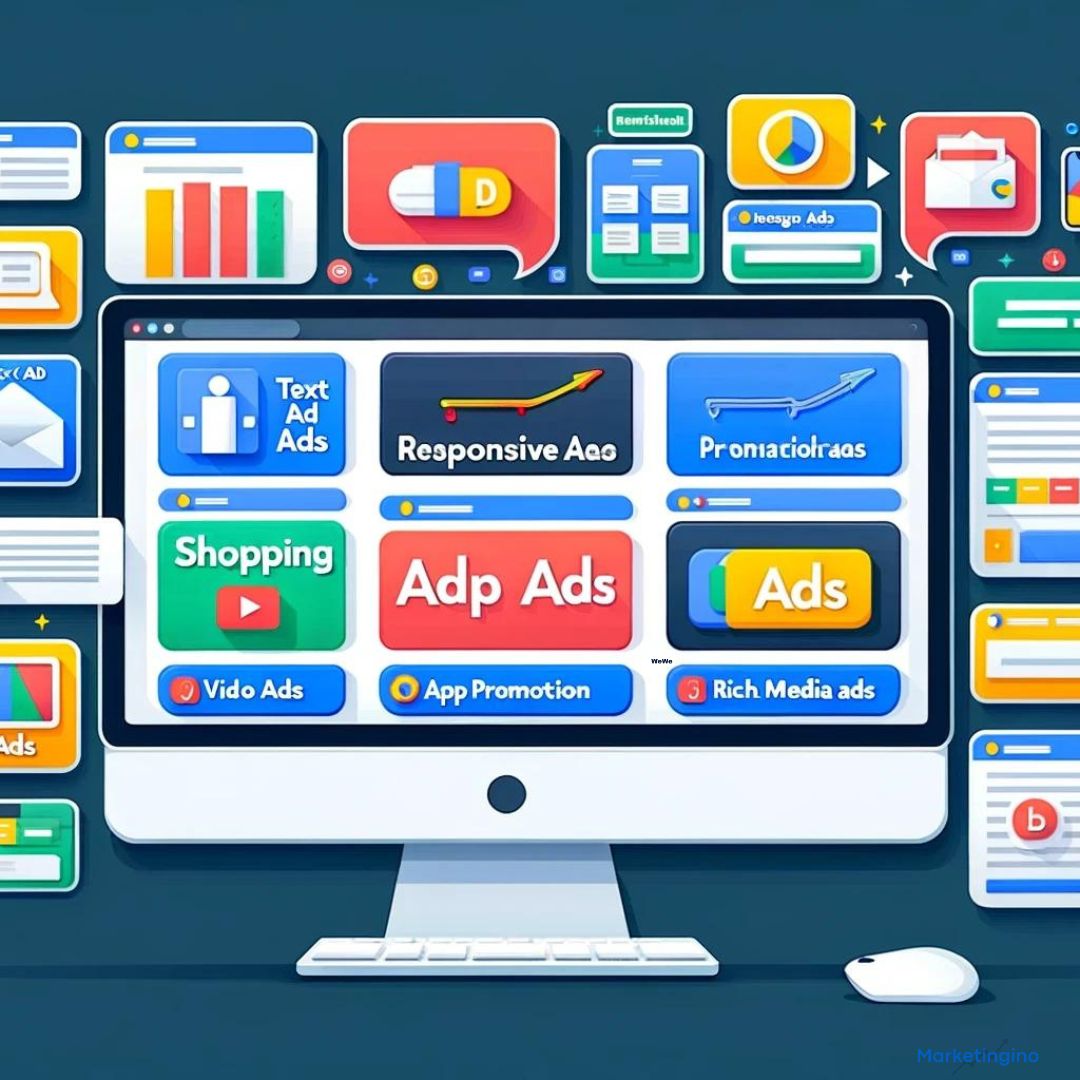
    Ad formats are the various elements that make up a Google Ad, including text, videos, images, and digital content. These formats are designed to engage users in different ways, depending on the nature of the ad and the platform where it appears. Understanding and utilizing the right ad formats can significantly enhance the effectiveness of an advertising campaign.

    What are Ad Formats?

    Ad formats refer to the different types of content that can be used in advertisements. Google Ads offers a variety of ad formats to cater to different marketing goals and audience preferences. Each format has its unique strengths and can be strategically used to attract attention, convey messages, and drive user actions.

    Types of Ad Formats

    1. Text Ads: Text ads are simple yet effective, consisting of a headline, a display URL, and a short description. They are commonly used in search results and are ideal for conveying concise messages.
    2. Image Ads: Image ads use visuals to capture attention. These ads can appear in various sizes and placements across the Google Display Network, making them suitable for brand awareness and engagement.
    3. Video Ads: Video ads can be highly engaging, combining visuals and audio to tell a story or demonstrate a product. They are often displayed on YouTube and other video partner sites.
    4. Responsive Ads: Responsive ads automatically adjust their size, appearance, and format to fit available ad spaces. They can include a mix of text, images, and videos, providing flexibility and broad reach.
    5. Shopping Ads: Shopping ads display product images, prices, and merchant names, helping users find and compare products quickly. These ads appear in Google Shopping results and search results.
    6. App Promotion Ads: These ads are designed to drive app downloads and engagement. They can include text, images, and videos, and appear in search results, the Google Play Store, and within other apps.
    7. Rich Media Ads: Rich media ads include interactive elements like animation, audio, and clickable areas, offering a dynamic and engaging user experience. They are typically used in display advertising.
    8. Call-Only Ads: Call-only ads are tailored for mobile devices, encouraging users to call the business directly from the ad. These ads include a phone number and a call button.

    How Ad Formats Work

    1. Creation: Advertisers create ads using the Google Ads platform, selecting the appropriate format based on their campaign objectives and target audience.
    2. Placement: The ad format determines where and how the ad will appear. For example, text ads primarily appear in search results, while video ads are displayed on YouTube.
    3. Optimization: Google Ads uses machine learning to optimize ad performance by testing different combinations of headlines, descriptions, images, and videos to find the most effective version.
    4. Targeting: Ads can be targeted based on keywords, user behavior, demographics, and other criteria to ensure they reach the most relevant audience.

    Benefits of Ad Formats

    1. Versatility: Multiple ad formats allow advertisers to choose the best way to communicate their message, whether through text, visuals, or multimedia.
    2. Enhanced Engagement: Interactive and visually appealing ad formats can capture user attention more effectively and encourage higher engagement rates.
    3. Better Reach: Different ad formats can be used across various platforms and devices, helping advertisers reach a broader audience.
    4. Improved Performance: Using a mix of ad formats can improve overall campaign performance by appealing to different user preferences and behaviors.

    Challenges of Ad Formats

    Despite their advantages, ad formats also present challenges:

    • Complexity: Managing multiple ad formats requires a good understanding of each format’s strengths and best practices.
    • Resource Intensive: Creating high-quality image and video ads can be resource-intensive, requiring more time and budget than text ads.
    • Performance Tracking: Analyzing the performance of different ad formats and optimizing them can be complex, requiring sophisticated analytics and testing.

    Ad formats are essential components of Google Ads, enabling advertisers to present their messages in diverse and engaging ways. By leveraging the right mix of ad formats, businesses can enhance their advertising efforts, reach their target audience more effectively, and achieve better campaign results. As digital advertising continues to evolve, staying informed about the latest ad formats and best practices will be crucial for maintaining a competitive edge.

    Share. Facebook Twitter Pinterest LinkedIn Tumblr Email

    Related Posts

    What is “Autonomous Campaigns”?

    29. 5. 2025

    What is “Prompt Engineering”?

    29. 5. 2025

    What is “Ethical AI Marketing”?

    29. 5. 2025

    What are “Synthetic Data”?

    29. 5. 2025
    Add A Comment
    Leave A Reply Cancel Reply

    Trending

    Decision-Making Under Uncertainty: What Marketing Leaders Get Wrong and How to Fix It

    28. 4. 2026

    GEO: What Is Generative Engine Optimization and Why It Matters in 2026

    28. 4. 2026

    How to Optimize Your Website for AI Search: A Practical Guide to Getting Cited by ChatGPT, Claude, and Perplexity

    28. 4. 2026

    AI and PPC: Why Artificial Intelligence Is Rewriting the Rules of Paid Media

    28. 4. 2026

    Recommerce: Why Selling Used Is the Fastest-Growing Channel in E-Commerce

    20. 4. 2026

    Agentic Commerce: How AI Is Taking Over the Shopping Cart

    20. 4. 2026
    About Us

    Marketingino is a modern business magazine for founders, marketers, e-commerce leaders, and innovators who are building what’s next.

    We cover the tools, tactics, and stories driving today’s most ambitious ventures—from early-stage startups to scaling e-shops, from breakthrough marketing strategies to the frontier of AI and automation.

    Email Us: info@marketingino.com

    Marketingino.com
    Facebook Instagram LinkedIn YouTube Bluesky
    • Home
    • Privacy Policy
    • Cookie Policy (EU)
    • Disclaimer
    © 2026 Marketingino.com, © 2026 Vision Projects, s. r. o.

    Type above and press Enter to search. Press Esc to cancel.

    Manage Consent
    To provide the best experiences, we use technologies like cookies to store and/or access device information. Consenting to these technologies will allow us to process data such as browsing behavior or unique IDs on this site. Not consenting or withdrawing consent, may adversely affect certain features and functions.
    Functional Always active
    The technical storage or access is strictly necessary for the legitimate purpose of enabling the use of a specific service explicitly requested by the subscriber or user, or for the sole purpose of carrying out the transmission of a communication over an electronic communications network.
    Preferences
    The technical storage or access is necessary for the legitimate purpose of storing preferences that are not requested by the subscriber or user.
    Statistics
    The technical storage or access that is used exclusively for statistical purposes. The technical storage or access that is used exclusively for anonymous statistical purposes. Without a subpoena, voluntary compliance on the part of your Internet Service Provider, or additional records from a third party, information stored or retrieved for this purpose alone cannot usually be used to identify you.
    Marketing
    The technical storage or access is required to create user profiles to send advertising, or to track the user on a website or across several websites for similar marketing purposes.
    • Manage options
    • Manage services
    • Manage {vendor_count} vendors
    • Read more about these purposes
    View preferences
    • {title}
    • {title}
    • {title}