


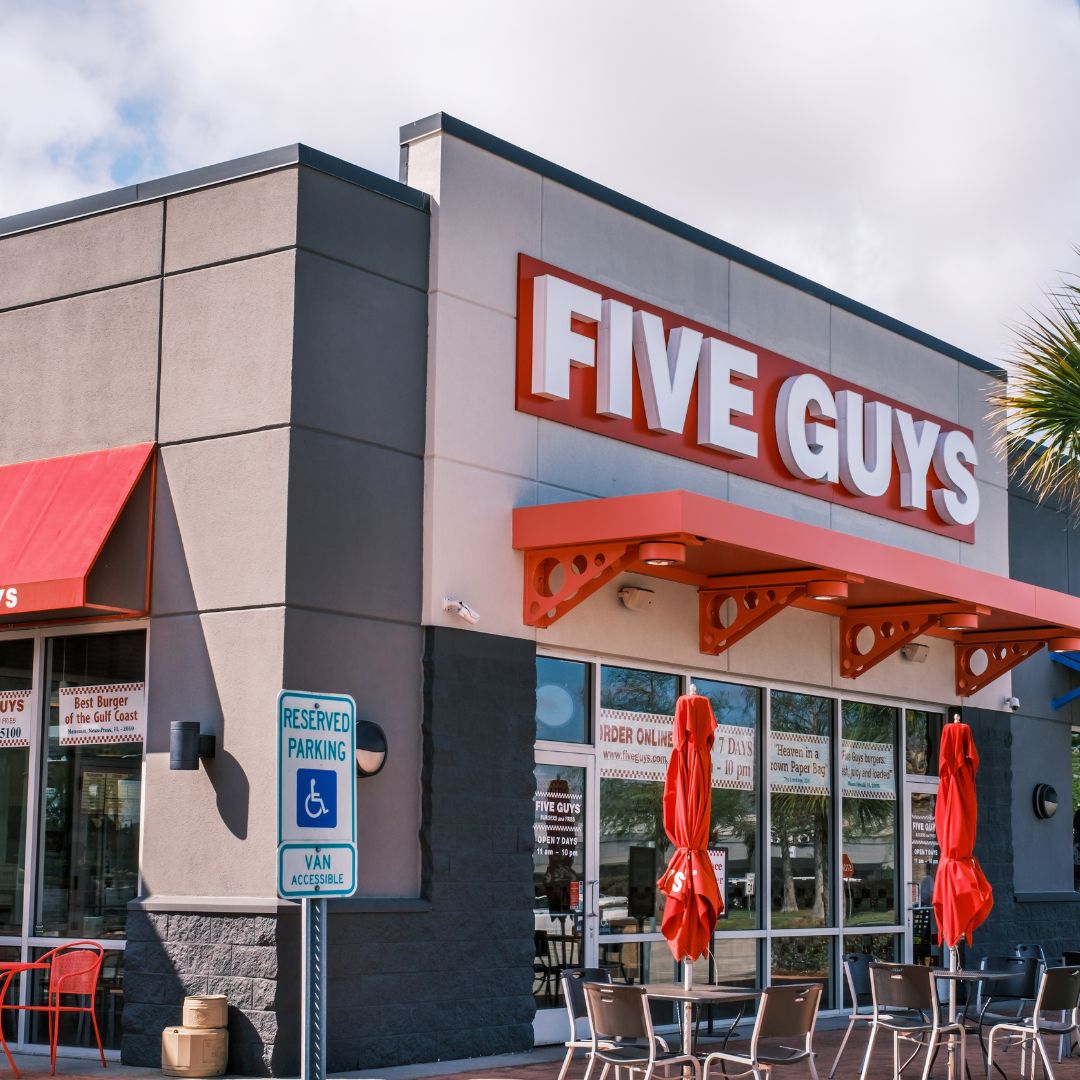
Five Guys’ meteoric rise from a small family-owned burger joint to a global fast-casual sensation is nothing short of remarkable. However, what makes their success even more intriguing is how they’ve achieved this without relying on flashy advertising campaigns, celebrity endorsements, or limited-time promotional deals—strategies typically favored by fast-food giants. Instead, Five Guys has stuck to a minimalist, customer-first marketing approach that hinges on word-of-mouth, authenticity, and an unwavering focus on product quality.
In an industry dominated by massive corporations, Five Guys’ marketing strategy stands out for its simplicity, dedication to the core product, and reliance on organic customer loyalty. This article takes a deep dive into how Five Guys has built and sustained its marketing success using unconventional yet highly effective tactics.
1. Word-of-Mouth Marketing: Let the Food Speak for Itself
Five Guys is a masterclass in word-of-mouth marketing. From the very beginning, founders Jerry Murrell and his family adopted the philosophy that satisfied customers would become their best promoters. This emphasis on letting the food speak for itself has been a defining feature of the brand.
Rather than spending huge sums on advertising, Five Guys invested heavily in ingredient quality, consistently delivering a product that customers would rave about. By focusing on fresh, never frozen beef, hand-cut fries, and customizable options, Five Guys differentiated itself from other fast-food chains and created a unique dining experience.
Positive reviews, word-of-mouth referrals, and customer recommendations became Five Guys’ most effective marketing tools. This grassroots approach allowed them to build a loyal customer base before even considering major expansion or franchising. Even as the brand has grown into a global phenomenon, this strategy remains a cornerstone of its marketing philosophy.
Five Guys’ belief in genuine customer reviews is evident in the way they display media and customer accolades inside their restaurants. Walk into any Five Guys location, and you’ll likely see reviews from local newspapers or online posts praising their burgers and fries, reinforcing the brand’s reputation without the need for extensive marketing campaigns.
2. Focus on Simplicity: Uncomplicated Menu and Brand Messaging
At a time when fast-food competitors are constantly expanding their menus with new, often gimmicky items to keep consumers engaged, Five Guys has done the opposite. Their simplified menu—focused on burgers, fries, and hot dogs—has remained unchanged for decades, with no seasonal items or trendy offerings.
This strategy is rooted in the belief that excellence comes from perfecting the basics. By offering fewer items, Five Guys ensures that every product they serve meets their high standards. The brand’s tagline, “Burgers and Fries, Done Right,” captures this essence of simplicity and authenticity.
In their marketing messaging, Five Guys doesn’t rely on flashy promotions or limited-time deals. Instead, they emphasize their commitment to fresh ingredients, customization options, and consistent quality. By sticking to this straightforward approach, Five Guys has created an unpretentious, reliable brand image that resonates with customers who appreciate good food done right.
3. Transparency and Authenticity: Open Kitchens and Honest Practices
Another key aspect of Five Guys’ marketing strategy is their focus on transparency and authenticity. The open kitchen concept, where customers can see their food being prepared, is a prime example of how Five Guys fosters trust and confidence in the quality of their food. This visibility reassures customers that their burgers are made fresh to order with real, high-quality ingredients.
This commitment to transparency extends to their ingredient sourcing. Five Guys prides itself on using fresh potatoes for their fries (often prominently displayed in sacks inside the restaurant), peanut oil for cooking, and hormone-free, never-frozen beef. They openly communicate these values to their customers in the restaurant and through their digital platforms.
Additionally, the no-frills interior design—with its bright red-and-white tile pattern and simple seating arrangement—reinforces this theme of authenticity. The restaurant ambiance is a direct reflection of the brand’s mission to keep things simple, straightforward, and focused on the food.
4. Leveraging Customer-Centric Marketing: Customization as an Experience
Five Guys built its brand around the idea of offering customers complete control over their meal, and this personalization has become a key selling point for the chain. With more than 250,000 possible combinations of burgers thanks to their extensive list of toppings (which come at no additional charge), customers feel empowered to craft a meal that is uniquely theirs.
This level of customization is central to their marketing appeal. The brand doesn’t need to launch endless campaigns promoting “new” products when customers can always create a different burger experience with each visit. Five Guys markets this aspect of choice, encouraging customers to experiment and make their meal truly personal.
This focus on customization also feeds into customer satisfaction and retention. Customers who feel invested in their meal choices are more likely to share their experiences, leading to more word-of-mouth marketing. It’s a subtle yet highly effective form of customer engagement that has worked wonders for Five Guys.
5. Minimal Traditional Advertising: Strategic Use of Digital Platforms
Five Guys has taken a relatively minimal approach to traditional advertising, especially in comparison to other fast-food giants that invest heavily in TV, radio, and digital ads. Instead, they’ve leaned on the power of social proof and online engagement to drive their marketing.
The brand relies heavily on social media to amplify customer satisfaction, share positive reviews, and promote organic conversations about the food. Rather than bombarding audiences with promotional content, Five Guys uses platforms like Twitter, Instagram, and Facebook to highlight real customer experiences, showcase photos of their food, and offer updates on new store openings.
When Five Guys does engage in more traditional advertising efforts, they tend to focus on regional campaigns, particularly when expanding into new markets. These campaigns focus on the Five Guys experience, drawing attention to the brand’s key differentiators—fresh ingredients, customizable burgers, and no-nonsense service.
This restrained approach to advertising allows the brand to remain authentic and approachable, a refreshing contrast to many of its competitors who frequently rely on loud, attention-grabbing campaigns.
6. Customer Reviews and Third-Party Accolades: Building Credibility
Five Guys has also benefited from strong third-party endorsements and accolades. In particular, ZAGAT ratings and online customer reviews played a significant role in establishing the chain’s early credibility. Unlike many fast-food chains that push for branded endorsements or celebrity partnerships, Five Guys has allowed customer reviews and independent ratings to do the talking.
By highlighting awards and positive feedback within their restaurants and on digital platforms, Five Guys effectively builds a sense of trust and authenticity. When customers see glowing reviews from trusted sources, they’re more likely to believe in the quality of the product and become curious to try it themselves.
This method of incorporating third-party endorsements allows the brand to cultivate an aura of quality and reliability that continues to attract new customers, especially in markets where the brand is relatively unknown.
7. Focus on Employee Satisfaction: Internal Marketing
Five Guys recognizes that happy employees lead to happy customers, and their focus on internal marketing has contributed significantly to the overall customer experience. By fostering a positive work environment, the brand ensures that its team members are motivated, engaged, and dedicated to upholding the company’s high standards.
Five Guys takes pride in training its employees well, compensating them fairly, and creating a work environment where team members feel valued. This internal focus translates directly into the quality of service that customers experience, which in turn generates positive word-of-mouth.
By marketing themselves as a customer-first and employee-first company, Five Guys has created a business that is not only profitable but also respected by employees and customers alike.
Five Guys’ marketing strategy is a case study in how to build an internationally recognized brand without relying on flashy advertising or trendy promotions. By focusing on simplicity, authenticity, and word-of-mouth marketing, the company has grown from a small family-owned burger joint into a global powerhouse.
Their approach shows that customer experience is the ultimate form of marketing, and by staying true to its values, Five Guys has created a loyal customer base that advocates for the brand in ways no advertisement ever could. As the brand continues to expand, its core principles of quality, customization, and transparency will likely ensure Five Guys’ place as a leader in the fast-casual dining space for years to come.