


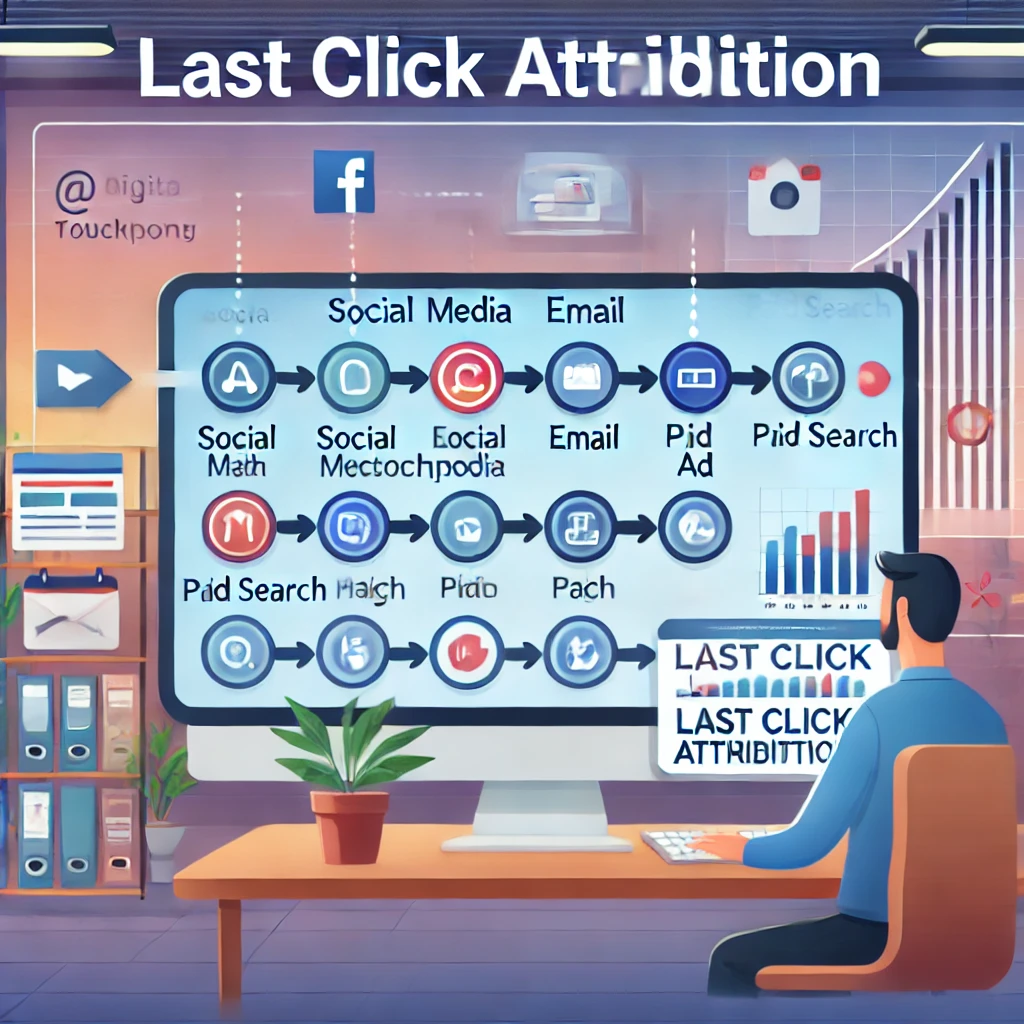
Last click attribution is a marketing measurement model that assigns all the credit for a conversion to the last known interaction or touchpoint a user had with a brand before completing a desired action. This model assumes that the final interaction, such as a paid ad click or website visit, is the most significant factor in driving the conversion, whether it’s a purchase, form submission, or sign-up.
While last click attribution is one of the simplest attribution models, it has limitations because it does not consider the entire customer journey or the cumulative impact of all previous touchpoints that may have influenced the final decision.
What is Last Click Attribution?
In digital marketing, a conversion refers to the completion of a desired action, such as making a purchase or signing up for a newsletter. Last click attribution focuses solely on the final interaction a user has before completing that conversion. For example, if a user clicks on a Google ad and then makes a purchase, the ad receives full credit for the conversion, regardless of earlier touchpoints like email campaigns or social media interactions that may have played a role.
For marketers, last click attribution is appealing because of its simplicity, as it provides a straightforward way to measure the effectiveness of a single touchpoint. However, this model overlooks the broader context of the customer journey, which often involves multiple touchpoints across different channels.
How Last Click Attribution Works
The process of last click attribution works as follows:
- Tracking User Interactions
As users interact with various marketing channels (e.g., ads, social media, emails, and direct website visits), these touchpoints are recorded by analytics tools such as Google Analytics. - Credit Given to the Last Interaction
When a user eventually converts, last click attribution assigns 100% of the credit for that conversion to the final interaction. For example, if a user first learns about a brand through an Instagram ad, receives a promotional email, and then clicks on a Google search ad before purchasing, the last click (the Google ad) receives full credit. - Measuring Performance
Marketers can use this model to measure the performance of specific campaigns or channels. The channel that gets the last click credit is deemed the most effective at driving conversions, based on the assumption that it played the most direct role in prompting the action.
Advantages of Last Click Attribution
- Simplicity
Last click attribution is easy to implement and understand. It provides clear insights into the immediate trigger that led to a conversion, making it a popular choice for marketers who want quick, straightforward data. - Focus on Direct Conversions
By highlighting the last touchpoint, marketers can see which channels or campaigns are driving direct conversions. This can help in assessing the effectiveness of paid ads or retargeting campaigns that aim to close sales. - Actionable for PPC Campaigns
Last click attribution is particularly useful for pay-per-click (PPC) campaigns, where the final click is often the most significant in completing a purchase. It helps marketers optimize their bids and budgets based on which ads are driving the most conversions.
Limitations of Last Click Attribution
- Ignores the Full Customer Journey
One of the biggest drawbacks of last click attribution is that it ignores all the touchpoints leading up to the final click. In reality, a user’s decision to convert is often influenced by multiple interactions across various channels. By focusing solely on the last touchpoint, this model overlooks the value of upper-funnel activities, such as awareness campaigns or content marketing. - Overvalues Lower-Funnel Channels
Last click attribution tends to give more credit to lower-funnel channels, such as paid search or remarketing ads, while undervaluing channels that build awareness and engagement earlier in the customer journey, such as display ads, social media, or organic search. - Misleading Performance Data
Relying exclusively on last click attribution can result in misleading insights. For example, if a user clicks on a Google ad after engaging with multiple touchpoints over the course of a week, the ad may receive all the credit for the conversion, even though earlier interactions contributed significantly to the decision-making process. - Limited Insight for Multi-Channel Campaigns
For businesses that run multi-channel marketing campaigns, last click attribution does not provide a complete picture of how each channel contributes to overall success. This can make it challenging to allocate budgets effectively across channels and campaigns.
Alternatives to Last Click Attribution
While last click attribution is a popular model, it is not always the best option for businesses that want a more comprehensive view of their marketing performance. Several other attribution models can provide a broader understanding of the customer journey:
- First Click Attribution
First click attribution assigns all the credit to the first interaction a user has with a brand. This model emphasizes the role of initial touchpoints in generating interest but overlooks the importance of nurturing leads through the middle and end of the funnel. - Linear Attribution
Linear attribution distributes credit evenly across all touchpoints in the customer journey. This model gives equal weight to every interaction, from the first click to the last, offering a more balanced view of how each channel contributes to the final conversion. - Time Decay Attribution
Time decay attribution gives more weight to touchpoints that occur closer to the conversion. While it acknowledges the importance of earlier interactions, it emphasizes the final touchpoints that helped close the deal. - Position-Based Attribution
Position-based (or U-shaped) attribution assigns the most credit to the first and last interactions, with the remaining credit distributed evenly across middle touchpoints. This model recognizes the significance of both the initial touchpoint that introduced the user to the brand and the final interaction that led to the conversion.
When to Use Last Click Attribution
Last click attribution can still be useful in certain situations, especially when measuring direct, lower-funnel interactions:
- PPC Campaigns
For PPC campaigns where the goal is immediate conversions, last click attribution provides actionable insights. It helps marketers determine which ads are directly leading to purchases and optimize their bidding strategies accordingly. - Simple Sales Cycles
Businesses with simple, short sales cycles (e.g., e-commerce sites with low-consideration products) may benefit from using last click attribution, as there are often fewer touchpoints leading up to a purchase. - Budget-Constrained Campaigns
For smaller businesses or campaigns with limited budgets, last click attribution can provide quick insights into which channels are driving the most immediate returns, helping marketers make faster decisions.
Best Practices for Using Last Click Attribution
- Combine with Other Models
Instead of relying solely on last click attribution, consider using it alongside other attribution models to get a more complete view of the customer journey. Multi-touch attribution models can offer deeper insights into how various channels work together. - Use Last Click for Direct Response Campaigns
Last click attribution works well for direct response campaigns where the goal is to drive immediate action, such as paid search or retargeting ads. In these cases, the final touchpoint often plays the most critical role. - Monitor Top-of-Funnel Performance Separately
Since last click attribution tends to undervalue top-of-funnel activities, track the performance of awareness and engagement campaigns separately to ensure they are contributing to overall marketing goals.
Last click attribution is a simple, easy-to-use model that helps marketers measure the immediate touchpoints driving conversions. While it can provide valuable insights for PPC campaigns and direct conversions, it falls short in capturing the full customer journey and the influence of earlier interactions. To get a more comprehensive view of marketing performance, businesses should consider using multi-touch attribution models or combining last click data with insights from other models.
Key Takeaway
Last click attribution assigns all the credit for a conversion to the final interaction, but it may overlook the contributions of earlier touchpoints. To fully understand the customer journey, marketers should consider using a combination of attribution models.