


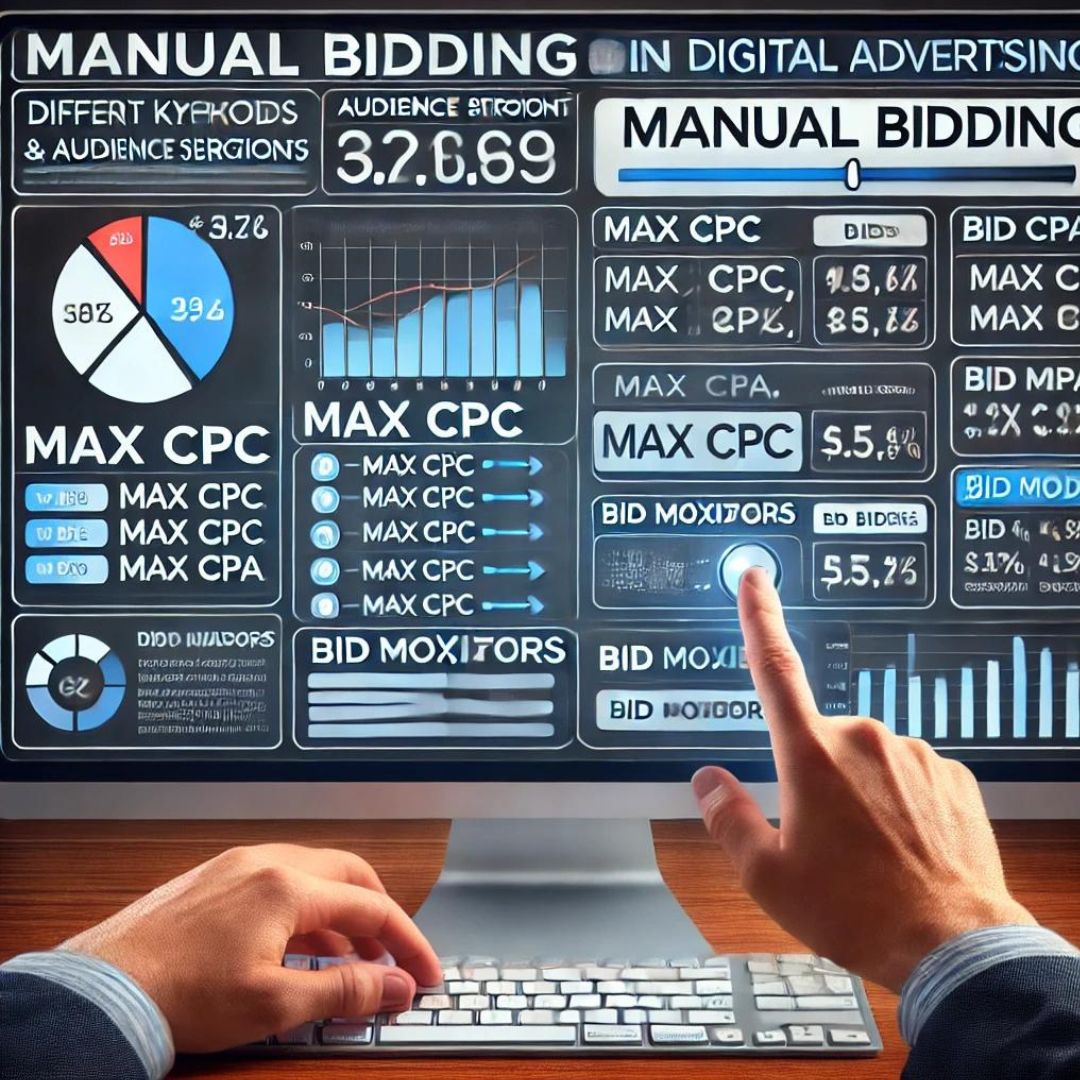
In the world of digital advertising, managing your bids effectively is crucial to maximizing the return on investment (ROI) of your campaigns. Whether you’re advertising on platforms like Google Ads, Facebook, or Amazon, one of the key decisions advertisers face is how to allocate their ad spend. One of the most powerful methods for optimizing ad spend is manual bidding.
Manual bidding allows marketers to have complete control over how much they’re willing to pay for each click, impression, or conversion based on specific criteria they define. This method contrasts with automated bidding, where the platform adjusts bids based on algorithms and machine learning. With manual bidding, the marketer determines the bid amounts based on factors such as keyword performance, audience segments, and campaign goals, offering a highly customized approach to ad spending.
In this article, we will explore how manual bidding works, its advantages and disadvantages, and the strategies marketers can use to manage bids effectively to optimize campaign performance.
What is Manual Bidding?
Manual bidding is a bidding strategy that gives advertisers full control over the amount they bid for each keyword, audience, or placement in an advertising campaign. Instead of relying on machine learning or algorithms to adjust bids automatically, manual bidding lets marketers set their own bids based on their goals, insights, and knowledge of their audience.
This approach is commonly used in pay-per-click (PPC) campaigns, where advertisers bid on keywords and only pay when users click on their ads. Manual bidding is also used in pay-per-impression (CPM) campaigns, where advertisers pay based on how many times their ad is shown, and in pay-per-conversion (CPA) campaigns, where payment is based on actions like form submissions or purchases.
By managing bids manually, marketers can fine-tune their campaign performance, optimizing bids for high-performing keywords or audiences while reducing spend on underperforming ones.
How Manual Bidding Works
With manual bidding, advertisers determine how much they are willing to pay for specific actions, such as clicks or impressions. They can adjust bids based on various factors, including:
- Keywords: Set specific bid amounts for each keyword based on its relevance, search volume, and historical performance.
- Geographic Locations: Increase or decrease bids depending on the performance of certain geographic regions.
- Devices: Adjust bids based on the device users are browsing from, such as mobile, desktop, or tablet.
- Time of Day: Modify bids during peak hours when users are more likely to engage with ads, or reduce bids during off-hours when engagement is lower.
- Audience Segments: Allocate more of your budget to audiences that are more likely to convert, based on past behavior or demographics.
The flexibility of manual bidding allows marketers to focus their budget on areas where it can deliver the highest returns while pulling back spend in areas where performance is weaker.
Key Components of Manual Bidding
To use manual bidding effectively, marketers need to understand a few key components of the process:
1. Max CPC (Cost-per-Click)
With manual CPC bidding, you set the maximum amount you’re willing to pay for a click on your ad. This is the most common form of manual bidding used in PPC campaigns like Google Ads. By setting a Max CPC, you ensure that you’re not overpaying for clicks while still staying competitive for your top keywords.
Example: If your Max CPC is set to $1, and Google determines that a click is available for $0.90, you will only pay $0.90 for that click. However, if the bid exceeds $1, you won’t win the auction, and your ad won’t show for that keyword.
2. Max CPM (Cost-per-Thousand Impressions)
In a CPM campaign, you set the maximum amount you’re willing to pay for 1,000 ad impressions. This model is often used for branding campaigns where visibility is more important than direct clicks. With manual CPM bidding, you can control how much you spend to get your ad in front of as many users as possible.
Example: If you set a Max CPM of $5 and your ad receives 1,000 impressions, you will pay no more than $5 for those impressions.
3. Max CPA (Cost-per-Acquisition)
With manual CPA bidding, you set the maximum amount you’re willing to pay for a specific action, such as a purchase or form submission. This is typically used for performance-based campaigns where the goal is conversions.
Example: If you set a Max CPA of $20, you’re willing to pay up to $20 for each conversion (like a sale or lead), but no more. If your conversion is achieved at a lower cost, say $15, you only pay $15 for that conversion.
Advantages of Manual Bidding
Manual bidding offers several benefits to advertisers who want more granular control over their ad campaigns:
1. Full Control Over Bids
With manual bidding, you can set precise bid amounts for different keywords, demographics, and other targeting criteria. This level of control allows you to prioritize budget for high-value segments or optimize campaigns based on specific business goals.
2. Optimize for High-Performing Keywords
Manual bidding allows you to identify and prioritize high-performing keywords that drive the most clicks and conversions. You can increase bids for these keywords to ensure your ads are shown more frequently or in higher positions, maximizing their impact.
3. Better Budget Allocation
By adjusting bids based on performance data, manual bidding enables you to allocate your budget more efficiently. You can reduce spend on low-performing keywords, geographies, or devices, ensuring that your ad dollars are going toward the areas that deliver the highest ROI.
4. Flexibility and Customization
Manual bidding allows for more flexible and customized campaign management. For example, if you know certain time periods or days of the week perform better for your business, you can increase bids during those times and lower them during off-peak periods.
Disadvantages of Manual Bidding
While manual bidding offers significant control and customization, it also comes with potential drawbacks:
1. Time-Consuming
Managing bids manually can be a time-intensive process, especially for larger campaigns with numerous keywords, audiences, and placements. Regular monitoring and adjustments are required to keep campaigns optimized, which can be overwhelming without the right tools or expertise.
2. Risk of Overspending
Without proper oversight, manual bidding can lead to overspending on certain keywords or placements if bids are set too high. Additionally, if bids are too low, you may miss out on valuable opportunities, meaning your ads won’t get enough visibility.
3. Requires Expertise
To manage manual bids effectively, marketers need to have a solid understanding of how bidding works, what factors influence ad rank, and how to interpret performance data. Beginners may struggle with bid management and optimization, which could hurt campaign performance.
Best Practices for Manual Bidding
To get the most out of manual bidding, consider these best practices:
1. Monitor Performance Regularly
Manual bidding requires constant attention. Regularly review your campaigns to see which keywords, audiences, and placements are performing well. Adjust bids accordingly—increase bids for high-performing keywords or audiences and decrease bids for those that are underperforming.
2. Use Bid Modifiers
Bid modifiers allow you to adjust your bids based on factors such as device, location, or time of day. This can help you refine your strategy and optimize spending in specific areas without making global changes to your campaign.
For example, if you notice that mobile users convert more frequently, you can increase your bid for mobile traffic while leaving bids for desktop users unchanged.
3. Test and Adjust Bids
Start with moderate bids and test different bid amounts to see how they impact performance. You may find that slightly increasing or decreasing bids can significantly affect your ad position, click-through rate (CTR), and conversion rate. Be prepared to adjust bids as you gather more data.
4. Set Bid Limits
Set limits for your maximum bid to ensure that you’re not overspending on certain keywords or placements. While it’s important to stay competitive, controlling your spend helps prevent unintentional budget overruns.
5. Use Negative Keywords
Negative keywords prevent your ads from being shown for irrelevant searches, which can help you save money on clicks that are unlikely to convert. Regularly review your search query reports to identify irrelevant keywords and add them to your negative keyword list.
Manual Bidding vs. Automated Bidding
While manual bidding provides granular control, automated bidding uses algorithms to adjust bids based on machine learning and data analysis. Each has its advantages, and the right choice depends on your specific goals, campaign size, and level of expertise.
- Manual Bidding is ideal for advertisers who want complete control over their bidding strategy and are willing to invest the time required to monitor and optimize campaigns.
- Automated Bidding is better suited for businesses looking to scale quickly or those with limited resources to manage bids manually. Automated systems adjust bids based on performance trends, ensuring that budgets are optimized without manual intervention.
For some businesses, a hybrid approach works best, using manual bidding for specific campaigns or keywords where precision is needed while relying on automated strategies for broader campaigns.
Manual bidding offers advertisers the flexibility and control needed to optimize ad spend based on specific business goals and campaign performance. While it requires time and expertise, manual bidding allows marketers to fine-tune their bids for high-performing keywords, demographics, and placements, leading to more efficient budget allocation and improved results.
By regularly monitoring campaign performance, adjusting bids based on data, and implementing best practices like bid modifiers and negative keywords, marketers can maximize their return on investment with manual bidding strategies. For those seeking greater control over their digital advertising campaigns, manual bidding provides a powerful solution to ensure ad spend is optimized for the highest value.