


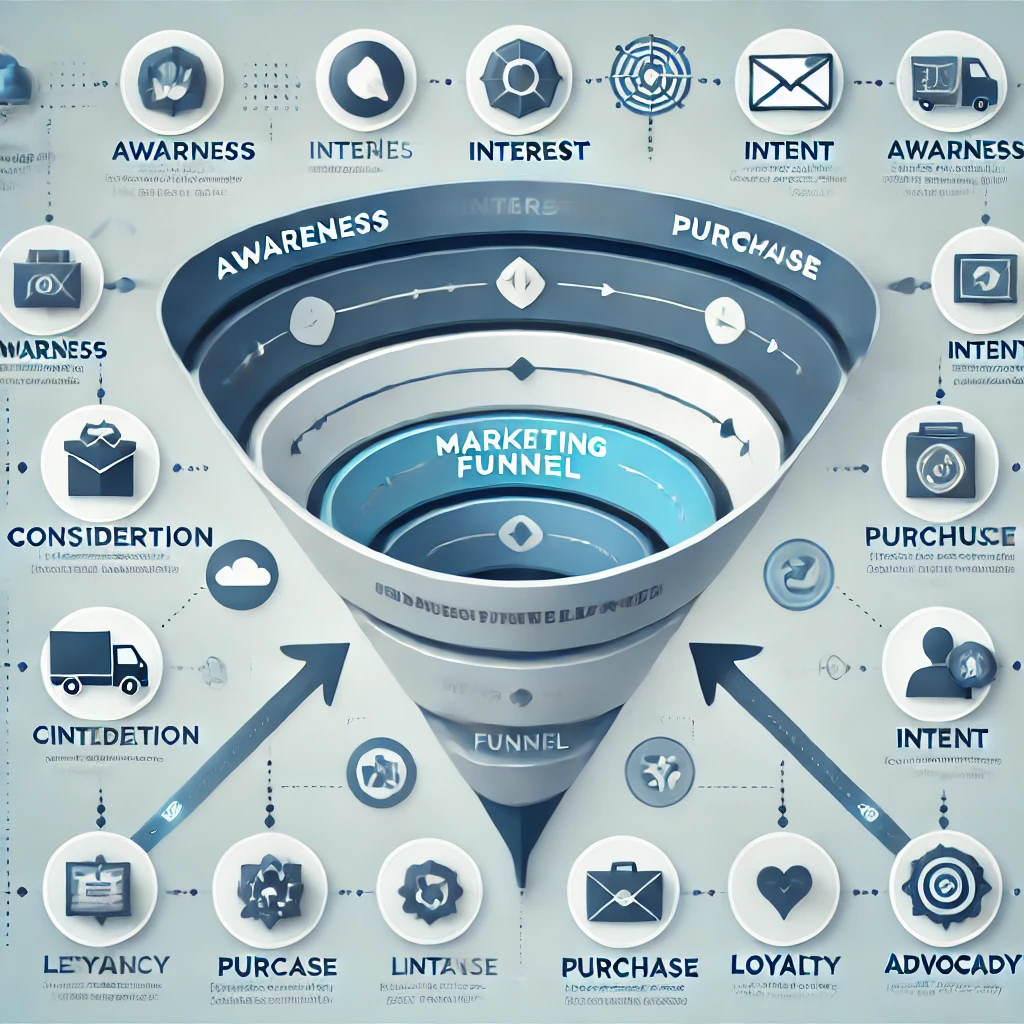
The marketing funnel is a visual representation of the customer journey, illustrating how people move from initially learning about a brand to becoming loyal customers. The funnel concept helps businesses understand the different stages a potential customer goes through and how to effectively engage them at each stage. By guiding prospects from awareness to action, and eventually to loyalty, businesses can optimize their marketing efforts to convert leads into repeat customers.
What is the Marketing Funnel?
The marketing funnel is divided into several stages, each representing a phase in the customer journey. It is called a funnel because it starts broad, with many potential customers entering at the top, and narrows as prospects move down, with fewer customers reaching the bottom stages. The funnel’s shape symbolizes the gradual reduction in numbers as only a portion of initial leads will ultimately make a purchase and become loyal to the brand.
While different businesses may use slightly different terms for the stages, the funnel typically includes the following:
- Awareness: At the top of the funnel, potential customers become aware of a brand, product, or service. This stage is about attracting attention and generating interest, often through advertising, content marketing, social media, and public relations.
- Interest: Once customers are aware of a brand, they move to the interest stage. Here, they begin to seek more information, exploring whether the product or service meets their needs. Marketers typically use email campaigns, educational content, and case studies to nurture interest.
- Consideration: In this stage, potential customers are seriously evaluating whether to purchase. They might compare products, read reviews, or check out pricing. Marketing efforts in this phase often include offering demos, free trials, product comparisons, and personalized messaging to encourage deeper engagement.
- Intent: The intent stage occurs when customers show signs they are ready to make a purchase. They may add items to a shopping cart, request a quote, or reach out to the sales team. Here, marketers focus on reinforcing value, addressing objections, and ensuring the sales process is seamless.
- Purchase: The next step is conversion—when a lead makes the final decision to buy. Effective marketing at this stage includes clear calls to action, incentives like discounts or free shipping, and an easy, frictionless checkout experience.
- Loyalty: Once a customer has made a purchase, the relationship doesn’t end. The loyalty stage is about nurturing ongoing engagement to turn one-time buyers into repeat customers. This can be done through loyalty programs, personalized follow-ups, and continuous value delivery.
- Advocacy: The ultimate goal is to turn loyal customers into brand advocates. Satisfied customers who trust a brand are likely to share their positive experiences with others, refer new customers, and provide testimonials. Marketing efforts at this stage include referral programs, reviews, and building a strong community around the brand.
Why is the Marketing Funnel Important?
The marketing funnel provides several key benefits:
- Structure and clarity: It helps businesses organize their marketing efforts around the customer journey, making it easier to tailor strategies to each stage and allocate resources effectively.
- Targeted marketing: By understanding where potential customers are in the funnel, marketers can deliver the right messages at the right time. For example, awareness-stage prospects need educational content, while intent-stage prospects need more persuasive, product-focused messaging.
- Improved conversion rates: The funnel approach helps identify weak points in the customer journey where leads are dropping off, allowing businesses to optimize these areas and improve overall conversion rates.
- Increased customer retention: By focusing not just on acquiring customers but also on nurturing loyalty and advocacy, businesses can build lasting relationships that lead to repeat purchases and long-term success.
Stages of the Marketing Funnel in Detail
- Awareness: At the top of the funnel, the goal is to attract as many people as possible and introduce them to the brand. Common strategies include social media marketing, SEO (search engine optimization), paid advertising, and content marketing (e.g., blogs, videos). The key here is visibility—getting your brand in front of potential customers.
- Interest: Once people are aware of your brand, the next step is to engage their interest. Content that educates or solves problems is effective in this stage, such as how-to guides, webinars, or email newsletters. The goal is to build a relationship and establish credibility.
- Consideration: In the consideration phase, prospects are weighing their options. Offering free resources like case studies, product demos, and personalized offers helps to keep your brand top of mind and positions you as the best solution.
- Intent: At this stage, potential customers are signaling their readiness to buy. Effective marketing tactics include offering discounts, showing customer reviews, and providing a smooth path to purchase with clear calls to action.
- Purchase: Conversion is the key focus at this stage. Businesses should ensure a hassle-free checkout process and offer customer support to address any last-minute questions or concerns. Offering post-purchase incentives, such as discount codes for future purchases, can encourage repeat buying.
- Loyalty: After the purchase, maintaining a connection with the customer is critical. Loyalty programs, personalized emails, and special offers for returning customers keep the relationship strong and encourage future purchases.
- Advocacy: Turning customers into advocates is a powerful marketing strategy. Encouraging satisfied customers to leave reviews, participate in referral programs, and share their experiences on social media helps bring in new leads and builds trust in your brand.
Example of a Marketing Funnel in Action
Imagine a software company offering a project management tool. At the awareness stage, they use social media ads to introduce the tool to their target audience of small business owners. After seeing the ad, interested prospects click through to a blog post explaining the benefits of project management tools. This blog post moves them into the interest stage.
From there, some prospects sign up for a free trial, entering the consideration stage, where they receive emails with tutorials and product features. Those who actively engage and express further interest (e.g., using the tool during the trial period) move to the intent stage, where the company sends them a special discount for purchasing the full version.
After purchasing, customers are entered into a loyalty program, offering them rewards for continued use. Over time, satisfied users leave positive reviews and refer other businesses, becoming advocates for the product.
The marketing funnel is a powerful framework for understanding and optimizing the customer journey. By focusing on each stage—from attracting new prospects to fostering customer loyalty—businesses can create a strategic marketing approach that nurtures leads, improves conversions, and builds long-term relationships. Understanding how to guide potential customers through the funnel can lead to more effective marketing efforts and sustained business growth.