


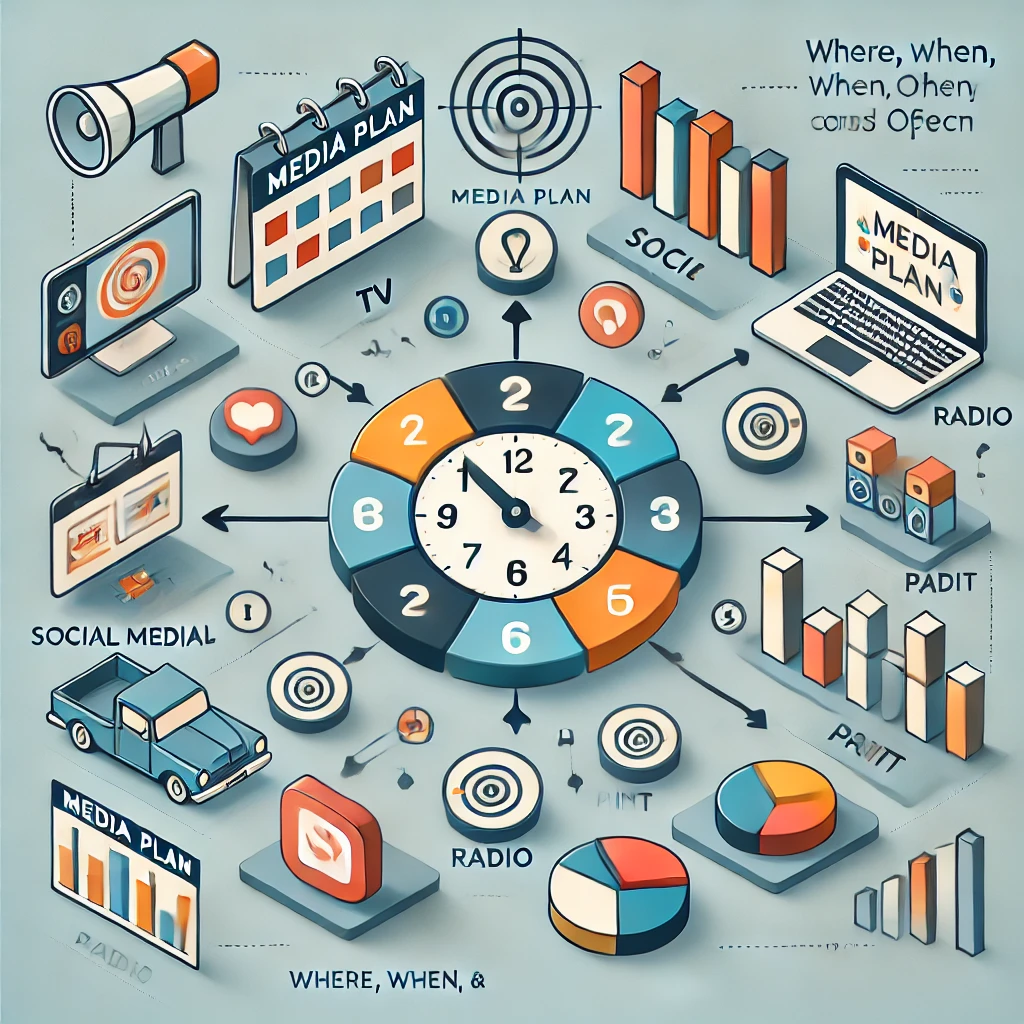
A media plan is a detailed strategy that outlines where, when, and how often an advertisement will appear across various media channels. It ensures that a brand’s advertising messages reach the right audience at the right time through the most effective platforms. Media planning is a key component of any marketing campaign, helping businesses maximize their reach, optimize their budget, and improve overall campaign effectiveness.
What is a Media Plan?
A media plan specifies how marketing messages will be distributed across different channels, such as TV, radio, digital platforms, social media, print, and out-of-home (OOH) advertising. The plan takes into account the target audience, campaign goals, available budget, and the strengths of each media platform. The goal is to ensure that advertisements are delivered through the right channels at the right frequency, optimizing visibility and engagement with the intended audience.
A comprehensive media plan will include the following elements:
- Target audience: Identifies the specific demographic or consumer segment that the campaign aims to reach. This includes age, gender, location, interests, and purchasing behavior.
- Media channels: Specifies which platforms will be used to distribute the ads (e.g., TV, digital, social media, radio, print). Each channel has its own strengths, and the right mix depends on the campaign’s objectives and the audience.
- Timing and scheduling: Details when ads will be placed across media channels, considering the most effective times and dates to maximize audience engagement. This may involve considering daily or weekly patterns, as well as seasonal trends.
- Frequency: Specifies how often the ad will be shown to the audience. The frequency needs to strike a balance between building awareness and avoiding ad fatigue.
- Budget allocation: Outlines how the advertising budget will be distributed across the different media channels, aiming to get the best return on investment (ROI) from each platform.
Importance of a Media Plan
A well-structured media plan is essential for several reasons:
- Optimized reach: A media plan helps businesses ensure that their advertisements reach the target audience through the most effective channels. By analyzing audience behavior and preferences, advertisers can select the right platforms to maximize their campaign’s impact.
- Budget efficiency: A clear media plan allows businesses to allocate their budgets strategically, ensuring that money is spent on channels that offer the highest return. This prevents wasteful spending and helps avoid oversaturation on less-effective platforms.
- Coordinated messaging: Media planning helps ensure that a brand’s messaging is consistent across all channels. It coordinates the timing and placement of ads to create a cohesive experience for the audience, enhancing the overall brand message.
- Campaign tracking and evaluation: A detailed media plan provides benchmarks for measuring campaign performance. By setting clear objectives, marketers can track how well different channels are contributing to the overall success of the campaign.
Steps to Creating a Media Plan
- Define objectives: The first step is to clearly define the goals of the advertising campaign. These goals could range from building brand awareness and generating leads to increasing website traffic or driving sales. The objectives will guide the media selection and overall strategy.
- Understand the target audience: Next, marketers must thoroughly understand their target audience, including demographic information (age, gender, income), geographic location, interests, and media consumption habits. This helps in choosing the most appropriate channels to reach potential customers.
- Select media channels: Based on the audience’s preferences and behavior, marketers select the best platforms to distribute ads. For example, a younger audience might be more active on social media platforms like Instagram and TikTok, while an older demographic might engage more with TV or radio.
- Determine timing and scheduling: Timing is critical to the success of a media plan. Advertisers should consider when their target audience is most likely to engage with content. For example, social media posts may perform better during certain times of day, while TV ads might reach more viewers during prime time.
- Establish frequency: The frequency of ad exposure is crucial to ensuring that the message resonates with the audience. If the ad is shown too often, it could lead to ad fatigue. If it’s shown too infrequently, it may not have enough impact. The frequency should be based on factors like the campaign duration, budget, and platform dynamics.
- Allocate the budget: After selecting the channels and determining the schedule, the next step is to allocate the budget. The budget distribution depends on the importance and effectiveness of each platform. For instance, more money might be spent on high-performing channels like digital ads, while a smaller portion might be reserved for less-critical platforms.
- Monitor and optimize: A successful media plan isn’t static. Throughout the campaign, marketers should continuously monitor performance metrics such as engagement rates, conversion rates, and ROI. Based on these insights, adjustments can be made to improve the plan’s effectiveness.
Example of a Media Plan
Imagine a company launching a new line of sustainable beauty products. Their media plan might look something like this:
- Target audience: Women aged 25-40, interested in eco-friendly and sustainable products, located in urban areas.
- Media channels:
- Instagram and Pinterest ads to reach a visually-driven, eco-conscious audience.
- Search engine marketing (SEM) through Google Ads targeting keywords like “organic skincare” and “sustainable beauty.”
- YouTube influencers to create product reviews and tutorials.
- Email marketing to engage previous customers with exclusive offers.
- Timing and scheduling: Ads will run for three months, starting with heavy promotion in the first month to build awareness, followed by a steady presence in months two and three.
- Frequency: Ads will appear on Instagram and Pinterest three times per week, while Google Ads will target search queries daily. YouTube influencer posts will be spaced throughout the campaign’s first month.
- Budget allocation:
- 50% to Instagram and Pinterest ads.
- 30% to Google Ads.
- 15% to YouTube influencer partnerships.
- 5% to email marketing.
By using this media plan, the company ensures its advertisements are strategically placed to engage with its ideal audience, maximizing visibility and conversions.
Challenges of Media Planning
- Data accuracy: A successful media plan relies on accurate audience data and insights. If this information is outdated or incomplete, it can result in poor media selection and ineffective campaigns.
- Media fragmentation: With the rise of digital platforms, audiences are increasingly fragmented across multiple channels. This makes it challenging for marketers to create a plan that ensures consistent reach across all platforms.
- Budget limitations: A limited budget can restrict the number of channels a brand can use, making it difficult to maximize reach. Prioritizing which channels will have the highest impact is key in these cases.
- Changing consumer behavior: Audience preferences and behaviors evolve rapidly, especially in digital media. What works today might not work tomorrow, requiring media plans to be flexible and adaptable.
A well-constructed media plan is essential for the success of any advertising campaign. It serves as a roadmap for where, when, and how often ads will be shown, ensuring that the right message reaches the right audience at the right time. By carefully selecting media channels, optimizing budgets, and continuously monitoring performance, businesses can increase the impact of their marketing efforts and drive meaningful results. Effective media planning not only ensures better ROI but also helps create a cohesive, consistent brand experience across all platforms.