


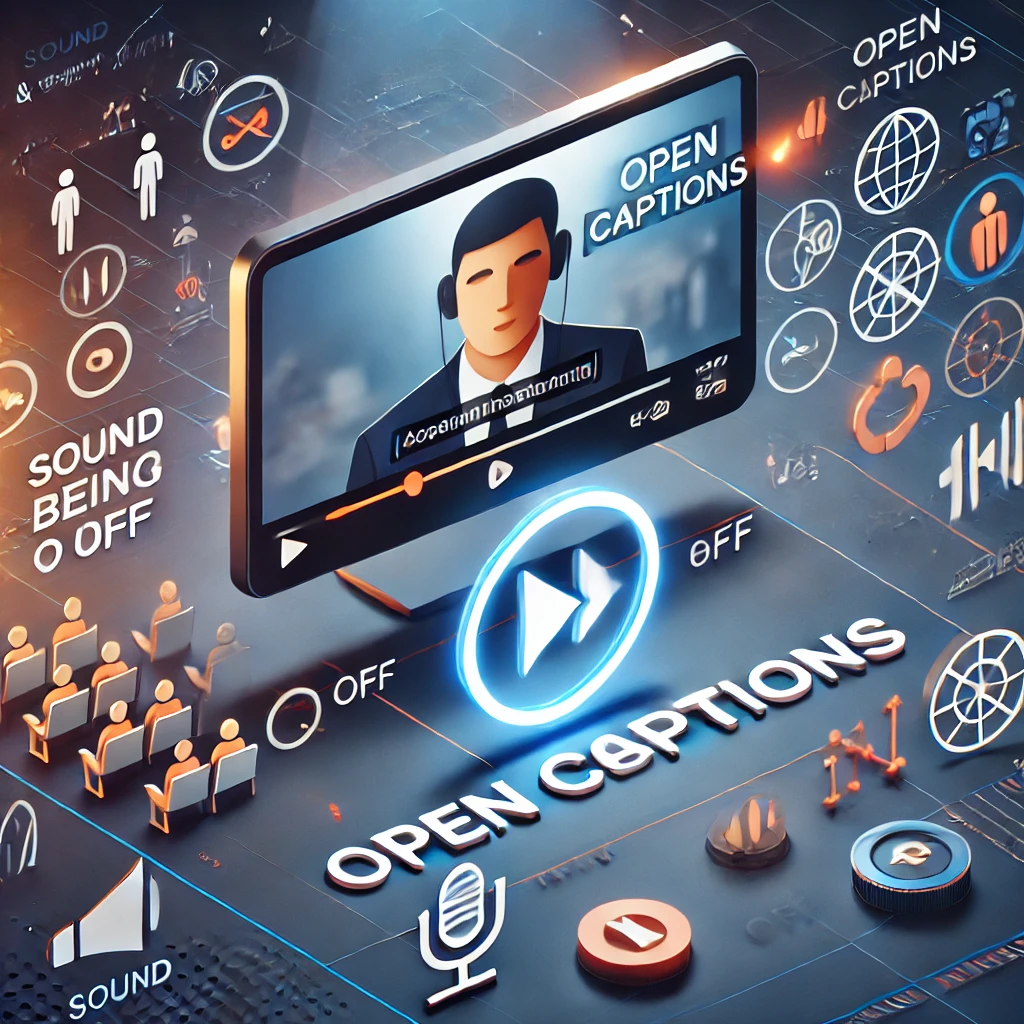
In today’s digital age, video content is ubiquitous across social media platforms, websites, and streaming services. As more people consume videos on the go or in different settings, accessibility features like captions have become crucial. Among the various types of captions, open captions stand out as a powerful tool for improving the viewing experience for diverse audiences. Open captions are subtitles that are embedded directly into the video and cannot be hidden or turned off by users.
Whether for accessibility, language translation, or viewer engagement, open captions have become an essential feature in modern video production.
What Are Open Captions?
Open captions are subtitles or text that are permanently embedded into a video. Unlike closed captions, which viewers can toggle on or off, open captions are always visible to everyone watching the video. This makes them a highly effective tool for ensuring that all viewers, regardless of their settings or preferences, can understand the content being presented.
Open captions are often used in scenarios where the viewing environment or platform might make closed captions difficult or unavailable, such as in public places, on social media feeds, or in international video sharing.
Why Use Open Captions?
- Accessibility for All Audiences Open captions are an important accessibility tool for people who are deaf or hard of hearing. By permanently displaying subtitles on the video, open captions ensure that these viewers can follow along with the dialogue and important sounds in the video. Additionally, open captions can help those watching videos in noisy environments or in places where they must keep the sound off, such as public transportation or workspaces.
- Improved Engagement Studies have shown that videos with captions, including open captions, tend to have higher engagement rates. Captions can capture attention, improve comprehension, and make videos more appealing to a broader audience. They also enhance retention of information, as viewers can read along while watching the video.
- Multilingual Audiences Open captions are especially helpful in multilingual settings. For international audiences or non-native speakers, captions offer a way to follow the content more easily. This is particularly useful for educational videos, marketing campaigns, and instructional content, where comprehension is key.
- Enhanced SEO and Searchability Open captions can improve the SEO performance of video content. While search engines cannot directly index the spoken words in a video, text-based captions make it easier to associate keywords with the video, improving discoverability. Additionally, videos with open captions are more likely to be shared and engaged with on social media platforms, driving traffic and visibility.
- Content Accessibility on All Platforms Not all platforms or devices support closed captions, especially in social media feeds or embedded players. Open captions ensure that subtitles are always available to the audience, regardless of the platform, device, or software they are using. This makes them particularly useful for marketing videos, social media campaigns, and mobile-first content.
Open Captions vs. Closed Captions
While both open and closed captions serve the same purpose of making video content more accessible and engaging, there are key differences between the two:
- Open Captions: Always visible and cannot be turned off. They are part of the video file itself, meaning no additional software or settings are required to view them.
- Closed Captions: Can be toggled on or off by the viewer, depending on their preferences or platform settings. Closed captions are typically stored as separate text files, which can be customized in terms of appearance (font size, color, etc.).
Which Should You Choose?
- Use open captions when you want to ensure that all viewers see the subtitles, particularly in videos shared on social media, in public places, or on platforms with limited captioning support.
- Opt for closed captions when giving viewers the flexibility to toggle captions on or off, especially on platforms that support robust captioning features like YouTube or Netflix.
Best Practices for Using Open Captions
When embedding open captions into your videos, it’s important to ensure that they are clear, readable, and don’t detract from the viewing experience. Here are some best practices to follow:
1. Choose an Appropriate Font and Size
Captions should be easy to read but not too large that they cover important parts of the video. Use a clean, sans-serif font like Arial or Helvetica, and ensure the font size is proportional to the video resolution.
2. Use High Contrast
Make sure there is enough contrast between the captions and the video background to ensure readability. White text with a black outline or shadow is a popular choice because it stands out against both light and dark backgrounds.
3. Keep the Timing in Sync
The timing of the captions is crucial. Ensure that the captions are synced properly with the spoken dialogue or audio cues. If captions appear too early or too late, it can confuse viewers and disrupt the flow of the video.
4. Limit the Number of Characters Per Line
Avoid overcrowding the screen with too much text at once. Stick to one to two lines of text at a time, with a character limit of around 32-40 characters per line. This ensures that viewers have enough time to read each caption without missing important details.
5. Include Non-Dialogue Sound Cues
For viewers who rely on captions, it’s important to include sound cues like [applause], [laughter], or [music playing] in the captions. This helps convey the full context of the scene, especially for those who are hard of hearing.
Examples of Open Caption Use
- Social Media Videos: Many videos on platforms like Facebook, Instagram, and Twitter use open captions to ensure that viewers, who often watch with the sound off, can still follow along. This is particularly important for ads, trailers, and promotional content that needs to grab attention quickly.
- Documentaries and Educational Videos: Open captions are often used in educational videos, where viewers need to follow detailed instructions or explanations. This ensures that learners can grasp the material, regardless of their hearing ability or environment.
- Public Spaces: In places like airports, bars, or gyms, where videos are played on screens in noisy environments, open captions are essential for viewers to understand the content without relying on audio.
Open captions offer a simple but effective way to make video content more accessible, engaging, and widely understood. By embedding subtitles directly into the video, businesses, educators, and creators can ensure that their content reaches a broader audience and is optimized for various platforms and viewing situations. Whether you’re producing marketing videos, tutorials, or entertainment content, open captions provide an inclusive solution that enhances the viewing experience for all.