


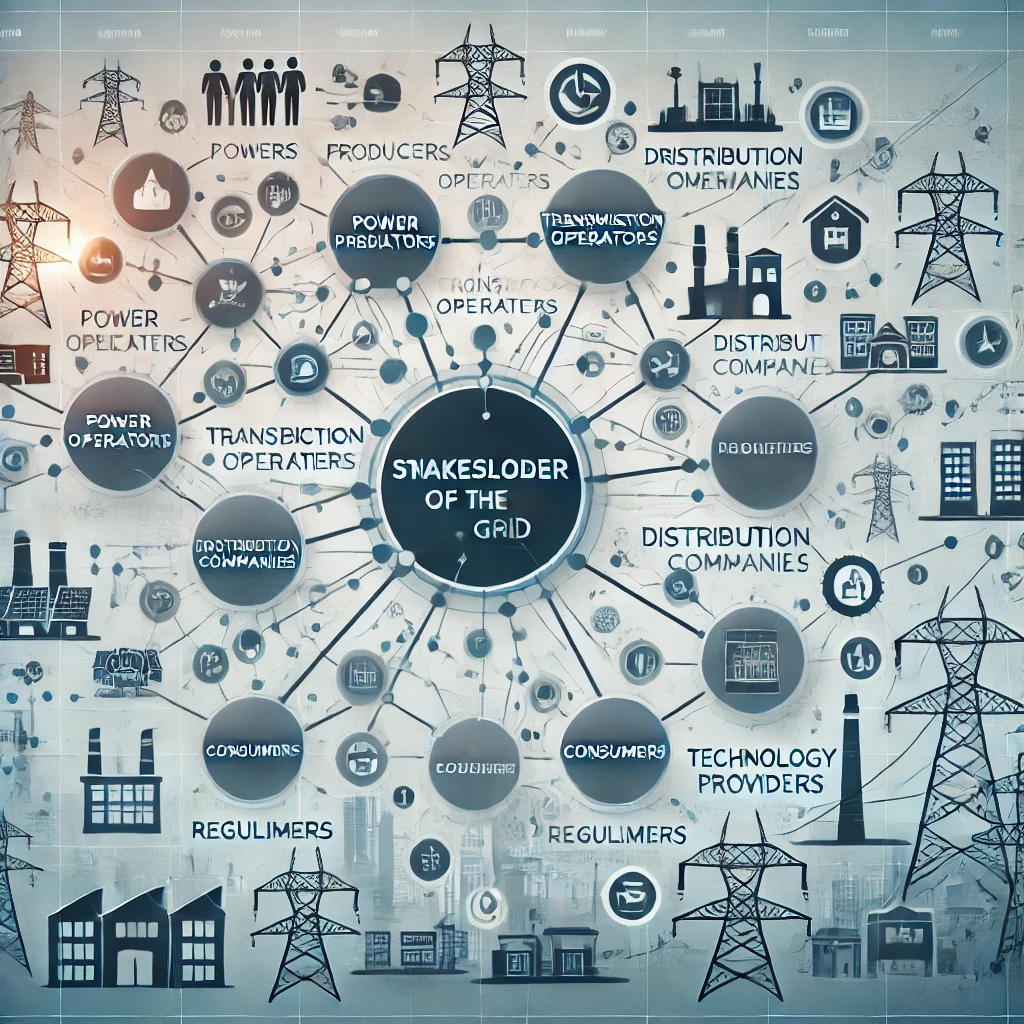
The power grid is a vast and intricate system responsible for generating, transmitting, and distributing electricity to homes, businesses, and industries across a country or region. In modern society, the grid is a vital lifeline, ensuring the continuous flow of energy that powers everyday life. However, behind this infrastructure lies a complex web of stakeholders, each playing a critical role in the efficient and sustainable operation of the power grid. To better understand the relationships and responsibilities within this ecosystem, a stakeholder map can be a valuable tool for visualizing how different entities interact and influence one another.
What is the Power Grid?
The power grid, also known as the electrical grid, is the interconnected network that delivers electricity from producers to consumers. It consists of four main components:
- Generation: The process of producing electricity, typically from power plants using various sources of energy such as fossil fuels, nuclear energy, wind, solar, and hydro.
- Transmission: The high-voltage transport of electricity over long distances from power plants to substations.
- Distribution: The local delivery of electricity from substations to consumers at a lower voltage.
- Consumption: The end-use of electricity by homes, businesses, factories, and other entities.
The power grid operates through a coordinated effort between various stakeholders, including energy producers, government regulators, utility companies, technology providers, and consumers. Understanding how these groups interrelate is crucial for maintaining grid stability, improving sustainability, and ensuring resilience in the face of challenges like climate change, cybersecurity threats, and evolving energy needs.
The Role of a Stakeholder Map in the Power Grid
A stakeholder map is a visual representation that identifies and categorizes all relevant parties involved in the operation of the power grid. It highlights the roles, interests, and influence of each stakeholder, providing clarity on how they interact with one another. By using this map, energy planners, policymakers, and business leaders can make informed decisions and manage relationships across the grid more effectively.
In the context of the power grid, a stakeholder map helps to answer critical questions:
- Who are the key players in energy generation, transmission, and distribution?
- How do government regulations and policies impact the grid’s operation?
- What role do consumers and environmental advocates play in influencing energy practices?
- How do technological advances, such as smart grids, affect stakeholder dynamics?
Key Stakeholders in the Power Grid
Understanding the power grid’s complexity requires identifying the various groups that have a vested interest in its operation. Here are the primary stakeholders typically involved in the grid’s ecosystem:
1. Energy Producers (Generators)
Energy producers are at the start of the grid’s supply chain. These include utility companies, independent power producers, and renewable energy providers that generate electricity using different sources such as coal, natural gas, nuclear, wind, and solar power. The shift toward renewable energy sources has added new players to the grid, such as solar and wind farm operators, while traditional producers are being pressured to transition to greener technologies.
Key Interests:
- Profitability and operational efficiency
- Meeting regulatory and environmental standards
- Increasing investment in renewable energy
- Ensuring grid reliability and resilience
2. Transmission Operators
Once electricity is generated, it must be transported over long distances through high-voltage power lines. Transmission operators manage this part of the grid and ensure that electricity flows efficiently from power plants to regional substations. These operators often need to coordinate across different regions, making their role critical in maintaining grid stability.
Key Interests:
- Grid stability and maintenance
- Infrastructure investment
- Reducing transmission losses
- Managing regional and cross-border energy flows
3. Distribution Companies
Distribution companies are responsible for delivering electricity from substations to end-users, such as residential homes, businesses, and industrial plants. These companies operate at lower voltage levels and are often the main point of contact for consumers when it comes to outages or billing.
Key Interests:
- Maintaining infrastructure and minimizing service disruptions
- Integrating distributed energy resources (e.g., rooftop solar panels)
- Balancing load and demand efficiently
- Customer satisfaction and engagement
4. Regulatory Bodies and Government Agencies
Regulatory bodies play a significant role in shaping the policies that govern the power grid. In many countries, energy markets are heavily regulated to ensure fair pricing, reliable service, and environmental protection. Government agencies at the federal, state, and local levels are also involved in setting energy policy, providing subsidies for renewable energy projects, and overseeing grid modernization efforts.
Key Interests:
- Ensuring grid reliability and security
- Promoting sustainability and carbon reduction goals
- Implementing regulations to protect consumers
- Encouraging the adoption of new technologies (e.g., smart grids, energy storage)
5. Consumers (Residential, Commercial, Industrial)
Consumers are at the receiving end of the power grid. They range from individual households to large industrial complexes, each with different energy needs and consumption patterns. Increasingly, consumers are taking an active role in the grid through the adoption of technologies like solar panels, electric vehicles, and smart meters, which allow for greater control over their energy usage.
Key Interests:
- Affordable and reliable electricity
- Access to clean and renewable energy
- Energy efficiency and cost savings
- Opportunities for decentralized generation (e.g., home solar systems)
6. Technology Providers
Advancements in technology are transforming the way the power grid operates. From smart grids and advanced metering infrastructure to energy storage and demand-response systems, technology providers are key stakeholders that help modernize the grid. These companies provide the hardware, software, and services needed to make the grid more efficient, resilient, and flexible.
Key Interests:
- Developing innovative energy solutions (e.g., battery storage, grid optimization)
- Collaborating with utilities and government on smart grid initiatives
- Enhancing cybersecurity for grid infrastructure
- Supporting renewable energy integration
7. Environmental Groups and Advocacy Organizations
With the increasing focus on climate change and the transition to sustainable energy, environmental groups are important stakeholders that influence power grid policies and practices. These organizations advocate for reducing greenhouse gas emissions, increasing the share of renewable energy in the grid, and pushing for better environmental regulations.
Key Interests:
- Reducing the environmental impact of energy production
- Promoting clean and renewable energy adoption
- Advocating for grid decarbonization
- Protecting ecosystems affected by energy infrastructure
8. Investors and Financial Institutions
Energy infrastructure requires significant capital investment, and investors are key stakeholders in funding grid modernization, renewable energy projects, and transmission upgrades. Financial institutions often work with utility companies and developers to finance large-scale projects that drive the grid forward.
Key Interests:
- Ensuring a return on investment in energy projects
- Assessing risk in an evolving energy market
- Supporting the transition to sustainable energy
- Identifying new opportunities in clean technology
Visualizing Stakeholder Relationships
A stakeholder map provides a visual framework that helps illustrate the relationships between these various groups. By mapping out each stakeholder’s influence, roles, and objectives, the power grid’s complexities become more understandable, allowing decision-makers to:
- Identify key partnerships and collaborations
- Understand the influence of different stakeholders on energy policies
- Anticipate potential conflicts or synergies between stakeholder interests
- Develop strategies that align diverse stakeholder goals toward a common objective, such as grid modernization or renewable energy integration
Challenges and Opportunities
Managing relationships between power grid stakeholders is not without its challenges. Balancing economic, environmental, and technical concerns often leads to competing priorities. For example:
- Transition to Renewable Energy: Traditional energy producers may face financial and regulatory challenges when transitioning to renewables, while new energy providers push for market entry.
- Infrastructure Modernization: While technology providers and regulators advocate for smart grid adoption, transmission and distribution companies may struggle with the costs and complexities of upgrading aging infrastructure.
- Consumer Expectations: As consumers demand cleaner energy and more control over their energy use, utilities must find ways to integrate decentralized energy resources like home solar systems while maintaining grid stability.
However, these challenges also present significant opportunities for collaboration. For instance, partnerships between utilities, technology providers, and consumers can lead to more efficient grid management, better energy storage solutions, and greater use of renewable energy sources.
The power grid is a highly interconnected system that relies on a diverse range of stakeholders, from energy producers and consumers to regulators and technology providers. A stakeholder map helps clarify these relationships, highlighting the roles, interests, and influences that shape the grid’s operation. As the grid evolves to meet new challenges—such as increasing demand for clean energy, integrating advanced technologies, and ensuring grid resilience—the ability to navigate and collaborate with stakeholders becomes essential for the grid’s future sustainability and success.