


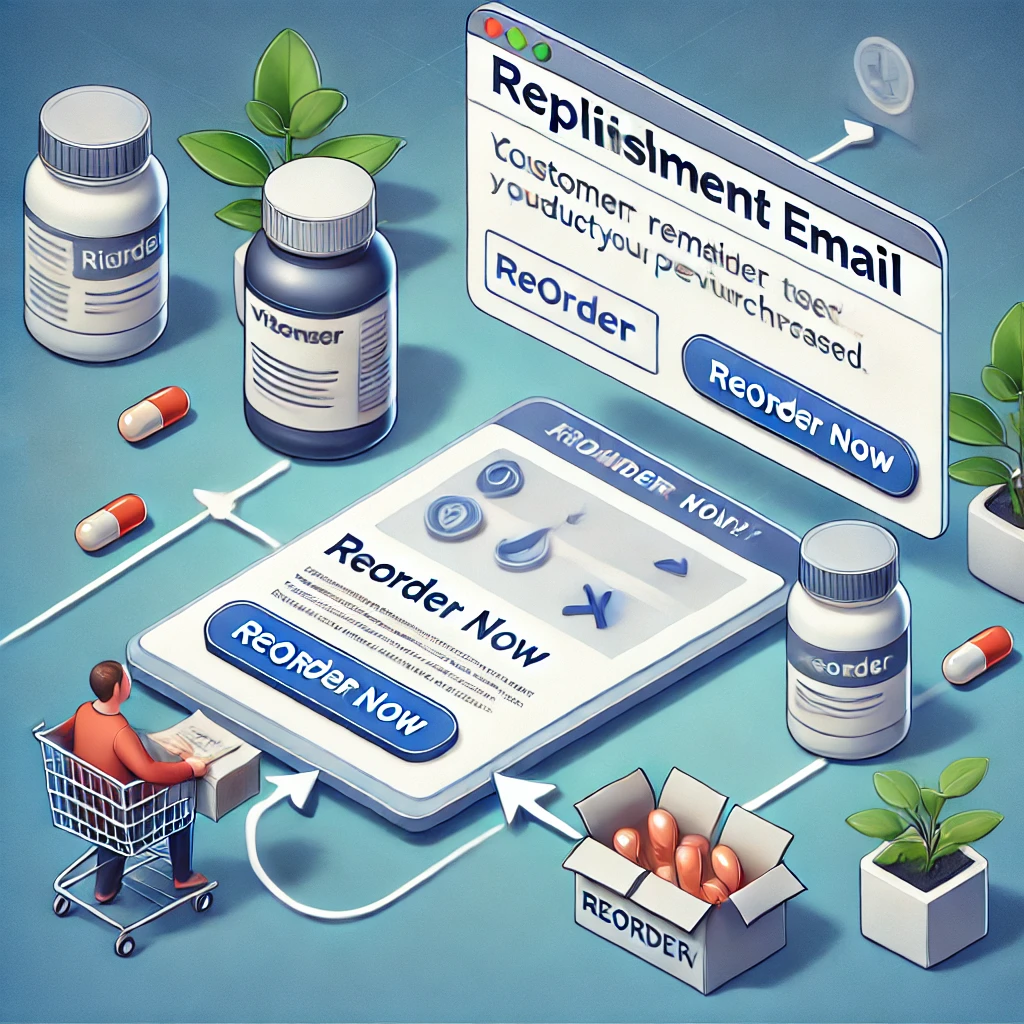
Replenishment emails are a powerful marketing tool designed to remind customers to make repeat purchases when the items they previously bought are likely to run out. These emails are highly relevant for businesses that sell consumable products, such as beauty products, health supplements, pet food, or household supplies—items that need to be repurchased regularly. By sending timely, personalized reminders, businesses can stay top-of-mind with their customers and drive repeat sales, increasing customer lifetime value.
This article will explore how replenishment emails work, the benefits they offer, best practices for crafting effective emails, and how to incorporate this strategy into a broader email marketing plan.
What Are Replenishment Emails?
Replenishment emails are automated messages sent to customers based on their past purchase behavior, specifically reminding them to reorder items that are likely to be running low. These emails are typically triggered after a certain amount of time has passed since the initial purchase, calculated based on the product’s typical usage cycle.
For example, if a customer buys a 30-day supply of vitamins, a replenishment email might be sent after 25 days to remind the customer that their supply is almost depleted and it’s time to place a new order.
Replenishment emails are particularly effective for consumable goods, where customers need to make regular purchases. These emails act as convenient reminders, eliminating the need for customers to manually track when they need to reorder, and thus encouraging them to stay loyal to the brand.
How Replenishment Emails Work
Replenishment emails are typically part of an automated email marketing system and work by tracking customer purchases and sending reminders based on pre-set intervals. Here’s how the process works:
- Tracking Purchase Data: The first step is gathering purchase data from customers. Every time a customer buys a product, their purchase information is logged, including the item purchased, the quantity, and the date of purchase.
- Setting a Replenishment Schedule: Based on the product type and its average usage cycle, an automated system calculates the approximate time when the customer is likely to run out of the product. For example, if a customer buys a 60-day supply of protein powder, a replenishment email might be scheduled to go out 50 days later, giving the customer time to reorder before they run out.
- Sending Personalized Reminders: When the replenishment time approaches, an email is automatically sent to the customer, reminding them to reorder. The email typically includes personalized details, such as the specific product they purchased, a convenient “reorder now” button, and possibly a discount or incentive to encourage the repeat purchase.
- Tracking Responses and Follow-Up: After the replenishment email is sent, the system tracks whether the customer responds by placing a new order. If they do not, a follow-up reminder email might be sent a few days later to prompt them again.
Benefits of Replenishment Emails
Replenishment emails offer numerous benefits for both businesses and customers, making them a valuable part of any email marketing strategy:
- Increased Repeat Sales: By reminding customers to reorder before they run out, replenishment emails encourage repeat purchases, helping businesses maintain a steady stream of revenue from loyal customers.
- Enhanced Customer Retention: Customers are more likely to remain loyal to a brand when they receive timely reminders to reorder essential products. These emails help establish a strong, ongoing relationship with customers by providing a convenient and personalized service.
- Improved Customer Experience: Replenishment emails make life easier for customers by reminding them when they need to reorder, saving them the hassle of tracking product usage themselves. This convenience can increase customer satisfaction and loyalty.
- Higher Customer Lifetime Value: By driving consistent repeat purchases, replenishment emails can increase the customer lifetime value (CLV), which is the total revenue a business can expect from a customer over the duration of their relationship.
- Cost-Effective Marketing: Automated replenishment emails are cost-effective to implement and require minimal ongoing effort. Once the system is set up, these emails are sent automatically, providing a high return on investment (ROI) with minimal manual work.
Best Practices for Replenishment Emails
To make the most of replenishment emails, businesses should follow several best practices:
- Personalize the Email: Personalization is key to making replenishment emails feel relevant and engaging. Address the customer by name, include the exact product they purchased, and offer a direct link to reorder the same item with one click. Customers are more likely to act on an email that feels tailored to their needs.
- Time It Right: Timing is crucial for replenishment emails. Send the email when the customer is likely to be running low on the product, but before they run out completely. This encourages them to reorder without having to rush or look for alternative suppliers.
- Include a Call to Action (CTA): Make it as easy as possible for customers to reorder by including a clear and prominent CTA, such as a “Reorder Now” button. The CTA should lead directly to the product page or, even better, to a pre-filled cart with the product already added.
- Offer Incentives: To further encourage repeat purchases, consider offering incentives in the replenishment email, such as a discount, free shipping, or a limited-time offer. Incentives can help motivate customers to act quickly and complete the reorder.
- Provide Multiple Reordering Options: Some customers may prefer to modify their original order, such as changing the quantity or trying a different product. Offer the option to adjust the reorder, so customers feel more in control and are more likely to engage with the email.
- Highlight Subscription Options: For customers who regularly purchase consumable products, it may make sense to offer a subscription option in the replenishment email. Subscriptions provide a more convenient option for customers and ensure consistent recurring revenue for businesses.
- Follow-Up with Non-Responders: If a customer doesn’t act on the initial replenishment email, consider sending a follow-up reminder a few days later. This second touchpoint can act as a gentle nudge to remind the customer to reorder.
- Use Engaging Design: The design of the replenishment email should be clean, visually appealing, and easy to navigate. Use product images, a clear CTA, and concise messaging to grab the customer’s attention and encourage action.
Examples of Replenishment Email Use Cases
Replenishment emails are especially effective for businesses that sell products with a natural usage cycle or shelf life. Some common examples include:
- Health and Beauty Products: Customers who purchase skincare products, vitamins, supplements, or cosmetics often need to replenish their stock regularly. Replenishment emails remind them to reorder before they run out, offering convenience and reinforcing the brand’s value.
- Household Goods: For consumable household items like cleaning supplies, paper products, or laundry detergent, replenishment emails ensure customers maintain their stock without needing to remember when to reorder.
- Pet Supplies: Pet owners frequently need to buy items like pet food, grooming products, or supplements. Replenishment emails help ensure that customers don’t forget to order what their pets need, creating a positive experience for both owner and pet.
- Subscription Boxes: Subscription services that offer monthly or quarterly deliveries of products (such as meal kits, fitness supplements, or beauty boxes) can use replenishment emails to remind customers when their next order is due or encourage early reorders.
- Food and Beverage: Businesses that sell food and beverage products, such as coffee, snacks, or protein shakes, can send replenishment emails when customers are likely running low, helping them avoid running out of their favorite items.
Replenishment emails are a simple yet powerful tool for driving repeat purchases, improving customer retention, and boosting revenue. By providing timely reminders for customers to reorder consumable products, businesses can create a seamless shopping experience while maximizing the lifetime value of their customers.
When done right—with personalized messaging, well-timed delivery, and clear calls to action—replenishment emails can be an integral part of any e-commerce or subscription-based business’s email marketing strategy. These emails not only help businesses maintain consistent sales but also build stronger, more loyal customer relationships.