


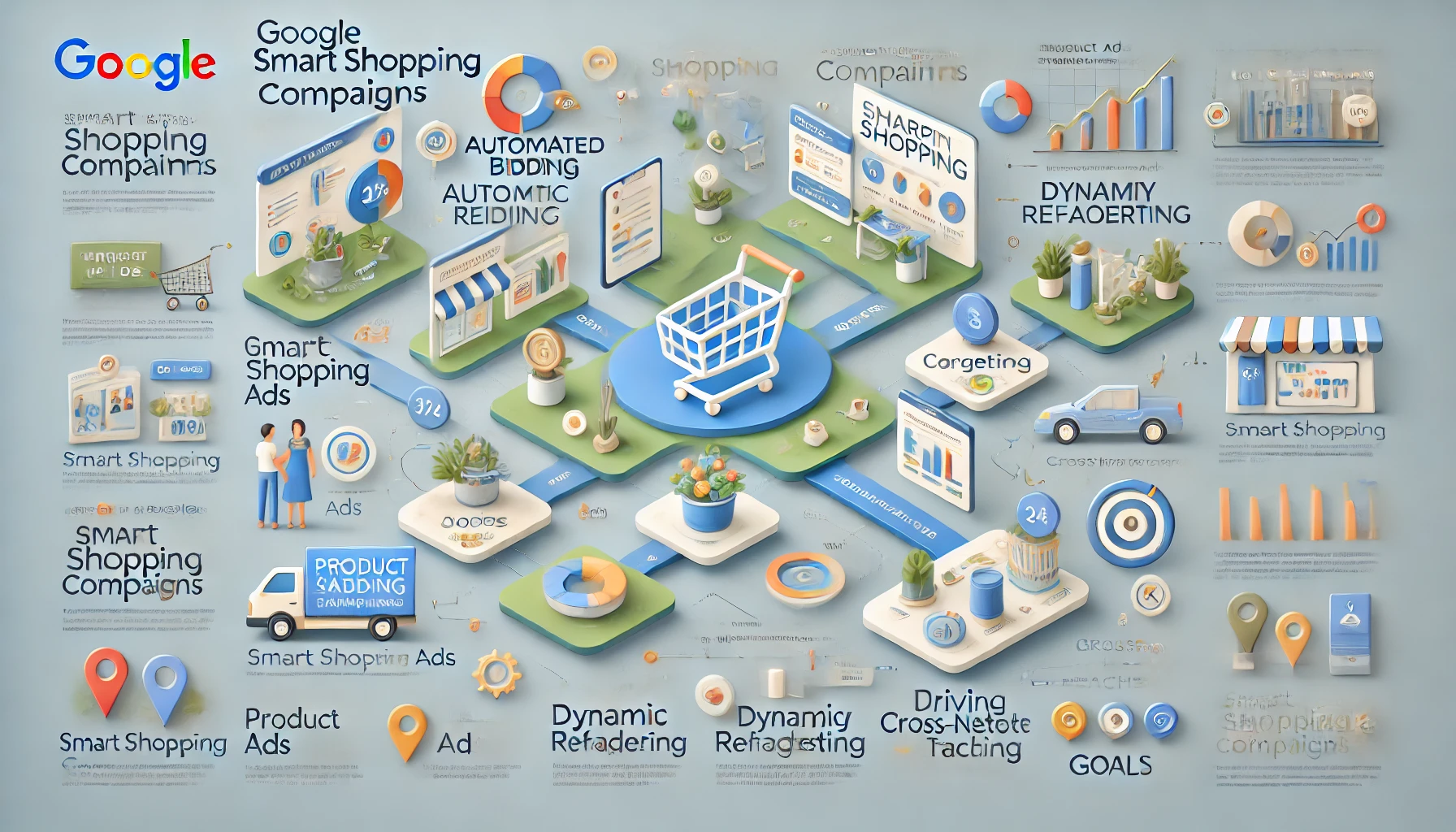
In the e-commerce world, effective advertising can make a substantial difference in driving sales and reaching the right customers. Google’s Smart Shopping Campaigns provide a powerful, automated solution that combines Shopping ads and display retargeting to optimize for more conversions and higher revenue. By leveraging machine learning, Smart Shopping Campaigns simplify the process of reaching high-intent shoppers while maximizing return on ad spend (ROAS). These campaigns reach users across Google’s entire ecosystem, including the Search Network, Display Network, YouTube, and Gmail, giving advertisers an efficient way to promote their products at scale.
What is a Smart Shopping Campaign?
A Smart Shopping Campaign is an advanced type of Shopping campaign within Google Ads that automates ad placements and bidding to maximize conversions and conversion value. Unlike traditional Shopping campaigns, which require manual adjustments and oversight, Smart Shopping Campaigns rely on Google’s machine learning algorithms to automatically manage key elements of the campaign. By combining standard Shopping ads with dynamic remarketing ads, Smart Shopping Campaigns provide a comprehensive advertising approach that targets both new and returning customers across multiple Google properties.
Key Features of Smart Shopping Campaigns
- Automated Bidding and Placements: Smart Shopping Campaigns use machine learning to adjust bids in real-time, optimizing placements for maximum conversion value. Bids are automatically set based on each auction’s likelihood of conversion.
- Dynamic Remarketing: In addition to reaching new customers, Smart Shopping Campaigns display ads to previous visitors, using dynamic remarketing to re-engage users with relevant products they’ve viewed before.
- Cross-Network Reach: Smart Shopping ads appear across Google’s entire network, including Google Search, Google Display, YouTube, and Gmail, enabling advertisers to reach shoppers at various touchpoints.
- Goal-Driven Optimization: Advertisers can set a target ROAS (Return on Ad Spend) if they have specific profitability goals, allowing Smart Shopping to prioritize ad spend on high-value opportunities.
How Smart Shopping Campaigns Work
Smart Shopping Campaigns utilize Google’s machine learning to automate the following aspects of campaign management:
- Ad Creation: Based on product data from Google Merchant Center, Smart Shopping Campaigns automatically generate ads using product images, titles, descriptions, and prices. These ads are dynamically customized for each user and platform.
- Audience Targeting: Google identifies and targets the most relevant audiences by analyzing signals such as user search behavior, interests, and engagement history. The algorithm adjusts targeting based on factors like device, location, and time of day, ensuring ads reach high-intent shoppers.
- Real-Time Bidding: Smart Shopping Campaigns adjust bids in real-time, using historical performance data and real-time signals to optimize for conversions and conversion value. The system automatically bids higher for users likely to convert and lowers bids in auctions with lower potential ROI.
- Dynamic Retargeting: Smart Shopping also dynamically retargets past website visitors, showing them ads that feature specific products they viewed previously. This feature is particularly effective for recapturing potential customers and moving them further along the sales funnel.
Benefits of Smart Shopping Campaigns
Smart Shopping Campaigns offer several benefits that make them an attractive choice for e-commerce businesses aiming to maximize visibility and conversions:
- Simplified Campaign Management: Smart Shopping automates bidding, ad creation, and targeting, reducing the workload and complexity involved in managing separate Shopping and display campaigns.
- Enhanced Reach Across Google Networks: By delivering ads across Google’s Search Network, Display Network, YouTube, and Gmail, Smart Shopping Campaigns increase the chances of engaging customers at multiple touchpoints, from awareness to conversion.
- Higher Conversion Rates with Dynamic Retargeting: By retargeting users who have previously shown interest, Smart Shopping increases the likelihood of converting high-value visitors, helping to capture sales that might otherwise be lost.
- Goal-Based Optimization: For businesses focused on maximizing profitability, Smart Shopping allows for goal-driven optimization based on target ROAS, helping to achieve the highest possible return on ad spend.
- Improved Performance with Machine Learning: Machine learning continuously refines the campaign, using data to make adjustments that maximize efficiency and ensure budget is allocated toward high-converting opportunities.
Setting Up a Smart Shopping Campaign
Creating a Smart Shopping Campaign requires a few key steps, including linking the Google Merchant Center account and defining campaign goals. Here’s a step-by-step guide:
- Link Google Merchant Center to Google Ads: To create a Smart Shopping Campaign, you need an active Google Merchant Center account with a product feed, which provides Google with essential product data (e.g., images, titles, and prices). Link this account to Google Ads to access product information for ad creation.
- Enable Conversion Tracking: For Smart Shopping to optimize effectively, conversion tracking must be enabled in Google Ads. Conversion tracking captures essential data, such as purchases or leads, which Google uses to refine campaign performance.
- Define Campaign Goals: If you have a specific target ROAS, set it during campaign creation to guide the optimization process. This goal-driven approach helps ensure the campaign aligns with profitability targets.
- Choose a Daily Budget: Set a daily budget based on your advertising goals. Google will optimize ad spend within this budget to maximize conversion value across networks.
- Launch the Campaign: Once the campaign is set up, Google’s algorithms will automatically manage the bidding, ad placements, and audience targeting, continuously optimizing for conversions.
Best Practices for Smart Shopping Campaigns
To maximize the effectiveness of Smart Shopping Campaigns, consider the following best practices:
- Provide High-Quality Product Data: The quality of your product feed directly affects ad performance. Ensure titles, descriptions, and images are clear, accurate, and visually appealing, as these elements influence click-through rates.
- Set a Realistic Target ROAS: If profitability is a priority, set a target ROAS that aligns with your business objectives. However, avoid setting an overly ambitious ROAS, as it can limit ad visibility by restricting bidding flexibility.
- Allocate an Adequate Budget: Smart Shopping Campaigns use data to optimize performance, and a sufficient budget is necessary to gather this data. Avoid setting a budget too low, as it may restrict the campaign’s learning process and overall effectiveness.
- Allow for a Learning Period: Smart Shopping Campaigns need time to gather data and refine their algorithms, so allow the campaign to run for at least two weeks before evaluating performance. This learning period helps the algorithm make informed adjustments for optimal results.
- Monitor Conversion Performance: Regularly review conversion data and ROAS to ensure that the campaign meets your goals. If you notice underperformance, consider adjusting the budget or target ROAS.
Examples of Smart Shopping Campaigns in Action
Smart Shopping Campaigns are highly versatile and can be tailored to various business goals, from driving online sales to increasing in-store visits. Here are a few examples:
Example 1: Online Retailer
An online fashion retailer might use a Smart Shopping Campaign to promote seasonal collections. By setting a target ROAS, the campaign can maximize revenue from high-margin items while re-engaging users who previously viewed or added products to their carts.
Example 2: Electronics Store
An electronics store could use Smart Shopping to promote popular gadgets across multiple networks. By targeting users on YouTube and Gmail, the campaign can reach potential customers during the research phase and retarget them as they get closer to making a purchase.
Example 3: Local Furniture Store
A furniture store might use Smart Shopping to drive both online sales and in-store visits by targeting customers within a specific geographic radius. Dynamic retargeting can encourage users who previously viewed items online to visit the store and make a purchase.
Limitations and Considerations
While Smart Shopping Campaigns offer significant advantages, there are some limitations to consider:
- Limited Control Over Placements and Bids: Smart Shopping’s automation limits advertisers’ control over bid adjustments and placements, which may not be suitable for advertisers who prefer more hands-on management.
- Simplified Reporting: Smart Shopping Campaigns provide limited reporting data compared to traditional Shopping campaigns, making it challenging to analyze performance at a granular level.
- Dependency on Machine Learning: Because Smart Shopping relies heavily on Google’s algorithms, underperformance may be challenging to diagnose and correct if it occurs.
For these reasons, Smart Shopping Campaigns are generally best suited for advertisers who prioritize ease of use and high-level performance goals over precise control and detailed reporting.
The Power of Smart Shopping Campaigns for E-commerce Success
Smart Shopping Campaigns offer an advanced solution for businesses aiming to maximize sales and optimize ROAS across Google’s networks. With features like automated bidding, dynamic retargeting, and cross-network reach, these campaigns empower businesses to reach customers at every stage of their purchasing journey. By leveraging machine learning, Smart Shopping not only simplifies campaign management but also ensures that ads are shown to users with the highest likelihood of conversion. For e-commerce businesses looking to scale their advertising efforts efficiently, Smart Shopping Campaigns provide a powerful, automated approach to achieving advertising goals and driving revenue growth.