Close Menu
Marketingino.comMarketingino.com
    What's Hot

    5 Self-Development Books Worth Reading This Summer (And What You Will Actually Take Away From Each)

    5. 6. 2026

    24 Hours in Vienna: The Honest Guide for People Who Hate Wasting Time

    5. 6. 2026

    How to Build a YouTube Channel as a Business: The Monetization Models That Actually Work

    5. 6. 2026
    Facebook X (Twitter) Instagram
    Facebook Instagram LinkedIn YouTube Bluesky
    Marketingino.comMarketingino.com
    • Home
    • Entrepreneurship
      1. Business Models
      2. Side Hustles
      3. Small Business
      4. Venture Capital
      5. Sustainability & Impact
      6. Startups
      7. Legal & Compliance
      Featured
      Side Hustles

      How to Build a YouTube Channel as a Business: The Monetization Models That Actually Work

      5. 6. 2026
      Recent

      How to Build a YouTube Channel as a Business: The Monetization Models That Actually Work

      5. 6. 2026

      The Unsexy Truth About Bootstrapping: What Nobody Tells You Before You Start

      5. 6. 2026

      EBITDA Explained: What It Is, Why It Matters, and When to Ignore It

      20. 5. 2026
    • Marketing
      1. Marketing Strategy
      2. AI & Automation
      3. Social Media
      4. Branding
      5. Content Marketing
      6. SEO & GEO
      7. Growth Marketing
      8. Digital Marketing
      9. Data & Analytics
      10. Customer Experience
      11. Vocabulary
      Featured
      AI & Automation

      AI and the Future of Marketing Jobs: What’s Actually at Risk, What Isn’t, and What You Should Do About It

      5. 6. 2026
      Recent

      AI and the Future of Marketing Jobs: What’s Actually at Risk, What Isn’t, and What You Should Do About It

      5. 6. 2026

      Agentic AI in E-commerce: How Autonomous Shopping Is Rewriting the Rules of Retail Media

      20. 5. 2026

      GEO: What Is Generative Engine Optimization and Why It Matters in 2026

      28. 4. 2026
    • Leadership
      1. Coaching & Mentoring
      2. Conflict & Crisis Management
      3. Emotional Intelligence
      4. Executive Mindset
      5. Remote & Hybrid Teams
      6. Team Building
      7. Vision & Strategy
      Featured
      Emotional Intelligence

      Slow Thinking in a Fast World: Why the Best Leaders Deliberately Pump the Brakes

      5. 6. 2026
      Recent

      Slow Thinking in a Fast World: Why the Best Leaders Deliberately Pump the Brakes

      5. 6. 2026

      Leading Through Uncertainty: What History’s Toughest Commanders Knew That Most Managers Don’t

      5. 6. 2026

      Marcus Aurelius and Modern Leadership: What the Philosopher Emperor Can Teach Us Today

      25. 5. 2026
    • Ecommerce
      1. Conversion Optimization
      2. Cross-Border Ecommerce
      3. Customer Retention
      4. D2C & Brands
      5. Ecommerce Marketing
      6. Marketplaces
      7. Online Stores
      8. Payments & Logistics
      Featured
      D2C & Brands

      Recommerce: Why Selling Used Is the Fastest-Growing Channel in E-Commerce

      20. 4. 2026
      Recent

      Recommerce: Why Selling Used Is the Fastest-Growing Channel in E-Commerce

      20. 4. 2026

      Agentic Commerce: How AI Is Taking Over the Shopping Cart

      20. 4. 2026

      The D2C Loyalty Playbook: 6 Tactics That Don’t Require a Single Promo Code

      11. 3. 2026
    • Life
      1. Business Stories
      2. Lifestyle
      3. Net Worth
      4. Travel
      Featured
      Lifestyle

      5 Self-Development Books Worth Reading This Summer (And What You Will Actually Take Away From Each)

      5. 6. 2026
      Recent

      5 Self-Development Books Worth Reading This Summer (And What You Will Actually Take Away From Each)

      5. 6. 2026

      24 Hours in Vienna: The Honest Guide for People Who Hate Wasting Time

      5. 6. 2026

      10 Powerful Reasons 2025 Proved Life Is Getting Better

      31. 12. 2025
    Marketingino.comMarketingino.com
    Home»Marketing»Data & Analytics»The Power of Net Promoter Score (NPS): A Simple Yet Effective Survey Tool
    Data & Analytics

    The Power of Net Promoter Score (NPS): A Simple Yet Effective Survey Tool

    27. 9. 20244 Mins Read
    Facebook Twitter Pinterest LinkedIn Tumblr Email
    OpenAI
    Share
    Facebook Twitter LinkedIn Pinterest Email

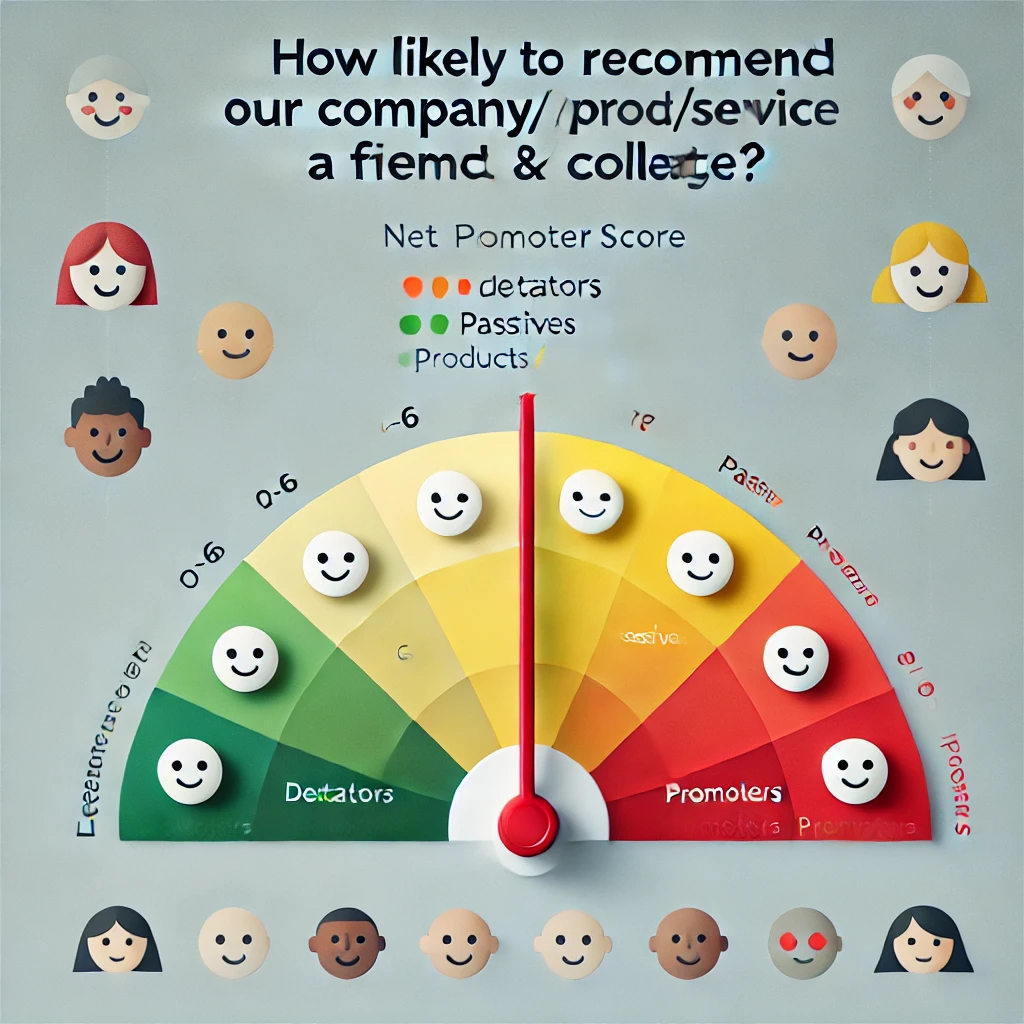
    In today’s customer-centric business landscape, companies constantly seek ways to measure customer satisfaction and loyalty. Among the many tools available, the Net Promoter Score (NPS) survey stands out due to its simplicity, efficiency, and effectiveness in providing actionable insights. It is a single-question survey that asks respondents to rate the likelihood that they would recommend a company, product, or service to a friend or colleague on a scale from zero to ten.

    What is NPS?

    The Net Promoter Score, introduced by Fred Reichheld in 2003, is based on the premise that the best way to gauge customer satisfaction is to understand how likely they are to recommend a business. The core NPS question is:

    “On a scale from 0 to 10, how likely are you to recommend [our company/product/service] to a friend or colleague?”

    Respondents select a number that reflects their likelihood to recommend. Based on their answers, they are categorized into three distinct groups:

    1. Promoters (9-10): These are loyal enthusiasts who are highly likely to recommend the company to others. Promoters drive growth and are more likely to make repeat purchases.
    2. Passives (7-8): These customers are satisfied but unenthusiastic. They are not as likely to promote the company, and they can be swayed by competitors.
    3. Detractors (0-6): These are dissatisfied customers who can damage the brand through negative word-of-mouth and are at a higher risk of churn.

    The NPS is then calculated by subtracting the percentage of detractors from the percentage of promoters. The score can range from -100 (if all respondents are detractors) to +100 (if all are promoters).

    Formula: NPS= Promoters% − Detractors%

    A positive score generally indicates more promoters than detractors, while a negative score suggests an issue with customer satisfaction and loyalty.

    Why Use NPS?

    The simplicity of the NPS survey is its primary strength. In an age where customers are bombarded with lengthy surveys, the NPS’s single-question format drastically increases response rates. Despite being short, it provides valuable insights that can be a predictor of future growth. Here’s why businesses should consider adopting NPS:

    1. Customer Loyalty and Retention: NPS focuses on customers’ likelihood to recommend, which correlates directly with loyalty. Loyal customers are more likely to stick around, even if competitors offer similar products or services.
    2. Actionable Insights: While the NPS question itself is straightforward, it opens the door for follow-up questions, such as “What is the primary reason for your score?” This qualitative feedback helps businesses identify key areas for improvement.
    3. Benchmarking: NPS is widely used across industries, which means it can be a great benchmarking tool. Companies can compare their NPS against industry averages and set goals to improve customer loyalty.
    4. Focus on Growth: Research has shown that companies with high NPS tend to grow faster than their competitors. Promoters drive referrals, which in turn leads to organic growth through word-of-mouth marketing.
    5. Cross-functional Benefits: NPS isn’t just a customer service tool; it’s useful across various departments. Marketing teams can use the score to craft strategies, sales can address pain points for detractors, and product development can innovate based on customer feedback.

    Implementing NPS

    Deploying an NPS survey can be done via multiple channels: email, website pop-ups, SMS, or even in-app surveys for digital products. The key to effective NPS usage lies in its integration into regular feedback cycles. Companies that review NPS data quarterly or monthly can stay ahead of customer trends and proactively address potential issues.

    Moreover, combining NPS with other metrics, such as Customer Satisfaction (CSAT) or Customer Effort Score (CES), can provide a more comprehensive view of customer experience.

    How to Interpret NPS Scores

    While NPS results can range from -100 to +100, understanding the score’s context is crucial. For instance, an NPS of 50 is excellent in some industries, while in others, it might be average. Here’s a general guideline for interpreting NPS scores:

    • +50 and above: This is considered excellent and indicates a large majority of promoters.
    • +20 to +49: This is a good range, suggesting that a company has more promoters than detractors.
    • 0 to +19: The company has a neutral NPS, which could signal opportunities for improvement.
    • Below 0: A negative NPS is a red flag, indicating that detractors outnumber promoters, which often points to deeper issues in the customer experience.

    The Net Promoter Score survey’s simplicity and effectiveness make it a valuable tool for companies looking to measure and improve customer loyalty. By focusing on how likely customers are to recommend a company, NPS serves as both a measure of customer satisfaction and a predictor of future growth. As businesses increasingly recognize the importance of loyalty and word-of-mouth referrals, NPS continues to be a cornerstone of modern customer feedback strategies.

    Share. Facebook Twitter Pinterest LinkedIn Tumblr Email

    Related Posts

    Why First-Party Data Is the Secret Weapon of Successful D2C Brands

    4. 12. 2025

    How the “Context of Decision-Making” Shapes Our Choices

    16. 7. 2025

    Beyond the Score: How to Measure the Right NPS and Truly Understand Your Customers

    22. 5. 2025

    Is the Pet Industry Outpacing the Kids’ Market in Profitability?

    18. 5. 2025
    Add A Comment
    Leave A Reply Cancel Reply

    Trending

    5 Self-Development Books Worth Reading This Summer (And What You Will Actually Take Away From Each)

    5. 6. 2026

    24 Hours in Vienna: The Honest Guide for People Who Hate Wasting Time

    5. 6. 2026

    How to Build a YouTube Channel as a Business: The Monetization Models That Actually Work

    5. 6. 2026

    The Unsexy Truth About Bootstrapping: What Nobody Tells You Before You Start

    5. 6. 2026

    AI and the Future of Marketing Jobs: What’s Actually at Risk, What Isn’t, and What You Should Do About It

    5. 6. 2026

    Slow Thinking in a Fast World: Why the Best Leaders Deliberately Pump the Brakes

    5. 6. 2026
    About Us

    Marketingino is a modern business magazine for founders, marketers, e-commerce leaders, and innovators who are building what’s next.

    We cover the tools, tactics, and stories driving today’s most ambitious ventures—from early-stage startups to scaling e-shops, from breakthrough marketing strategies to the frontier of AI and automation.

    Email Us: info@marketingino.com

    Marketingino.com
    Facebook Instagram LinkedIn YouTube Bluesky
    • Home
    • Privacy Policy
    • Cookie Policy (EU)
    • Disclaimer
    © 2026 Marketingino.com, © 2026 Vision Projects, s. r. o.

    Type above and press Enter to search. Press Esc to cancel.

    Manage Consent
    To provide the best experiences, we use technologies like cookies to store and/or access device information. Consenting to these technologies will allow us to process data such as browsing behavior or unique IDs on this site. Not consenting or withdrawing consent, may adversely affect certain features and functions.
    Functional Always active
    The technical storage or access is strictly necessary for the legitimate purpose of enabling the use of a specific service explicitly requested by the subscriber or user, or for the sole purpose of carrying out the transmission of a communication over an electronic communications network.
    Preferences
    The technical storage or access is necessary for the legitimate purpose of storing preferences that are not requested by the subscriber or user.
    Statistics
    The technical storage or access that is used exclusively for statistical purposes. The technical storage or access that is used exclusively for anonymous statistical purposes. Without a subpoena, voluntary compliance on the part of your Internet Service Provider, or additional records from a third party, information stored or retrieved for this purpose alone cannot usually be used to identify you.
    Marketing
    The technical storage or access is required to create user profiles to send advertising, or to track the user on a website or across several websites for similar marketing purposes.
    • Manage options
    • Manage services
    • Manage {vendor_count} vendors
    • Read more about these purposes
    View preferences
    • {title}
    • {title}
    • {title}