


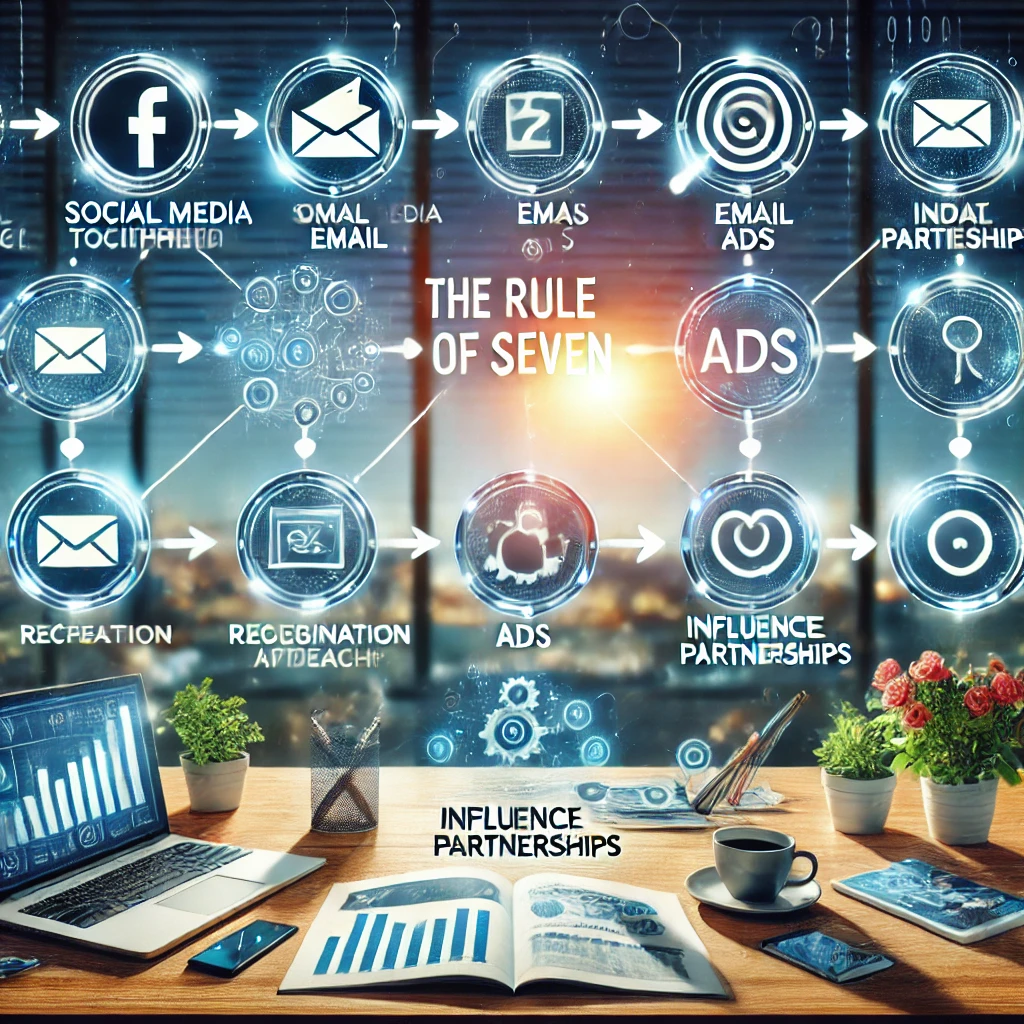
In marketing, the Rule of Seven is a concept that suggests a potential customer needs to encounter a brand’s message at least seven times before they are ready to take action, whether that’s making a purchase, signing up for a service, or engaging with the brand in other meaningful ways. This principle highlights the importance of consistent messaging and brand visibility in the customer journey. In this article, we’ll dive into the origins of the Rule of Seven, how it applies to modern marketing, and strategies to implement it effectively across different channels.
1. What is the Rule of Seven?
The Rule of Seven is a psychological marketing concept that originated in the 1930s with the movie industry, which found that audiences needed to hear about a film at least seven times before they were likely to watch it. The same principle has since been applied to marketing and advertising, with the premise that the average consumer needs multiple touchpoints with a brand to progress from initial awareness to purchase.
The Rule of Seven isn’t a strict scientific formula but rather a general guideline that emphasizes the power of repetition in building brand familiarity and trust. By consistently presenting a message, marketers can reinforce brand identity, communicate value, and create a sense of reliability that ultimately drives customer action.
2. Why the Rule of Seven Matters in Marketing
A. Building Brand Familiarity and Recognition
Repeated exposure helps potential customers remember a brand and recognize it when they encounter it again. The more often they see the brand, the more familiar it becomes, leading to greater trust and credibility.
B. Reinforcing the Brand’s Value Proposition
Each interaction is an opportunity to communicate the brand’s unique value. Consistent messaging across multiple touchpoints reinforces the benefits and differentiators of the brand, making it easier for potential customers to understand and remember.
C. Overcoming Customer Hesitation
The buying process often involves some hesitation or uncertainty. Repeated exposure provides reassurance and helps potential customers feel more confident in their decision, especially for higher-value or complex products.
D. Staying Top-of-Mind
With consumers constantly bombarded by ads, maintaining top-of-mind awareness is essential. The Rule of Seven ensures a brand remains relevant and memorable amid competing messages, making it more likely customers will recall it when they’re ready to make a purchase.
E. Increasing the Likelihood of Conversion
Each exposure brings the customer closer to taking action. By consistently presenting a message across various platforms, marketers increase the likelihood that the customer will move from consideration to conversion.
3. Modern Applications of the Rule of Seven
In today’s digital age, customers are exposed to messages through a wide range of channels, from social media and email to search ads and influencer content. Here’s how the Rule of Seven applies across these modern touchpoints:
A. Social Media
Social media provides a platform for frequent, non-intrusive brand interactions. Through posts, stories, ads, and influencer partnerships, brands can reach customers multiple times, often seamlessly integrating into their daily online routines.
B. Email Marketing
Email allows for personalized and direct communication. Regular emails—such as newsletters, promotions, and abandoned cart reminders—provide repeated exposure to the brand in a customer’s inbox, reinforcing messages over time.
C. Retargeting Ads
Retargeting ads show ads to people who have previously visited a website but didn’t convert. By appearing on websites and social media, retargeting ads remind potential customers of the brand and encourage them to return.
D. Content Marketing
Content marketing provides valuable information that can keep customers engaged with the brand. Blog posts, videos, and how-to guides give customers multiple reasons to interact with the brand, offering repeated exposure that builds familiarity.
E. Influencer Marketing
Influencers can help increase a brand’s visibility across multiple posts and platforms. By consistently sharing a brand’s message, influencers can reach followers multiple times, reinforcing the brand’s identity and value.
F. Paid Search and Display Ads
Paid ads on search engines and display networks allow brands to appear at the top of search results or on popular websites. These ads increase the frequency of exposure and can be specifically targeted to reach the right audience multiple times.
4. Implementing the Rule of Seven in a Marketing Strategy
To apply the Rule of Seven effectively, it’s important to plan a multi-channel approach that ensures repeated exposure without overwhelming the audience. Here’s how to implement this concept strategically:
A. Define Your Core Message
Identify the main message you want to communicate to potential customers. This message should highlight the brand’s value proposition, benefits, and differentiators. Consistency in the core message helps reinforce brand identity across all touchpoints.
B. Create a Cohesive Multi-Channel Strategy
Develop a strategy that incorporates various platforms, such as social media, email, search, and content marketing. Each channel offers a unique way to engage the audience, and using multiple channels ensures broader and more frequent exposure.
C. Use Retargeting to Remind Potential Customers
Retargeting can be a powerful tool to remind visitors of your brand after their first interaction. This tactic can help nudge potential customers back to your website, bringing them closer to taking action.
D. Leverage Influencers for Additional Reach
Partnering with influencers who share your target audience can increase the frequency of exposure by reaching customers through a trusted source. Influencers add credibility to the message and can reinforce brand awareness.
E. Engage with Personalized Email Marketing
Using personalized emails, such as reminders, updates, or promotions, can help keep potential customers engaged. Tailored email campaigns provide multiple touchpoints that align with the Rule of Seven without feeling repetitive.
F. Maintain Brand Consistency Across All Platforms
Ensure that the brand’s visual identity, tone, and message are consistent across all channels. Consistency strengthens brand recognition and helps customers make the connection between different interactions.
G. Track and Adjust for Optimal Frequency
Monitor the performance of your campaigns and adjust the frequency of your messages if necessary. Too many touchpoints can lead to ad fatigue, so it’s essential to find a balance between consistent exposure and overwhelming the audience.
5. Examples of Brands Using the Rule of Seven Effectively
A. Coca-Cola
Coca-Cola uses a multi-channel approach that includes TV ads, social media posts, influencer collaborations, and outdoor advertising to reinforce its brand message. The consistent exposure across various channels helps Coca-Cola stay top-of-mind, even for consumers who aren’t actively seeking the product.
B. Amazon
Amazon’s retargeting ads and personalized email recommendations provide continuous engagement, reminding customers of items they may be interested in purchasing. By showing ads and sending reminders, Amazon encourages repeated interactions, often leading to a purchase.
C. Nike
Nike combines social media, email, content marketing, and influencer partnerships to reinforce its brand message. Through consistent branding and inspirational messaging, Nike has created a loyal following, with each touchpoint bringing potential customers closer to taking action.
6. Potential Challenges and How to Overcome Them
A. Risk of Overexposure
Too many touchpoints in a short period can lead to ad fatigue, where customers become irritated or disengaged. To avoid this, spread out interactions over time and diversify the messaging to keep it fresh and relevant.
B. Inconsistent Messaging
If the brand’s message varies significantly across platforms, customers may become confused or fail to recognize the brand. Ensure that the core message remains consistent across all channels to reinforce brand identity.
C. Difficulty Measuring Frequency
Tracking the exact number of interactions can be challenging, especially across different platforms. Using analytics tools and customer relationship management (CRM) software can help track touchpoints and improve targeting.
7. The Long-Term Impact of the Rule of Seven
The Rule of Seven remains a relevant and valuable concept in modern marketing, emphasizing the need for multiple touchpoints to create brand familiarity, build trust, and ultimately drive conversions. By strategically applying this rule through a cohesive, multi-channel approach, brands can increase the likelihood of moving potential customers from awareness to action.
In an age where consumers are constantly exposed to advertisements, the Rule of Seven underscores the importance of persistent, consistent engagement. When used effectively, this approach creates a positive customer experience that not only encourages conversions but also fosters long-term loyalty.