Close Menu
Marketingino.comMarketingino.com
    What's Hot

    Leading a Marketing Team Through AI Disruption

    19. 8. 2026

    From Individual Contributor to CMO: A Leadership Roadmap for Marketers

    19. 8. 2026

    Remote Leadership: Why Every Manager Should Hold Open Office Hours

    17. 7. 2026
    Facebook X (Twitter) Instagram
    Facebook Instagram LinkedIn YouTube Bluesky
    Marketingino.comMarketingino.com
    • Home
    • Entrepreneurship
      1. Business Models
      2. Side Hustles
      3. Small Business
      4. Venture Capital
      5. Sustainability & Impact
      6. Startups
      7. Legal & Compliance
      Featured
      Side Hustles

      How to Build a YouTube Channel as a Business: The Monetization Models That Actually Work

      5. 6. 2026
      Recent

      How to Build a YouTube Channel as a Business: The Monetization Models That Actually Work

      5. 6. 2026

      The Unsexy Truth About Bootstrapping: What Nobody Tells You Before You Start

      5. 6. 2026

      EBITDA Explained: What It Is, Why It Matters, and When to Ignore It

      20. 5. 2026
    • Marketing
      1. Marketing Strategy
      2. AI & Automation
      3. Social Media
      4. Branding
      5. Content Marketing
      6. SEO & GEO
      7. Growth Marketing
      8. Digital Marketing
      9. Data & Analytics
      10. Customer Experience
      11. Vocabulary
      Featured
      AI & Automation

      Leading a Marketing Team Through AI Disruption

      19. 8. 2026
      Recent

      Leading a Marketing Team Through AI Disruption

      19. 8. 2026

      9 AI Marketing Tools Every Marketer Should Know in 2026

      17. 7. 2026

      AI and the Future of Marketing Jobs: What’s Actually at Risk, What Isn’t, and What You Should Do About It

      5. 6. 2026
    • Leadership
      1. Coaching & Mentoring
      2. Conflict & Crisis Management
      3. Emotional Intelligence
      4. Executive Mindset
      5. Remote & Hybrid Teams
      6. Team Building
      7. Vision & Strategy
      Featured
      Vision & Strategy

      From Individual Contributor to CMO: A Leadership Roadmap for Marketers

      19. 8. 2026
      Recent

      From Individual Contributor to CMO: A Leadership Roadmap for Marketers

      19. 8. 2026

      Remote Leadership: Why Every Manager Should Hold Open Office Hours

      17. 7. 2026

      Slow Thinking in a Fast World: Why the Best Leaders Deliberately Pump the Brakes

      5. 6. 2026
    • Ecommerce
      1. Conversion Optimization
      2. Cross-Border Ecommerce
      3. Customer Retention
      4. D2C & Brands
      5. Ecommerce Marketing
      6. Marketplaces
      7. Online Stores
      8. Payments & Logistics
      Featured
      D2C & Brands

      Recommerce: Why Selling Used Is the Fastest-Growing Channel in E-Commerce

      20. 4. 2026
      Recent

      Recommerce: Why Selling Used Is the Fastest-Growing Channel in E-Commerce

      20. 4. 2026

      Agentic Commerce: How AI Is Taking Over the Shopping Cart

      20. 4. 2026

      The D2C Loyalty Playbook: 6 Tactics That Don’t Require a Single Promo Code

      11. 3. 2026
    • Life
      1. Business Stories
      2. Lifestyle
      3. Net Worth
      4. Travel
      Featured
      Lifestyle

      5 Self-Development Books Worth Reading This Summer (And What You Will Actually Take Away From Each)

      5. 6. 2026
      Recent

      5 Self-Development Books Worth Reading This Summer (And What You Will Actually Take Away From Each)

      5. 6. 2026

      24 Hours in Vienna: The Honest Guide for People Who Hate Wasting Time

      5. 6. 2026

      10 Powerful Reasons 2025 Proved Life Is Getting Better

      31. 12. 2025
    Marketingino.comMarketingino.com
    Home»Marketing»Marketing Strategy»Toyota’s Marketing Strategy: A Comprehensive Analysis
    Marketing Strategy

    Toyota’s Marketing Strategy: A Comprehensive Analysis

    22. 7. 20244 Mins Read
    Facebook Twitter Pinterest LinkedIn Tumblr Email
    Canva
    Share
    Facebook Twitter LinkedIn Pinterest Email

    Toyota, one of the most recognized automotive brands globally, has built its reputation on reliability, innovation, and customer satisfaction. This article explores the key elements of Toyota’s marketing strategy that have helped the company maintain its position as a global leader in the automotive industry.

    Brand Positioning

    Toyota positions itself as a brand synonymous with quality, reliability, and innovation. The company’s tagline, “Let’s Go Places,” reflects its commitment to providing vehicles that offer exceptional performance and enhance the driving experience. Toyota’s strong emphasis on safety, durability, and environmental responsibility has helped build a loyal customer base.

    Product Diversification

    Toyota’s product lineup is extensive, catering to a wide range of consumer preferences and needs. The company’s product diversification strategy includes:

    • Sedans and Hatchbacks: Models like the Camry, Corolla, and Yaris.
    • SUVs and Crossovers: Popular models such as the RAV4, Highlander, and 4Runner.
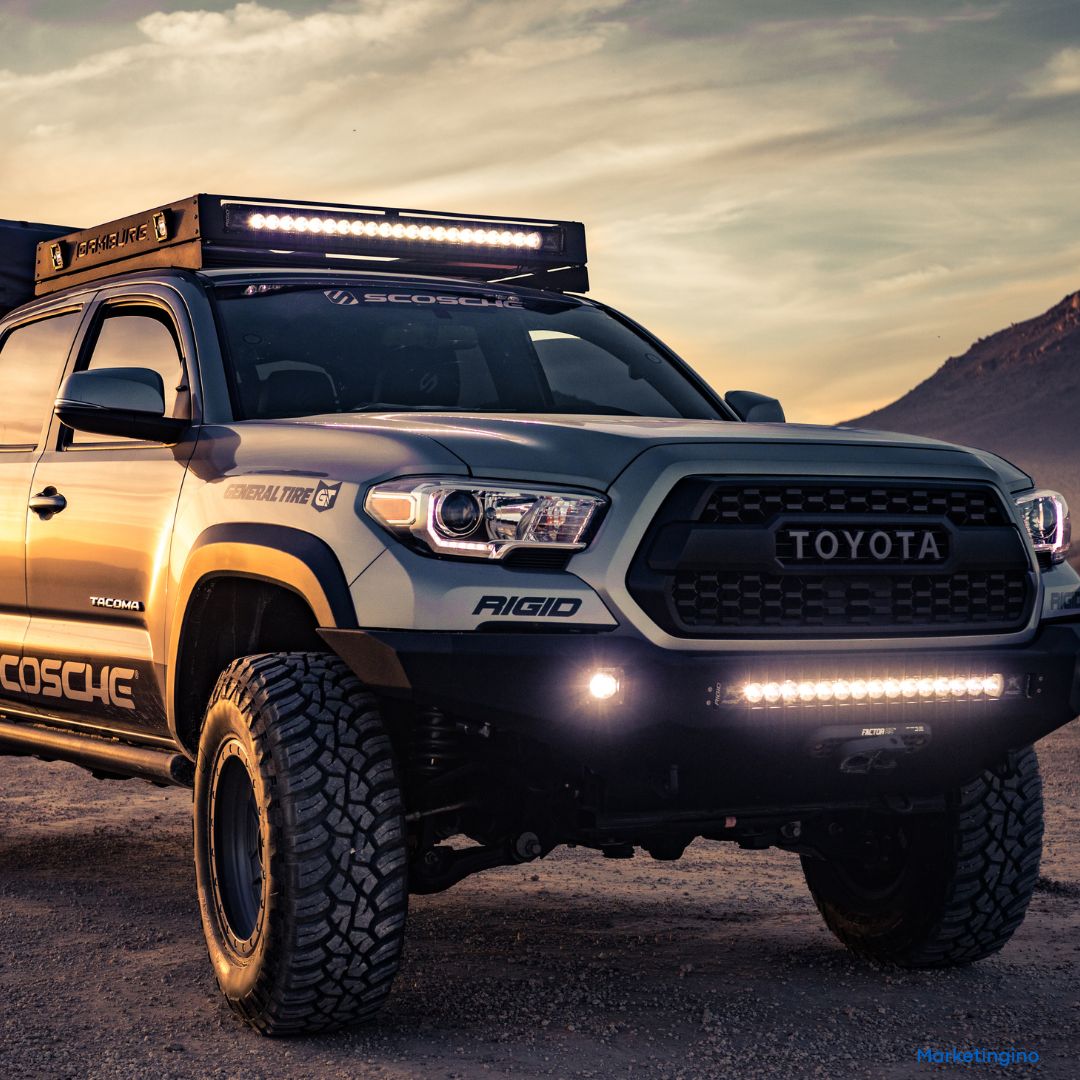
    • Trucks: Including the Tacoma and Tundra.
    • Hybrid and Electric Vehicles: The Prius, Mirai, and the newly launched bZ4X.
    • Luxury Vehicles: Under the Lexus brand, offering high-end options for luxury car buyers.

    This broad range ensures that Toyota can meet the demands of various market segments, from budget-conscious consumers to those seeking luxury and performance.

    Innovation and R&D Investment

    Toyota invests significantly in research and development to stay ahead in the competitive automotive industry. The company is a pioneer in hybrid technology, with the Prius being one of the most successful hybrid models globally. Toyota’s commitment to innovation is also evident in its efforts to develop hydrogen fuel cell vehicles and electric vehicles (EVs). This focus on sustainable technologies aligns with global trends towards eco-friendly transportation solutions.

    Marketing and Advertising

    Toyota’s marketing campaigns are designed to emphasize the quality, reliability, and innovative features of its vehicles. Key elements of Toyota’s marketing strategy include:

    • Compelling Advertisements: Toyota’s advertisements often focus on the reliability and safety of its vehicles, as well as their innovative features. The company uses a mix of emotional and practical appeals to connect with consumers.
    • High-Profile Sponsorships: Toyota sponsors major sporting events and teams, including the Olympic Games and various motorsports events, to enhance brand visibility and associate with excellence and performance.
    • Digital Marketing: Toyota effectively uses digital platforms to reach a broad audience, employing social media, influencer partnerships, and targeted online advertising.

    Global Reach and Localization

    Toyota’s global presence is complemented by its localization strategy. The company adapts its marketing efforts to suit local preferences, cultures, and market conditions. For instance, Toyota offers region-specific models and variations to meet the unique demands of different markets. This localization strategy helps Toyota remain relevant and appealing to consumers worldwide.

    Strategic Partnerships and Collaborations

    Toyota engages in strategic partnerships and collaborations to strengthen its market position and drive innovation. Partnerships with tech companies, such as its collaboration with Panasonic on battery technology, enhance Toyota’s capabilities in developing advanced automotive technologies. Additionally, Toyota’s alliances with other automakers help in sharing resources and expertise, leading to mutual benefits.

    Customer Engagement and After-Sales Service

    Toyota prioritizes customer engagement and provides excellent after-sales service. The company uses various channels, including social media, to interact with customers, gather feedback, and address concerns. Toyota’s extensive dealership and service network ensures that customers have access to reliable maintenance and support, reinforcing brand loyalty.

    Sustainability and Corporate Social Responsibility (CSR)

    Toyota is committed to sustainability and corporate social responsibility. The company has set ambitious goals for reducing its environmental impact, including the Toyota Environmental Challenge 2050, which aims to achieve zero carbon emissions from its vehicles and operations. Toyota’s CSR initiatives, such as community development programs and disaster relief efforts, enhance its brand image and demonstrate its commitment to positive social impact.

    Toyota’s marketing strategy is a blend of innovation, product diversification, effective advertising, and customer-centric approaches. By consistently delivering reliable, high-quality vehicles and adapting to market trends, Toyota has maintained its status as a global automotive leader. The company’s focus on sustainability, customer satisfaction, and continuous improvement ensures that it remains at the forefront of the industry, driving the future of mobility.

    Share. Facebook Twitter Pinterest LinkedIn Tumblr Email

    Related Posts

    The Marketing Strategy of Pantone: How a Color System Became a Cultural Icon

    16. 1. 2026

    LA vs. NYC Real Estate: Two Cities, Two Marketing Strategies

    11. 12. 2025

    Red Bull’s Content Empire: How an Energy Drink Became a Media Company

    6. 12. 2025

    Lidl’s Marketing Strategy: How a German Discount Retailer Challenged Premium Supermarkets Across Europe

    5. 12. 2025
    Add A Comment
    Leave A Reply Cancel Reply

    Trending

    Leading a Marketing Team Through AI Disruption

    19. 8. 2026

    From Individual Contributor to CMO: A Leadership Roadmap for Marketers

    19. 8. 2026

    Remote Leadership: Why Every Manager Should Hold Open Office Hours

    17. 7. 2026

    9 AI Marketing Tools Every Marketer Should Know in 2026

    17. 7. 2026

    5 Self-Development Books Worth Reading This Summer (And What You Will Actually Take Away From Each)

    5. 6. 2026

    24 Hours in Vienna: The Honest Guide for People Who Hate Wasting Time

    5. 6. 2026
    About Us

    Marketingino is a modern business magazine for founders, marketers, e-commerce leaders, and innovators who are building what’s next.

    We cover the tools, tactics, and stories driving today’s most ambitious ventures—from early-stage startups to scaling e-shops, from breakthrough marketing strategies to the frontier of AI and automation.

    Email Us: info@marketingino.com

    Marketingino.com
    Facebook Instagram LinkedIn YouTube Bluesky
    • Home
    • Privacy Policy
    • Cookie Policy (EU)
    • Disclaimer
    © 2026 Marketingino.com, © 2026 Vision Projects, s. r. o.

    Type above and press Enter to search. Press Esc to cancel.