Close Menu
Marketingino.comMarketingino.com
    What's Hot

    5 Self-Development Books Worth Reading This Summer (And What You Will Actually Take Away From Each)

    5. 6. 2026

    24 Hours in Vienna: The Honest Guide for People Who Hate Wasting Time

    5. 6. 2026

    How to Build a YouTube Channel as a Business: The Monetization Models That Actually Work

    5. 6. 2026
    Facebook X (Twitter) Instagram
    Facebook Instagram LinkedIn YouTube Bluesky
    Marketingino.comMarketingino.com
    • Home
    • Entrepreneurship
      1. Business Models
      2. Side Hustles
      3. Small Business
      4. Venture Capital
      5. Sustainability & Impact
      6. Startups
      7. Legal & Compliance
      Featured
      Side Hustles

      How to Build a YouTube Channel as a Business: The Monetization Models That Actually Work

      5. 6. 2026
      Recent

      How to Build a YouTube Channel as a Business: The Monetization Models That Actually Work

      5. 6. 2026

      The Unsexy Truth About Bootstrapping: What Nobody Tells You Before You Start

      5. 6. 2026

      EBITDA Explained: What It Is, Why It Matters, and When to Ignore It

      20. 5. 2026
    • Marketing
      1. Marketing Strategy
      2. AI & Automation
      3. Social Media
      4. Branding
      5. Content Marketing
      6. SEO & GEO
      7. Growth Marketing
      8. Digital Marketing
      9. Data & Analytics
      10. Customer Experience
      11. Vocabulary
      Featured
      AI & Automation

      AI and the Future of Marketing Jobs: What’s Actually at Risk, What Isn’t, and What You Should Do About It

      5. 6. 2026
      Recent

      AI and the Future of Marketing Jobs: What’s Actually at Risk, What Isn’t, and What You Should Do About It

      5. 6. 2026

      Agentic AI in E-commerce: How Autonomous Shopping Is Rewriting the Rules of Retail Media

      20. 5. 2026

      GEO: What Is Generative Engine Optimization and Why It Matters in 2026

      28. 4. 2026
    • Leadership
      1. Coaching & Mentoring
      2. Conflict & Crisis Management
      3. Emotional Intelligence
      4. Executive Mindset
      5. Remote & Hybrid Teams
      6. Team Building
      7. Vision & Strategy
      Featured
      Emotional Intelligence

      Slow Thinking in a Fast World: Why the Best Leaders Deliberately Pump the Brakes

      5. 6. 2026
      Recent

      Slow Thinking in a Fast World: Why the Best Leaders Deliberately Pump the Brakes

      5. 6. 2026

      Leading Through Uncertainty: What History’s Toughest Commanders Knew That Most Managers Don’t

      5. 6. 2026

      Marcus Aurelius and Modern Leadership: What the Philosopher Emperor Can Teach Us Today

      25. 5. 2026
    • Ecommerce
      1. Conversion Optimization
      2. Cross-Border Ecommerce
      3. Customer Retention
      4. D2C & Brands
      5. Ecommerce Marketing
      6. Marketplaces
      7. Online Stores
      8. Payments & Logistics
      Featured
      D2C & Brands

      Recommerce: Why Selling Used Is the Fastest-Growing Channel in E-Commerce

      20. 4. 2026
      Recent

      Recommerce: Why Selling Used Is the Fastest-Growing Channel in E-Commerce

      20. 4. 2026

      Agentic Commerce: How AI Is Taking Over the Shopping Cart

      20. 4. 2026

      The D2C Loyalty Playbook: 6 Tactics That Don’t Require a Single Promo Code

      11. 3. 2026
    • Life
      1. Business Stories
      2. Lifestyle
      3. Net Worth
      4. Travel
      Featured
      Lifestyle

      5 Self-Development Books Worth Reading This Summer (And What You Will Actually Take Away From Each)

      5. 6. 2026
      Recent

      5 Self-Development Books Worth Reading This Summer (And What You Will Actually Take Away From Each)

      5. 6. 2026

      24 Hours in Vienna: The Honest Guide for People Who Hate Wasting Time

      5. 6. 2026

      10 Powerful Reasons 2025 Proved Life Is Getting Better

      31. 12. 2025
    Marketingino.comMarketingino.com
    Home»Vocabulary»Change Management: Ensuring Smooth Transitions in Organizations
    Vocabulary

    Change Management: Ensuring Smooth Transitions in Organizations

    20. 6. 20243 Mins Read
    Facebook Twitter Pinterest LinkedIn Tumblr Email
    OpenAI
    Share
    Facebook Twitter LinkedIn Pinterest Email

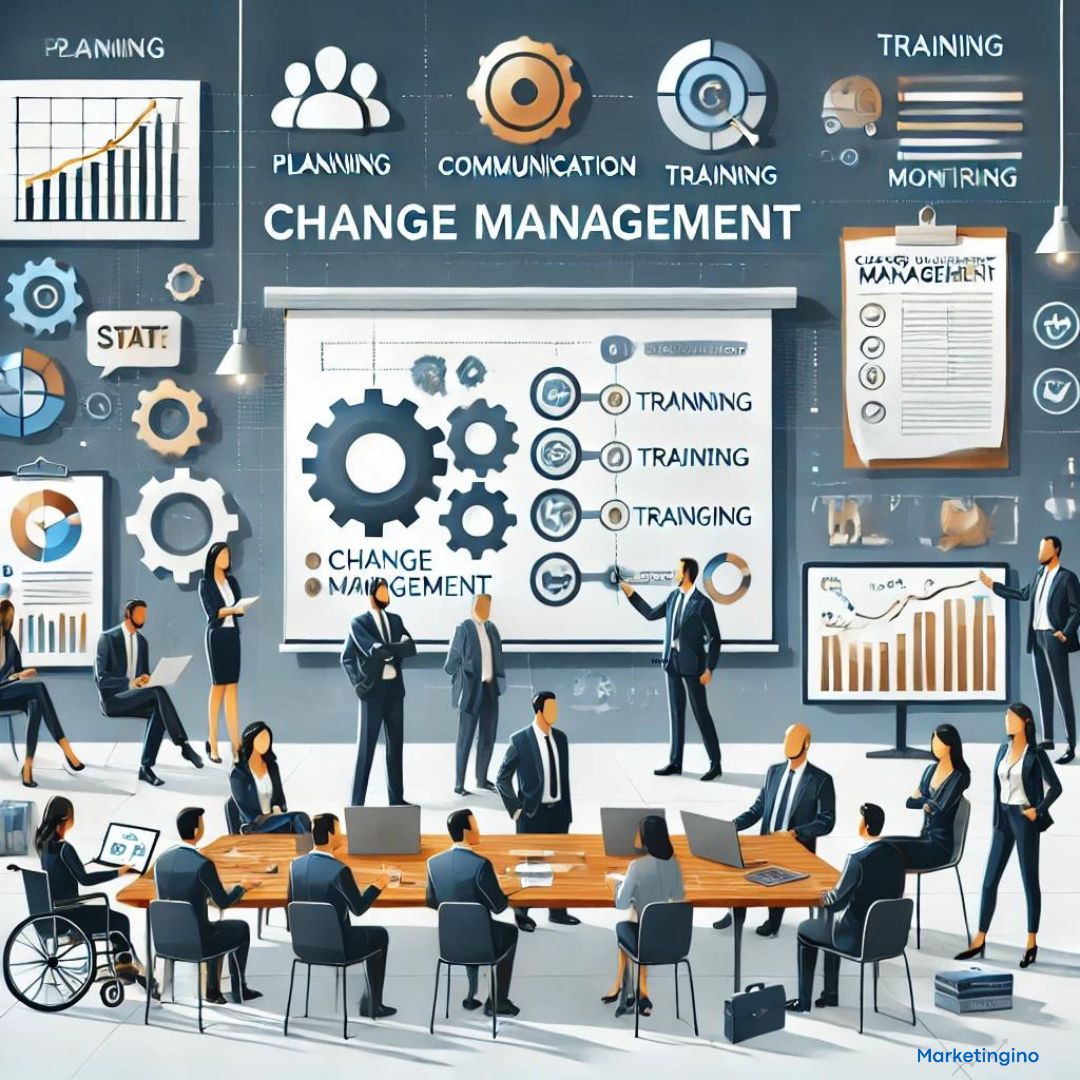
    Change management encompasses the methods, practices, approaches, and processes that organizations use to ensure that changes are implemented smoothly and effectively. Whether it involves restructuring, new technologies, or shifts in business strategies, change management is essential for minimizing disruption and achieving desired outcomes.

    Key Components of Change Management

    1. Change Planning:
      • Definition: The process of outlining the steps and strategies needed to implement change.
      • Role: It involves setting clear objectives, identifying stakeholders, and developing a detailed action plan.
    2. Communication:
      • Definition: The dissemination of information regarding the change to all affected parties.
      • Role: Effective communication ensures that everyone understands the reasons for the change, the benefits, and the impact on their roles.
    3. Training and Support:
      • Definition: Providing the necessary resources and education to help employees adapt to the change.
      • Role: Training programs and support systems are crucial for building the skills and confidence needed to embrace new processes or technologies.
    4. Stakeholder Engagement:
      • Definition: Involving all relevant parties in the change process to gain their input and buy-in.
      • Role: Engaging stakeholders helps to address concerns, reduce resistance, and foster a sense of ownership.
    5. Monitoring and Evaluation:
      • Definition: Assessing the progress and effectiveness of the change implementation.
      • Role: Continuous monitoring and feedback allow for adjustments and improvements, ensuring the change meets its objectives.

    Steps in the Change Management Process

    1. Identify the Need for Change:
      • Recognize the internal or external factors necessitating change, such as market shifts, technological advancements, or organizational challenges.
    2. Develop a Change Strategy:
      • Outline the goals, timeline, resources, and key actions required for the change. Identify potential risks and develop mitigation plans.
    3. Communicate the Change:
      • Inform employees and stakeholders about the upcoming change through meetings, emails, presentations, and other communication channels. Address any questions and concerns.
    4. Implement the Change:
      • Execute the change according to the plan, providing necessary training and support. Ensure that all team members understand their roles and responsibilities.
    5. Monitor Progress:
      • Track the implementation process using key performance indicators (KPIs) and feedback from employees. Make adjustments as needed to address challenges and improve outcomes.
    6. Evaluate and Reinforce:
      • Assess the overall success of the change initiative. Reinforce the change by recognizing achievements, addressing remaining issues, and embedding new practices into the organizational culture.

    Importance of Change Management

    1. Minimizes Disruption:
      • A structured approach to change management helps minimize disruptions to operations and maintains productivity.
    2. Reduces Resistance:
      • By involving and communicating with stakeholders, organizations can reduce resistance and gain support for the change.
    3. Enhances Adaptability:
      • Effective change management builds a culture of adaptability, making it easier for organizations to respond to future changes.
    4. Improves Outcomes:
      • Properly managed change leads to better outcomes, including improved performance, higher employee morale, and successful achievement of strategic goals.

    Change management is a vital discipline that ensures organizational changes are implemented smoothly and effectively. By focusing on planning, communication, training, stakeholder engagement, and continuous monitoring, organizations can navigate transitions with minimal disruption and achieve their desired objectives. Embracing best practices in change management not only facilitates successful change initiatives but also builds a resilient and adaptable organizational culture.

    Share. Facebook Twitter Pinterest LinkedIn Tumblr Email

    Related Posts

    What is “Autonomous Campaigns”?

    29. 5. 2025

    What is “Prompt Engineering”?

    29. 5. 2025

    What is “Ethical AI Marketing”?

    29. 5. 2025

    What are “Synthetic Data”?

    29. 5. 2025
    Add A Comment
    Leave A Reply Cancel Reply

    Trending

    5 Self-Development Books Worth Reading This Summer (And What You Will Actually Take Away From Each)

    5. 6. 2026

    24 Hours in Vienna: The Honest Guide for People Who Hate Wasting Time

    5. 6. 2026

    How to Build a YouTube Channel as a Business: The Monetization Models That Actually Work

    5. 6. 2026

    The Unsexy Truth About Bootstrapping: What Nobody Tells You Before You Start

    5. 6. 2026

    AI and the Future of Marketing Jobs: What’s Actually at Risk, What Isn’t, and What You Should Do About It

    5. 6. 2026

    Slow Thinking in a Fast World: Why the Best Leaders Deliberately Pump the Brakes

    5. 6. 2026
    About Us

    Marketingino is a modern business magazine for founders, marketers, e-commerce leaders, and innovators who are building what’s next.

    We cover the tools, tactics, and stories driving today’s most ambitious ventures—from early-stage startups to scaling e-shops, from breakthrough marketing strategies to the frontier of AI and automation.

    Email Us: info@marketingino.com

    Marketingino.com
    Facebook Instagram LinkedIn YouTube Bluesky
    • Home
    • Privacy Policy
    • Cookie Policy (EU)
    • Disclaimer
    © 2026 Marketingino.com, © 2026 Vision Projects, s. r. o.

    Type above and press Enter to search. Press Esc to cancel.

    Manage Consent
    To provide the best experiences, we use technologies like cookies to store and/or access device information. Consenting to these technologies will allow us to process data such as browsing behavior or unique IDs on this site. Not consenting or withdrawing consent, may adversely affect certain features and functions.
    Functional Always active
    The technical storage or access is strictly necessary for the legitimate purpose of enabling the use of a specific service explicitly requested by the subscriber or user, or for the sole purpose of carrying out the transmission of a communication over an electronic communications network.
    Preferences
    The technical storage or access is necessary for the legitimate purpose of storing preferences that are not requested by the subscriber or user.
    Statistics
    The technical storage or access that is used exclusively for statistical purposes. The technical storage or access that is used exclusively for anonymous statistical purposes. Without a subpoena, voluntary compliance on the part of your Internet Service Provider, or additional records from a third party, information stored or retrieved for this purpose alone cannot usually be used to identify you.
    Marketing
    The technical storage or access is required to create user profiles to send advertising, or to track the user on a website or across several websites for similar marketing purposes.
    • Manage options
    • Manage services
    • Manage {vendor_count} vendors
    • Read more about these purposes
    View preferences
    • {title}
    • {title}
    • {title}