Close Menu
Marketingino.comMarketingino.com
    What's Hot

    5 Self-Development Books Worth Reading This Summer (And What You Will Actually Take Away From Each)

    5. 6. 2026

    24 Hours in Vienna: The Honest Guide for People Who Hate Wasting Time

    5. 6. 2026

    How to Build a YouTube Channel as a Business: The Monetization Models That Actually Work

    5. 6. 2026
    Facebook X (Twitter) Instagram
    Facebook Instagram LinkedIn YouTube Bluesky
    Marketingino.comMarketingino.com
    • Home
    • Entrepreneurship
      1. Business Models
      2. Side Hustles
      3. Small Business
      4. Venture Capital
      5. Sustainability & Impact
      6. Startups
      7. Legal & Compliance
      Featured
      Side Hustles

      How to Build a YouTube Channel as a Business: The Monetization Models That Actually Work

      5. 6. 2026
      Recent

      How to Build a YouTube Channel as a Business: The Monetization Models That Actually Work

      5. 6. 2026

      The Unsexy Truth About Bootstrapping: What Nobody Tells You Before You Start

      5. 6. 2026

      EBITDA Explained: What It Is, Why It Matters, and When to Ignore It

      20. 5. 2026
    • Marketing
      1. Marketing Strategy
      2. AI & Automation
      3. Social Media
      4. Branding
      5. Content Marketing
      6. SEO & GEO
      7. Growth Marketing
      8. Digital Marketing
      9. Data & Analytics
      10. Customer Experience
      11. Vocabulary
      Featured
      AI & Automation

      AI and the Future of Marketing Jobs: What’s Actually at Risk, What Isn’t, and What You Should Do About It

      5. 6. 2026
      Recent

      AI and the Future of Marketing Jobs: What’s Actually at Risk, What Isn’t, and What You Should Do About It

      5. 6. 2026

      Agentic AI in E-commerce: How Autonomous Shopping Is Rewriting the Rules of Retail Media

      20. 5. 2026

      GEO: What Is Generative Engine Optimization and Why It Matters in 2026

      28. 4. 2026
    • Leadership
      1. Coaching & Mentoring
      2. Conflict & Crisis Management
      3. Emotional Intelligence
      4. Executive Mindset
      5. Remote & Hybrid Teams
      6. Team Building
      7. Vision & Strategy
      Featured
      Emotional Intelligence

      Slow Thinking in a Fast World: Why the Best Leaders Deliberately Pump the Brakes

      5. 6. 2026
      Recent

      Slow Thinking in a Fast World: Why the Best Leaders Deliberately Pump the Brakes

      5. 6. 2026

      Leading Through Uncertainty: What History’s Toughest Commanders Knew That Most Managers Don’t

      5. 6. 2026

      Marcus Aurelius and Modern Leadership: What the Philosopher Emperor Can Teach Us Today

      25. 5. 2026
    • Ecommerce
      1. Conversion Optimization
      2. Cross-Border Ecommerce
      3. Customer Retention
      4. D2C & Brands
      5. Ecommerce Marketing
      6. Marketplaces
      7. Online Stores
      8. Payments & Logistics
      Featured
      D2C & Brands

      Recommerce: Why Selling Used Is the Fastest-Growing Channel in E-Commerce

      20. 4. 2026
      Recent

      Recommerce: Why Selling Used Is the Fastest-Growing Channel in E-Commerce

      20. 4. 2026

      Agentic Commerce: How AI Is Taking Over the Shopping Cart

      20. 4. 2026

      The D2C Loyalty Playbook: 6 Tactics That Don’t Require a Single Promo Code

      11. 3. 2026
    • Life
      1. Business Stories
      2. Lifestyle
      3. Net Worth
      4. Travel
      Featured
      Lifestyle

      5 Self-Development Books Worth Reading This Summer (And What You Will Actually Take Away From Each)

      5. 6. 2026
      Recent

      5 Self-Development Books Worth Reading This Summer (And What You Will Actually Take Away From Each)

      5. 6. 2026

      24 Hours in Vienna: The Honest Guide for People Who Hate Wasting Time

      5. 6. 2026

      10 Powerful Reasons 2025 Proved Life Is Getting Better

      31. 12. 2025
    Marketingino.comMarketingino.com
    Home»Vocabulary»Internet Troll: Disrupting Online Communities with Inflammatory Behavior
    Vocabulary

    Internet Troll: Disrupting Online Communities with Inflammatory Behavior

    7. 9. 20245 Mins Read
    Facebook Twitter Pinterest LinkedIn Tumblr Email
    OpenAI
    Share
    Facebook Twitter LinkedIn Pinterest Email

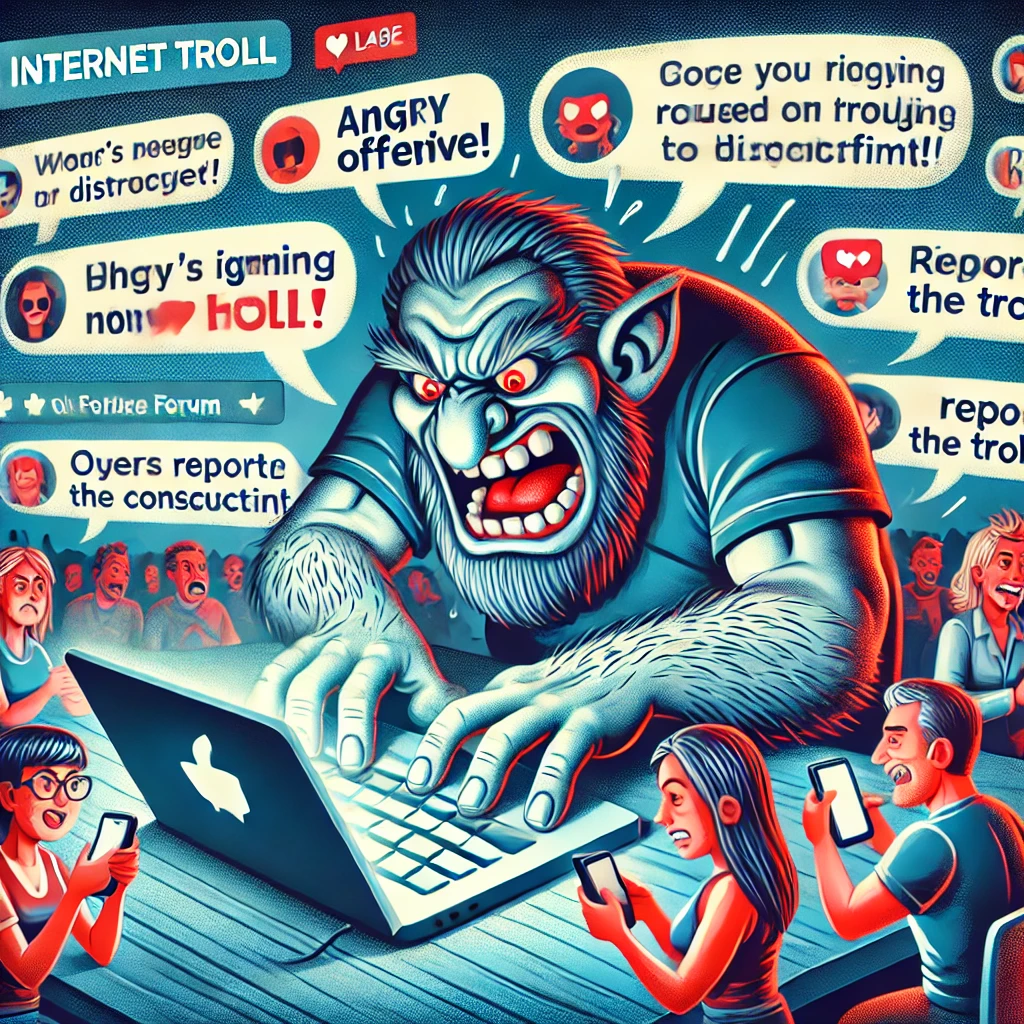
    An internet troll is an individual who deliberately antagonizes, provokes, or upsets others online by posting inflammatory, unnecessary, or offensive comments or content. Their primary objective is to disrupt conversations, generate emotional reactions, and create chaos within online communities, whether on social media platforms, forums, blogs, or comment sections. Unlike users who may unintentionally cause friction in a discussion, trolls thrive on deliberately causing disruption.

    Internet trolls have become a well-known phenomenon in the digital age, often contributing to negative online experiences and harming the constructive and positive communication that most platforms aim to foster.

    Defining the Behavior of an Internet Troll

    Trolls often use various tactics to elicit reactions from others. Their behaviors include:

    1. Posting Offensive Content
      Internet trolls frequently post offensive, crude, or hateful comments designed to provoke strong emotional responses. These comments may target individuals, groups, or sensitive topics like politics, religion, or social issues.
    2. Engaging in Personal Attacks
      Trolls often direct their efforts at individuals by launching personal attacks or insults. By ridiculing or demeaning others, trolls aim to provoke heated responses and draw more attention to the conversation they have derailed.
    3. Derailing Discussions
      Trolls disrupt conversations by diverting the topic or introducing irrelevant, inflammatory comments. For example, in a discussion about climate change, a troll might post conspiracy theories or attack others for their beliefs, steering the conversation away from the original topic.
    4. Spreading Misinformation
      Some trolls use misinformation or false claims to create confusion or division within online communities. By intentionally spreading incorrect information, they seek to stir controversy and disrupt healthy dialogue.
    5. Playing the “Devil’s Advocate”
      Trolls may position themselves as contrarians in any given conversation, always taking an opposing or provocative stance regardless of the issue at hand. This is done not to encourage healthy debate but to irritate and antagonize others.

    Motivations Behind Trolling

    Trolls are driven by various motives, ranging from personal amusement to more malicious intentions. Common reasons for trolling include:

    1. Entertainment (For the Lulz)
      Many trolls engage in disruptive behavior purely for amusement. They enjoy provoking others and witnessing the reactions their inflammatory posts generate. In internet slang, this is often referred to as doing something “for the lulz” (laughs).
    2. Desire for Attention
      Trolls crave attention, and by disrupting conversations, they force others to engage with them, even if the attention is negative. Their behavior ensures they remain at the center of the conversation, no matter how disruptive.
    3. Power and Control
      Trolling can give individuals a sense of power or control, as they can manipulate the emotions and reactions of others. By causing disruption and chaos, they can exert influence over online conversations.
    4. Malice or Hatred
      Some trolls are motivated by hatred or prejudice, using trolling as a vehicle to harass or spread harm. These trolls may target individuals based on race, gender, religion, or other personal characteristics, contributing to toxic online environments.
    5. Disruption for Political or Ideological Reasons
      In some cases, trolls disrupt discussions to promote a particular political agenda or ideology. They may aim to silence dissent, mislead others, or manipulate public opinion.

    The Impact of Trolling on Online Communities

    1. Creating a Toxic Environment
      Trolls often contribute to a hostile or toxic environment where meaningful discussions are overshadowed by negativity. Communities that are frequently targeted by trolls may experience a decline in participation, as users may avoid engaging to steer clear of confrontations.
    2. Derailing Productive Conversations
      Trolling disrupts the flow of conversations and shifts attention away from the original topic. When online communities or discussion threads are constantly derailed, it becomes difficult to engage in meaningful or constructive dialogue.
    3. Emotional Distress for Targets
      Internet trolls can cause significant emotional distress for individuals, especially when personal attacks or targeted harassment are involved. Victims of trolling may experience anxiety, frustration, or even feelings of helplessness as they become embroiled in confrontations.
    4. Spreading Misinformation
      Trolls that intentionally spread false information can contribute to the erosion of trust in online spaces. Their actions may cause confusion, contribute to misinformation, and disrupt the sharing of accurate and reliable information.

    Dealing with Internet Trolls

    1. Ignore and Do Not Engage
      One of the most effective strategies for dealing with trolls is to ignore them. Trolls thrive on reactions, and by not responding, you deprive them of the attention they seek. In many cases, trolls will move on when they do not get the engagement they desire.
    2. Moderation and Reporting
      Online platforms often have moderation tools in place to handle trolling behavior. Reporting trolls to moderators or administrators can help remove disruptive content and maintain a positive online environment. Some platforms also allow for blocking or banning persistent trolls.
    3. Enforcing Community Guidelines
      Websites and online communities should have clear guidelines in place that outline acceptable behavior. Consistently enforcing these guidelines can help prevent trolling and foster a more respectful online environment.
    4. Educating Users
      Educating online users about the nature of trolling and how to handle it can minimize its impact. Users should be encouraged to avoid engaging with trolls and report inappropriate content when necessary.

    Internet trolls are individuals who intentionally disrupt online discussions and antagonize others through offensive, inflammatory, or irrelevant comments. While their motivations may vary from amusement to malice, the effects of trolling can be damaging to online communities. By recognizing trolling behavior and employing strategies to deal with it—such as ignoring, reporting, and enforcing community standards—users can help reduce its impact and foster a more positive, respectful online environment.

    Key Takeaway

    Trolling thrives on attention and disruption. To counteract it, it’s essential to avoid engaging with trolls, leverage platform moderation tools, and promote positive online interactions.

    Share. Facebook Twitter Pinterest LinkedIn Tumblr Email

    Related Posts

    What is “Autonomous Campaigns”?

    29. 5. 2025

    What is “Prompt Engineering”?

    29. 5. 2025

    What is “Ethical AI Marketing”?

    29. 5. 2025

    What are “Synthetic Data”?

    29. 5. 2025
    Add A Comment
    Leave A Reply Cancel Reply

    Trending

    5 Self-Development Books Worth Reading This Summer (And What You Will Actually Take Away From Each)

    5. 6. 2026

    24 Hours in Vienna: The Honest Guide for People Who Hate Wasting Time

    5. 6. 2026

    How to Build a YouTube Channel as a Business: The Monetization Models That Actually Work

    5. 6. 2026

    The Unsexy Truth About Bootstrapping: What Nobody Tells You Before You Start

    5. 6. 2026

    AI and the Future of Marketing Jobs: What’s Actually at Risk, What Isn’t, and What You Should Do About It

    5. 6. 2026

    Slow Thinking in a Fast World: Why the Best Leaders Deliberately Pump the Brakes

    5. 6. 2026
    About Us

    Marketingino is a modern business magazine for founders, marketers, e-commerce leaders, and innovators who are building what’s next.

    We cover the tools, tactics, and stories driving today’s most ambitious ventures—from early-stage startups to scaling e-shops, from breakthrough marketing strategies to the frontier of AI and automation.

    Email Us: info@marketingino.com

    Marketingino.com
    Facebook Instagram LinkedIn YouTube Bluesky
    • Home
    • Privacy Policy
    • Cookie Policy (EU)
    • Disclaimer
    © 2026 Marketingino.com, © 2026 Vision Projects, s. r. o.

    Type above and press Enter to search. Press Esc to cancel.

    Manage Consent
    To provide the best experiences, we use technologies like cookies to store and/or access device information. Consenting to these technologies will allow us to process data such as browsing behavior or unique IDs on this site. Not consenting or withdrawing consent, may adversely affect certain features and functions.
    Functional Always active
    The technical storage or access is strictly necessary for the legitimate purpose of enabling the use of a specific service explicitly requested by the subscriber or user, or for the sole purpose of carrying out the transmission of a communication over an electronic communications network.
    Preferences
    The technical storage or access is necessary for the legitimate purpose of storing preferences that are not requested by the subscriber or user.
    Statistics
    The technical storage or access that is used exclusively for statistical purposes. The technical storage or access that is used exclusively for anonymous statistical purposes. Without a subpoena, voluntary compliance on the part of your Internet Service Provider, or additional records from a third party, information stored or retrieved for this purpose alone cannot usually be used to identify you.
    Marketing
    The technical storage or access is required to create user profiles to send advertising, or to track the user on a website or across several websites for similar marketing purposes.
    • Manage options
    • Manage services
    • Manage {vendor_count} vendors
    • Read more about these purposes
    View preferences
    • {title}
    • {title}
    • {title}