Close Menu
Marketingino.comMarketingino.com
    What's Hot

    The Best Business Side Hustles to Start in 2026

    14. 11. 2025

    Cash Flow Is King: How to Manage Money Without Killing Momentum

    14. 11. 2025

    Analyzing PPC Performance: Metrics That Matter for E-commerce Growth

    13. 11. 2025
    Facebook X (Twitter) Instagram
    Facebook Instagram LinkedIn YouTube Bluesky
    Marketingino.comMarketingino.com
    • Home
    • Entrepreneurship
      1. Business Models
      2. Side Hustles
      3. Small Business
      4. Venture Capital
      5. Sustainability & Impact
      6. Startups
      7. Legal & Compliance
      Featured
      Side Hustles

      The Best Business Side Hustles to Start in 2026

      14. 11. 2025
      Recent

      The Best Business Side Hustles to Start in 2026

      14. 11. 2025

      Cash Flow Is King: How to Manage Money Without Killing Momentum

      14. 11. 2025

      10 Low-Cost Side Hustles You Can Start with Zero Technical Skills

      9. 11. 2025
    • Marketing
      1. Marketing Strategy
      2. Social Media
      3. Branding
      4. Content Marketing
      5. SEO
      6. Growth Marketing
      7. Digital Marketing
      8. Data & Analytics
      9. Customer Experience
      10. Vocabulary
      Featured
      Growth Marketing

      Analyzing PPC Performance: Metrics That Matter for E-commerce Growth

      13. 11. 2025
      Recent

      Analyzing PPC Performance: Metrics That Matter for E-commerce Growth

      13. 11. 2025

      Top 10 UX Mistakes Online Store Owners Make—and How to Fix Them

      12. 11. 2025

      How ChatGPT Got 100 Million Users in 60 Days With Zero Ads (Marketing Strategy Revealed)

      10. 11. 2025
    • Leadership
      1. Coaching & Mentoring
      2. Conflict & Crisis Management
      3. Emotional Intelligence
      4. Executive Mindset
      5. Remote & Hybrid Teams
      6. Team Building
      7. Vision & Strategy
      Featured
      Conflict & Crisis Management

      10 Early Warning Signs That Preventing Burnout in Teams

      4. 11. 2025
      Recent

      10 Early Warning Signs That Preventing Burnout in Teams

      4. 11. 2025

      The Remote Leadership Lifestyle: Managing Global Teams from Anywhere

      3. 11. 2025

      Leadership Techniques for Managing Multigenerational Teams in Tech Companies

      27. 10. 2025
    • Ecommerce
      1. Conversion Optimization
      2. Cross-Border Ecommerce
      3. Customer Retention
      4. D2C & Brands
      5. Ecommerce Marketing
      6. Marketplaces
      7. Online Stores
      8. Payments & Logistics
      Featured
      Customer Retention

      How to Calculate—and Increase—Your Customer Lifetime Value Step by Step

      25. 10. 2025
      Recent

      How to Calculate—and Increase—Your Customer Lifetime Value Step by Step

      25. 10. 2025

      How to Optimize UX for Higher Conversions in Your WooCommerce Store

      15. 10. 2025

      How to Optimize Product Listings Across Amazon, eBay, Etsy, and Zalando

      7. 10. 2025
    • Life
      1. Business Stories
      2. Lifestyle
      3. Net Worth
      4. Travel
      Featured
      Lifestyle

      How to Build a Billion-Dollar Company Without Sacrificing Family

      30. 10. 2025
      Recent

      How to Build a Billion-Dollar Company Without Sacrificing Family

      30. 10. 2025

      How CEOs Build Thriving Businesses Without Sacrificing Life

      15. 10. 2025

      Is the Golem of Prague Real? Separating Legend from a Dan Brown-Inspired Reality

      22. 9. 2025
    Marketingino.comMarketingino.com
    Home»Marketing»Digital Marketing»Marketing Automation: Streamlining Marketing Efforts with Technology
    Digital Marketing

    Marketing Automation: Streamlining Marketing Efforts with Technology

    24. 9. 20245 Mins Read
    Facebook Twitter Pinterest LinkedIn Tumblr Email
    OpenAI
    Share
    Facebook Twitter LinkedIn Pinterest Email

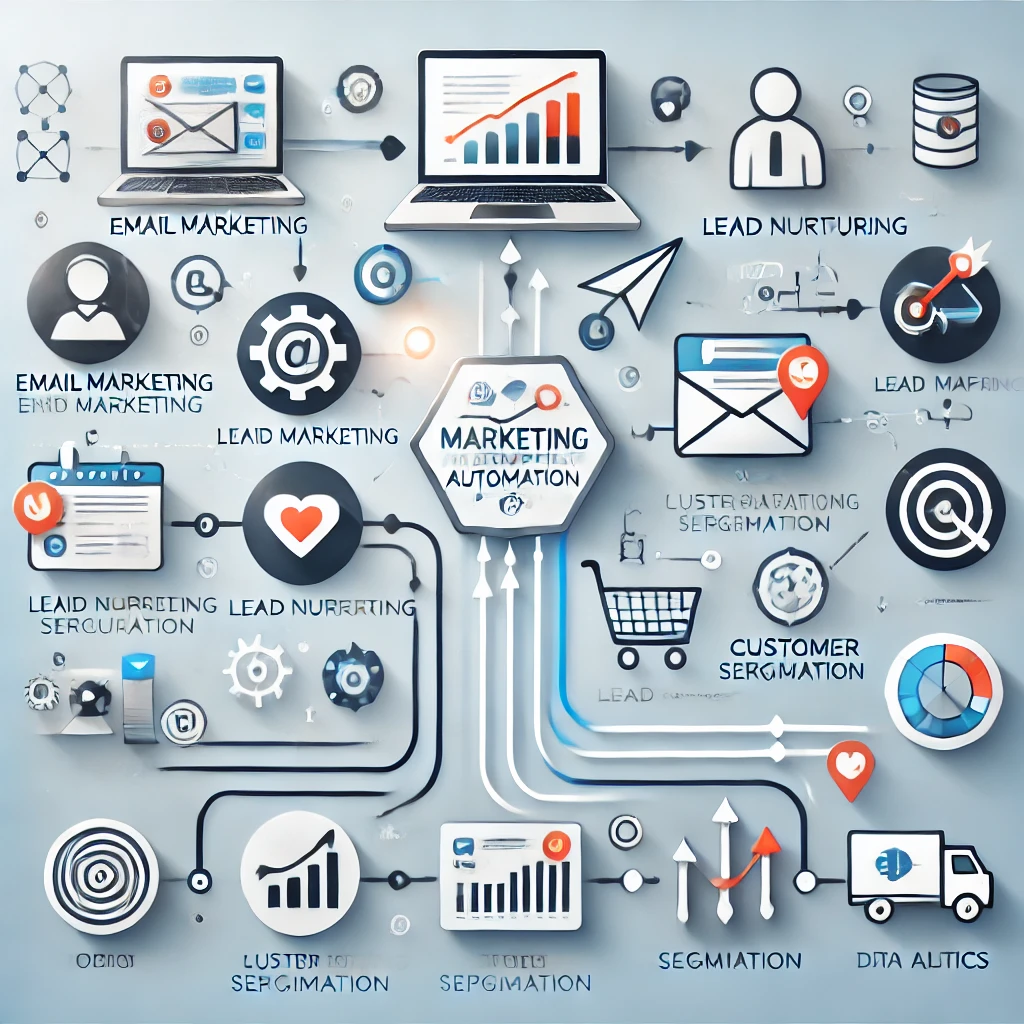
    Marketing automation is the practice of using software, tools, and technology to streamline, automate, and measure marketing tasks and workflows. The goal is to improve efficiency, deliver personalized experiences at scale, and increase overall marketing effectiveness. By automating repetitive tasks, businesses can focus on more strategic aspects of their marketing efforts while ensuring consistent and timely communication with potential customers.

    What is Marketing Automation?

    Marketing automation refers to a suite of technologies designed to manage marketing processes across multiple channels automatically. These tools can automate tasks such as sending personalized emails, posting on social media, lead generation, nurturing campaigns, customer segmentation, and more. By leveraging these tools, businesses can create sophisticated marketing campaigns that target specific segments of their audience based on behavior, preferences, and engagement levels.

    Some of the most common types of tasks automated by marketing platforms include:

    1. Email marketing: Automatically sending targeted emails to prospects or customers based on their behavior, such as signing up for a newsletter or making a purchase.
    2. Lead scoring: Automatically assigning scores to leads based on their interactions with the brand (e.g., website visits, email clicks) to prioritize the most promising leads.
    3. Customer segmentation: Automatically grouping customers into segments based on shared characteristics, behaviors, or interests for more tailored messaging.
    4. Social media management: Automating social media posts, scheduling, and monitoring across multiple platforms to maintain a consistent presence.
    5. Campaign tracking and reporting: Automatically tracking the performance of marketing campaigns and generating reports to measure ROI, conversion rates, and engagement.

    Why is Marketing Automation Important?

    Marketing automation provides several key benefits for businesses:

    1. Efficiency and time-saving: Automating repetitive tasks such as email follow-ups, social media scheduling, and lead nurturing frees up time for marketers to focus on high-level strategy and creative initiatives. This results in improved productivity and better use of resources.
    2. Personalization at scale: One of the main advantages of marketing automation is its ability to deliver personalized content to a large audience. By automating personalized email campaigns, targeted ads, and dynamic website content, businesses can provide individualized experiences for each customer without the need for manual intervention.
    3. Improved customer experience: Automation ensures that customers receive timely and relevant messages, enhancing their overall experience with the brand. Automated workflows can guide prospects through the customer journey, from initial awareness to final purchase, by delivering the right message at the right time.
    4. Lead nurturing and conversion: Marketing automation helps businesses nurture leads over time by sending relevant content based on where a prospect is in the buying process. This ensures that potential customers remain engaged until they are ready to convert.
    5. Data-driven decision-making: Automated marketing tools provide valuable insights into campaign performance, customer behavior, and engagement metrics. This data allows businesses to make informed decisions, optimize their strategies, and improve return on investment (ROI).

    How Does Marketing Automation Work?

    Marketing automation platforms typically operate through the following processes:

    1. Data collection and integration: Automation tools integrate with various data sources such as customer relationship management (CRM) systems, websites, social media, and email platforms. This allows them to gather information about customer behavior, preferences, and interactions.
    2. Segmentation: Based on the collected data, marketing automation platforms segment customers into different groups. Segmentation can be based on demographics, purchase history, engagement levels, or any other relevant criteria.
    3. Trigger-based actions: Automation tools use triggers, such as a customer signing up for a newsletter or abandoning a shopping cart, to initiate marketing actions. For example, an automated email may be sent to remind a customer to complete their purchase or offer a discount.
    4. Campaign execution: Once the marketing automation system is set up, it runs campaigns autonomously. Emails, social media posts, or ads are automatically sent based on pre-defined rules and workflows.
    5. Tracking and analytics: Marketing automation platforms monitor the performance of campaigns in real-time, providing insights into how customers are interacting with the content. Marketers can track key performance indicators (KPIs) such as open rates, click-through rates, and conversions to measure the success of campaigns.

    Common Marketing Automation Tools

    There are numerous marketing automation platforms available, each offering a range of features to suit different business needs. Some of the most widely used tools include:

    1. HubSpot: Known for its user-friendly interface and comprehensive suite of tools for inbound marketing, HubSpot offers automated workflows for email marketing, lead nurturing, and customer relationship management.
    2. Marketo: A powerful tool focused on lead management and nurturing, Marketo is often used by larger enterprises for its advanced targeting and segmentation capabilities.
    3. Mailchimp: A popular tool for small to medium-sized businesses, Mailchimp offers automated email marketing, audience segmentation, and campaign analytics.
    4. Pardot: Salesforce’s B2B marketing automation platform, Pardot, is used for lead generation, email marketing, and nurturing campaigns aimed at business customers.
    5. ActiveCampaign: This platform provides a range of automation tools for email marketing, CRM, and sales automation, focusing on delivering personalized customer experiences.

    Example of Marketing Automation in Action

    Imagine a retail company using marketing automation to manage its email marketing campaigns. When a new customer signs up for the company’s newsletter, an automated welcome email is triggered, offering a discount on their first purchase. If the customer adds items to their shopping cart but doesn’t complete the purchase, another email is sent automatically, reminding them to finalize their order and possibly offering a further incentive.

    Additionally, the automation system tracks customer behavior, such as what products they browse and buy. Based on this data, the system segments customers into groups and sends personalized product recommendations or promotions tailored to their interests.

    Marketing automation has become an essential tool for businesses looking to streamline their marketing processes, enhance customer experiences, and improve efficiency. By leveraging technology to automate repetitive tasks, businesses can deliver personalized content at scale, nurture leads more effectively, and gain valuable insights into customer behavior. Ultimately, marketing automation helps companies stay competitive in an increasingly digital and fast-paced world.

    Share. Facebook Twitter Pinterest LinkedIn Tumblr Email

    Related Posts

    Why Your Small Business Email Marketing Campaigns Aren’t Converting and How to Fix Them

    25. 10. 2025

    Retargeting 101: How to Bring Back Visitors Who Didn’t Convert (Yet)

    10. 10. 2025

    The Complete Guide to Writing PPC Ad Copy That Actually Converts for Ecommerce

    20. 9. 2025

    Staying Ahead of the Curve: Adapting to Google’s Latest Algorithm Updates

    17. 7. 2025
    Add A Comment
    Leave A Reply Cancel Reply

    Trending

    The Best Business Side Hustles to Start in 2026

    14. 11. 2025

    Cash Flow Is King: How to Manage Money Without Killing Momentum

    14. 11. 2025

    Analyzing PPC Performance: Metrics That Matter for E-commerce Growth

    13. 11. 2025

    Top 10 UX Mistakes Online Store Owners Make—and How to Fix Them

    12. 11. 2025

    How ChatGPT Got 100 Million Users in 60 Days With Zero Ads (Marketing Strategy Revealed)

    10. 11. 2025

    10 Low-Cost Side Hustles You Can Start with Zero Technical Skills

    9. 11. 2025
    About Us

    Marketingino is a modern business magazine for founders, marketers, e-commerce leaders, and innovators who are building what’s next.

    We cover the tools, tactics, and stories driving today’s most ambitious ventures—from early-stage startups to scaling e-shops, from breakthrough marketing strategies to the frontier of AI and automation.

    Email Us: info@marketingino.com

    Marketingino.com
    Facebook Instagram LinkedIn YouTube Bluesky
    • Home
    • Privacy Policy
    • Cookie Policy (EU)
    • Disclaimer
    © 2025 Marketingino.com, © 2025 Vision Projects, s. r. o.

    Type above and press Enter to search. Press Esc to cancel.

    Manage Consent
    To provide the best experiences, we use technologies like cookies to store and/or access device information. Consenting to these technologies will allow us to process data such as browsing behavior or unique IDs on this site. Not consenting or withdrawing consent, may adversely affect certain features and functions.
    Functional Always active
    The technical storage or access is strictly necessary for the legitimate purpose of enabling the use of a specific service explicitly requested by the subscriber or user, or for the sole purpose of carrying out the transmission of a communication over an electronic communications network.
    Preferences
    The technical storage or access is necessary for the legitimate purpose of storing preferences that are not requested by the subscriber or user.
    Statistics
    The technical storage or access that is used exclusively for statistical purposes. The technical storage or access that is used exclusively for anonymous statistical purposes. Without a subpoena, voluntary compliance on the part of your Internet Service Provider, or additional records from a third party, information stored or retrieved for this purpose alone cannot usually be used to identify you.
    Marketing
    The technical storage or access is required to create user profiles to send advertising, or to track the user on a website or across several websites for similar marketing purposes.
    • Manage options
    • Manage services
    • Manage {vendor_count} vendors
    • Read more about these purposes
    View preferences
    • {title}
    • {title}
    • {title}