Close Menu
Marketingino.comMarketingino.com
    What's Hot

    Leading a Marketing Team Through AI Disruption

    19. 8. 2026

    From Individual Contributor to CMO: A Leadership Roadmap for Marketers

    19. 8. 2026

    Remote Leadership: Why Every Manager Should Hold Open Office Hours

    17. 7. 2026
    Facebook X (Twitter) Instagram
    Facebook Instagram LinkedIn YouTube Bluesky
    Marketingino.comMarketingino.com
    • Home
    • Entrepreneurship
      1. Business Models
      2. Side Hustles
      3. Small Business
      4. Venture Capital
      5. Sustainability & Impact
      6. Startups
      7. Legal & Compliance
      Featured
      Side Hustles

      How to Build a YouTube Channel as a Business: The Monetization Models That Actually Work

      5. 6. 2026
      Recent

      How to Build a YouTube Channel as a Business: The Monetization Models That Actually Work

      5. 6. 2026

      The Unsexy Truth About Bootstrapping: What Nobody Tells You Before You Start

      5. 6. 2026

      EBITDA Explained: What It Is, Why It Matters, and When to Ignore It

      20. 5. 2026
    • Marketing
      1. Marketing Strategy
      2. AI & Automation
      3. Social Media
      4. Branding
      5. Content Marketing
      6. SEO & GEO
      7. Growth Marketing
      8. Digital Marketing
      9. Data & Analytics
      10. Customer Experience
      11. Vocabulary
      Featured
      AI & Automation

      Leading a Marketing Team Through AI Disruption

      19. 8. 2026
      Recent

      Leading a Marketing Team Through AI Disruption

      19. 8. 2026

      9 AI Marketing Tools Every Marketer Should Know in 2026

      17. 7. 2026

      AI and the Future of Marketing Jobs: What’s Actually at Risk, What Isn’t, and What You Should Do About It

      5. 6. 2026
    • Leadership
      1. Coaching & Mentoring
      2. Conflict & Crisis Management
      3. Emotional Intelligence
      4. Executive Mindset
      5. Remote & Hybrid Teams
      6. Team Building
      7. Vision & Strategy
      Featured
      Vision & Strategy

      From Individual Contributor to CMO: A Leadership Roadmap for Marketers

      19. 8. 2026
      Recent

      From Individual Contributor to CMO: A Leadership Roadmap for Marketers

      19. 8. 2026

      Remote Leadership: Why Every Manager Should Hold Open Office Hours

      17. 7. 2026

      Slow Thinking in a Fast World: Why the Best Leaders Deliberately Pump the Brakes

      5. 6. 2026
    • Ecommerce
      1. Conversion Optimization
      2. Cross-Border Ecommerce
      3. Customer Retention
      4. D2C & Brands
      5. Ecommerce Marketing
      6. Marketplaces
      7. Online Stores
      8. Payments & Logistics
      Featured
      D2C & Brands

      Recommerce: Why Selling Used Is the Fastest-Growing Channel in E-Commerce

      20. 4. 2026
      Recent

      Recommerce: Why Selling Used Is the Fastest-Growing Channel in E-Commerce

      20. 4. 2026

      Agentic Commerce: How AI Is Taking Over the Shopping Cart

      20. 4. 2026

      The D2C Loyalty Playbook: 6 Tactics That Don’t Require a Single Promo Code

      11. 3. 2026
    • Life
      1. Business Stories
      2. Lifestyle
      3. Net Worth
      4. Travel
      Featured
      Lifestyle

      5 Self-Development Books Worth Reading This Summer (And What You Will Actually Take Away From Each)

      5. 6. 2026
      Recent

      5 Self-Development Books Worth Reading This Summer (And What You Will Actually Take Away From Each)

      5. 6. 2026

      24 Hours in Vienna: The Honest Guide for People Who Hate Wasting Time

      5. 6. 2026

      10 Powerful Reasons 2025 Proved Life Is Getting Better

      31. 12. 2025
    Marketingino.comMarketingino.com
    Home»Vocabulary»Understanding Lean Canvas: A Tool for Efficient Business Planning
    Vocabulary

    Understanding Lean Canvas: A Tool for Efficient Business Planning

    16. 6. 20244 Mins Read
    Facebook Twitter Pinterest LinkedIn Tumblr Email
    Source: ChatGPT
    Share
    Facebook Twitter LinkedIn Pinterest Email

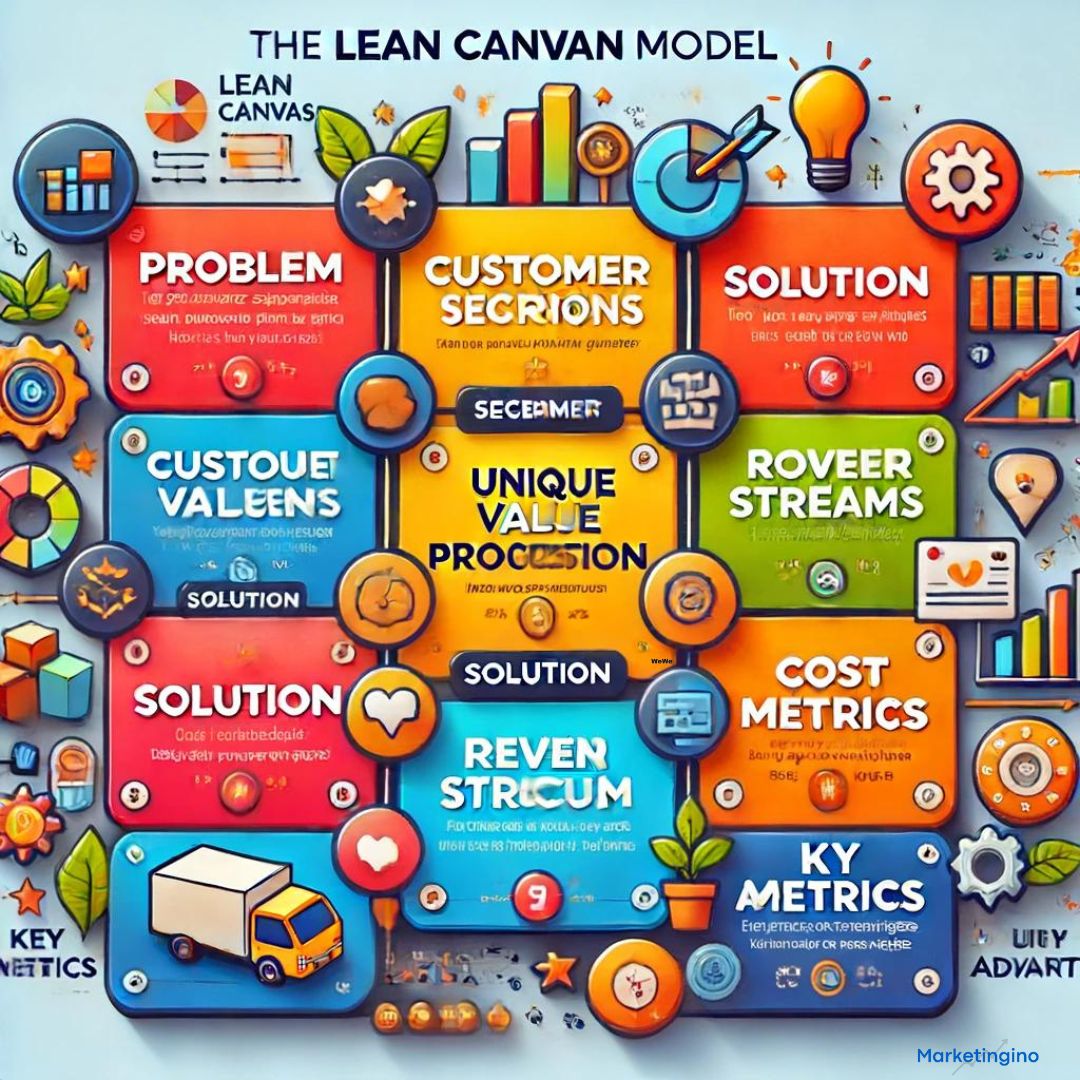
    The Lean Canvas is a strategic management tool designed to help entrepreneurs and business owners succinctly and effectively outline their business models. Created by Ash Maurya, it is a more startup-focused adaptation of the Business Model Canvas, emphasizing rapid prototyping and iterative learning. This article explores the history, components, benefits, and practical applications of the Lean Canvas in business planning.

    History of Lean Canvas

    Ash Maurya, an entrepreneur and author, introduced the Lean Canvas in his book “Running Lean” in 2010. Inspired by Alexander Osterwalder’s Business Model Canvas, Maurya sought to create a more straightforward and actionable tool for startups. The Lean Canvas emphasizes identifying and solving critical problems, understanding customer needs, and iterating quickly based on feedback.

    Components of Lean Canvas

    The Lean Canvas consists of nine key components, each designed to capture essential aspects of a business model:

    1. Problem: Identifies the top three problems the business aims to solve.
    2. Customer Segments: Defines the target audience and potential customers.
    3. Unique Value Proposition: Articulates the distinct benefit or value the business offers to its customers.
    4. Solution: Outlines the top three features or solutions that address the identified problems.
    5. Channels: Describes the pathways through which the business will reach and communicate with its customers.
    6. Revenue Streams: Specifies the ways the business will generate income.
    7. Cost Structure: Details the main costs associated with running the business.
    8. Key Metrics: Identifies the key performance indicators (KPIs) that will measure the business’s success.
    9. Unfair Advantage: Highlights any unique advantage that cannot be easily copied or replicated by competitors.

    Benefits of Using Lean Canvas

    1. Simplicity and Clarity: The Lean Canvas condenses a comprehensive business plan into a single page, making it easier to understand and communicate.
    2. Focus on Critical Elements: By emphasizing problems, solutions, and customer segments, the Lean Canvas ensures that businesses focus on the most critical aspects of their model.
    3. Flexibility: The Lean Canvas encourages continuous iteration and adaptation, allowing businesses to pivot quickly based on feedback and market changes.
    4. Customer-Centric: By focusing on customer problems and needs, the Lean Canvas helps businesses develop solutions that are truly valuable to their target audience.
    5. Efficient Resource Allocation: Understanding key metrics and cost structures enables better decision-making regarding resource allocation and investment.

    Practical Applications

    The Lean Canvas is widely used across various stages of business development and industries:

    1. Startups: Entrepreneurs use the Lean Canvas to quickly validate their business ideas and identify potential pitfalls early in the development process.
    2. Product Development: Teams use the Lean Canvas to align on product features, customer needs, and market fit, ensuring that development efforts are focused and effective.
    3. Marketing Strategy: Marketing teams leverage the Lean Canvas to better understand their target audience, craft compelling value propositions, and choose the most effective channels for reaching customers.
    4. Business Workshops: Facilitators use the Lean Canvas in workshops and training sessions to teach business planning and innovation.
    5. Corporate Innovation: Established companies use the Lean Canvas to explore new business models and product lines, fostering a culture of continuous improvement and innovation.

    Creating a Lean Canvas

    Creating a Lean Canvas involves a few straightforward steps:

    1. Identify Problems: Start by listing the top three problems your business aims to solve.
    2. Define Customer Segments: Identify your target audience and potential customer segments.
    3. Craft Unique Value Proposition: Clearly articulate the unique benefit your business offers.
    4. Outline Solutions: List the top three features or solutions addressing the identified problems.
    5. Determine Channels: Specify the pathways to reach and communicate with your customers.
    6. Define Revenue Streams: Identify how your business will generate income.
    7. Describe Cost Structure: Detail the main costs involved in running your business.
    8. Identify Key Metrics: Determine the key metrics to measure success.
    9. Highlight Unfair Advantage: Note any unique, non-replicable advantages.

    The Lean Canvas is a powerful tool for efficient business planning, offering a clear, concise, and actionable framework for developing and iterating business models. By focusing on critical problems, customer needs, and rapid iteration, the Lean Canvas helps entrepreneurs and businesses create value-driven solutions that meet market demands. Whether you’re a startup founder or part of an established company, incorporating the Lean Canvas into your planning process can significantly enhance your strategic approach and drive business success.

    Share. Facebook Twitter Pinterest LinkedIn Tumblr Email

    Related Posts

    What is “Autonomous Campaigns”?

    29. 5. 2025

    What is “Prompt Engineering”?

    29. 5. 2025

    What is “Ethical AI Marketing”?

    29. 5. 2025

    What are “Synthetic Data”?

    29. 5. 2025
    Add A Comment
    Leave A Reply Cancel Reply

    Trending

    Leading a Marketing Team Through AI Disruption

    19. 8. 2026

    From Individual Contributor to CMO: A Leadership Roadmap for Marketers

    19. 8. 2026

    Remote Leadership: Why Every Manager Should Hold Open Office Hours

    17. 7. 2026

    9 AI Marketing Tools Every Marketer Should Know in 2026

    17. 7. 2026

    5 Self-Development Books Worth Reading This Summer (And What You Will Actually Take Away From Each)

    5. 6. 2026

    24 Hours in Vienna: The Honest Guide for People Who Hate Wasting Time

    5. 6. 2026
    About Us

    Marketingino is a modern business magazine for founders, marketers, e-commerce leaders, and innovators who are building what’s next.

    We cover the tools, tactics, and stories driving today’s most ambitious ventures—from early-stage startups to scaling e-shops, from breakthrough marketing strategies to the frontier of AI and automation.

    Email Us: info@marketingino.com

    Marketingino.com
    Facebook Instagram LinkedIn YouTube Bluesky
    • Home
    • Privacy Policy
    • Cookie Policy (EU)
    • Disclaimer
    © 2026 Marketingino.com, © 2026 Vision Projects, s. r. o.

    Type above and press Enter to search. Press Esc to cancel.