Close Menu
Marketingino.comMarketingino.com
    What's Hot

    5 Self-Development Books Worth Reading This Summer (And What You Will Actually Take Away From Each)

    5. 6. 2026

    24 Hours in Vienna: The Honest Guide for People Who Hate Wasting Time

    5. 6. 2026

    How to Build a YouTube Channel as a Business: The Monetization Models That Actually Work

    5. 6. 2026
    Facebook X (Twitter) Instagram
    Facebook Instagram LinkedIn YouTube Bluesky
    Marketingino.comMarketingino.com
    • Home
    • Entrepreneurship
      1. Business Models
      2. Side Hustles
      3. Small Business
      4. Venture Capital
      5. Sustainability & Impact
      6. Startups
      7. Legal & Compliance
      Featured
      Side Hustles

      How to Build a YouTube Channel as a Business: The Monetization Models That Actually Work

      5. 6. 2026
      Recent

      How to Build a YouTube Channel as a Business: The Monetization Models That Actually Work

      5. 6. 2026

      The Unsexy Truth About Bootstrapping: What Nobody Tells You Before You Start

      5. 6. 2026

      EBITDA Explained: What It Is, Why It Matters, and When to Ignore It

      20. 5. 2026
    • Marketing
      1. Marketing Strategy
      2. AI & Automation
      3. Social Media
      4. Branding
      5. Content Marketing
      6. SEO & GEO
      7. Growth Marketing
      8. Digital Marketing
      9. Data & Analytics
      10. Customer Experience
      11. Vocabulary
      Featured
      AI & Automation

      AI and the Future of Marketing Jobs: What’s Actually at Risk, What Isn’t, and What You Should Do About It

      5. 6. 2026
      Recent

      AI and the Future of Marketing Jobs: What’s Actually at Risk, What Isn’t, and What You Should Do About It

      5. 6. 2026

      Agentic AI in E-commerce: How Autonomous Shopping Is Rewriting the Rules of Retail Media

      20. 5. 2026

      GEO: What Is Generative Engine Optimization and Why It Matters in 2026

      28. 4. 2026
    • Leadership
      1. Coaching & Mentoring
      2. Conflict & Crisis Management
      3. Emotional Intelligence
      4. Executive Mindset
      5. Remote & Hybrid Teams
      6. Team Building
      7. Vision & Strategy
      Featured
      Emotional Intelligence

      Slow Thinking in a Fast World: Why the Best Leaders Deliberately Pump the Brakes

      5. 6. 2026
      Recent

      Slow Thinking in a Fast World: Why the Best Leaders Deliberately Pump the Brakes

      5. 6. 2026

      Leading Through Uncertainty: What History’s Toughest Commanders Knew That Most Managers Don’t

      5. 6. 2026

      Marcus Aurelius and Modern Leadership: What the Philosopher Emperor Can Teach Us Today

      25. 5. 2026
    • Ecommerce
      1. Conversion Optimization
      2. Cross-Border Ecommerce
      3. Customer Retention
      4. D2C & Brands
      5. Ecommerce Marketing
      6. Marketplaces
      7. Online Stores
      8. Payments & Logistics
      Featured
      D2C & Brands

      Recommerce: Why Selling Used Is the Fastest-Growing Channel in E-Commerce

      20. 4. 2026
      Recent

      Recommerce: Why Selling Used Is the Fastest-Growing Channel in E-Commerce

      20. 4. 2026

      Agentic Commerce: How AI Is Taking Over the Shopping Cart

      20. 4. 2026

      The D2C Loyalty Playbook: 6 Tactics That Don’t Require a Single Promo Code

      11. 3. 2026
    • Life
      1. Business Stories
      2. Lifestyle
      3. Net Worth
      4. Travel
      Featured
      Lifestyle

      5 Self-Development Books Worth Reading This Summer (And What You Will Actually Take Away From Each)

      5. 6. 2026
      Recent

      5 Self-Development Books Worth Reading This Summer (And What You Will Actually Take Away From Each)

      5. 6. 2026

      24 Hours in Vienna: The Honest Guide for People Who Hate Wasting Time

      5. 6. 2026

      10 Powerful Reasons 2025 Proved Life Is Getting Better

      31. 12. 2025
    Marketingino.comMarketingino.com
    Home»Life & Success»Business Stories»Converse: From Athletic Staple to Cultural Icon
    Business Stories

    Converse: From Athletic Staple to Cultural Icon

    23. 5. 20243 Mins Read
    Facebook Twitter Pinterest LinkedIn Tumblr Email
    Share
    Facebook Twitter LinkedIn Pinterest Email

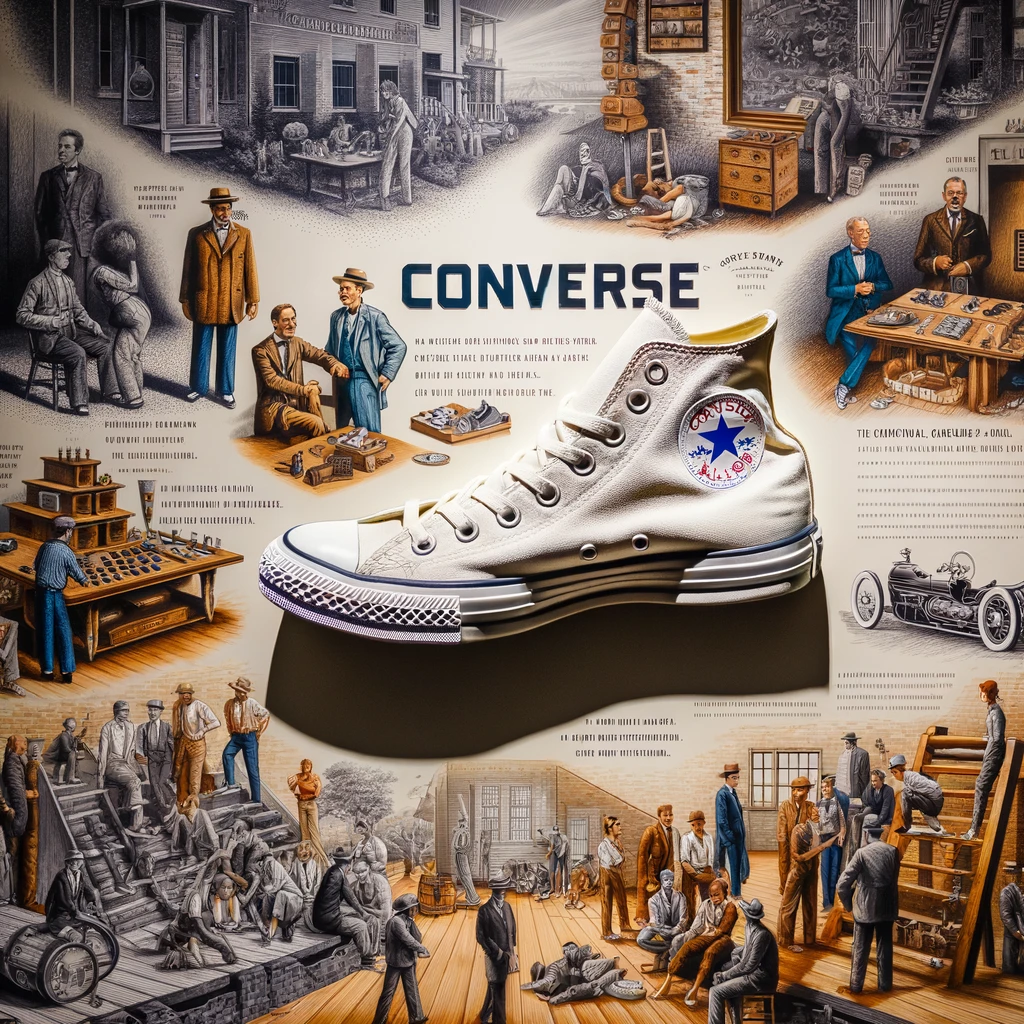
    Converse was founded in 1908 by Marquis Mills Converse in Malden, Massachusetts, originally as the Converse Rubber Shoe Company. Initially, the company focused on winterized rubber-soled footwear, but it wasn’t long before they ventured into the world of athletic shoes. In 1917, Converse introduced the “All-Star,” a basketball shoe that would eventually become one of the most iconic sneakers in history.

    The Chuck Taylor Influence

    In 1921, Charles “Chuck” Taylor, a semi-professional basketball player, joined the company as a salesman. Taylor’s enthusiasm for the shoes and his extensive promotional efforts led to significant modifications and improvements in the design. By 1932, his signature was added to the ankle patch of the shoe, rebranding them as the “Chuck Taylor All-Stars.” These shoes quickly gained popularity and became the standard for basketball players across the United States.

    Dominance and Decline

    Converse All-Stars were the official basketball shoe of the Olympic Games from 1936 to 1968, and during World War II, they were the official athletic shoe of the U.S. armed forces. By the 1960s, Converse controlled about 80% of the sneaker market. However, the rise of competitors with better technology and marketing strategies, such as Nike, Adidas, and Puma, led to a decline in Converse’s dominance in the sports world by the 1970s.

    Despite this decline, Converse sneakers found a new life in the music and fashion scenes. They became a symbol of rebellion and individuality, worn by artists like Kurt Cobain of Nirvana, members of the punk rock band The Ramones, and hip-hop artists like Ice Cube. The shoes’ appeal extended beyond musicians, appearing in popular films and TV shows, further embedding them in American pop culture.

    Bankruptcy and Rebirth

    The financial troubles of the late 20th century led Converse to file for bankruptcy multiple times. In 2001, the company was bought out and restructured, eventually leading to its acquisition by Nike in 2003 for $305 million. Under Nike’s management, production was moved overseas, reducing costs and revitalizing the brand.

    Modern Era

    Today, Converse continues to be a significant player in the sneaker market, balancing its rich heritage with modern trends. The brand has expanded its product line to include various styles and special editions, such as collaborations with contemporary artists and designers. The Chuck Taylor All-Star remains a bestseller, beloved for its classic design and cultural significance.

    Converse has embraced sustainability initiatives and modern marketing strategies, ensuring its relevance in the fast-paced fashion industry. With a blend of history and innovation, Converse stands as a testament to enduring style and adaptability.

    Share. Facebook Twitter Pinterest LinkedIn Tumblr Email

    Related Posts

    How Castro’s Personal Cigar Became the World’s Most Luxury Brand

    1. 9. 2025

    Challenges and Opportunities for Startups in the Current Economic Climate

    25. 6. 2025

    Strategies for Managing Virtual Teams and Digital Nomads

    20. 6. 2025

    The Soaring Flight and Financial Fortunes of Angry Birds

    17. 6. 2025
    Add A Comment
    Leave A Reply Cancel Reply

    Trending

    5 Self-Development Books Worth Reading This Summer (And What You Will Actually Take Away From Each)

    5. 6. 2026

    24 Hours in Vienna: The Honest Guide for People Who Hate Wasting Time

    5. 6. 2026

    How to Build a YouTube Channel as a Business: The Monetization Models That Actually Work

    5. 6. 2026

    The Unsexy Truth About Bootstrapping: What Nobody Tells You Before You Start

    5. 6. 2026

    AI and the Future of Marketing Jobs: What’s Actually at Risk, What Isn’t, and What You Should Do About It

    5. 6. 2026

    Slow Thinking in a Fast World: Why the Best Leaders Deliberately Pump the Brakes

    5. 6. 2026
    About Us

    Marketingino is a modern business magazine for founders, marketers, e-commerce leaders, and innovators who are building what’s next.

    We cover the tools, tactics, and stories driving today’s most ambitious ventures—from early-stage startups to scaling e-shops, from breakthrough marketing strategies to the frontier of AI and automation.

    Email Us: info@marketingino.com

    Marketingino.com
    Facebook Instagram LinkedIn YouTube Bluesky
    • Home
    • Privacy Policy
    • Cookie Policy (EU)
    • Disclaimer
    © 2026 Marketingino.com, © 2026 Vision Projects, s. r. o.

    Type above and press Enter to search. Press Esc to cancel.

    Manage Consent
    To provide the best experiences, we use technologies like cookies to store and/or access device information. Consenting to these technologies will allow us to process data such as browsing behavior or unique IDs on this site. Not consenting or withdrawing consent, may adversely affect certain features and functions.
    Functional Always active
    The technical storage or access is strictly necessary for the legitimate purpose of enabling the use of a specific service explicitly requested by the subscriber or user, or for the sole purpose of carrying out the transmission of a communication over an electronic communications network.
    Preferences
    The technical storage or access is necessary for the legitimate purpose of storing preferences that are not requested by the subscriber or user.
    Statistics
    The technical storage or access that is used exclusively for statistical purposes. The technical storage or access that is used exclusively for anonymous statistical purposes. Without a subpoena, voluntary compliance on the part of your Internet Service Provider, or additional records from a third party, information stored or retrieved for this purpose alone cannot usually be used to identify you.
    Marketing
    The technical storage or access is required to create user profiles to send advertising, or to track the user on a website or across several websites for similar marketing purposes.
    • Manage options
    • Manage services
    • Manage {vendor_count} vendors
    • Read more about these purposes
    View preferences
    • {title}
    • {title}
    • {title}