


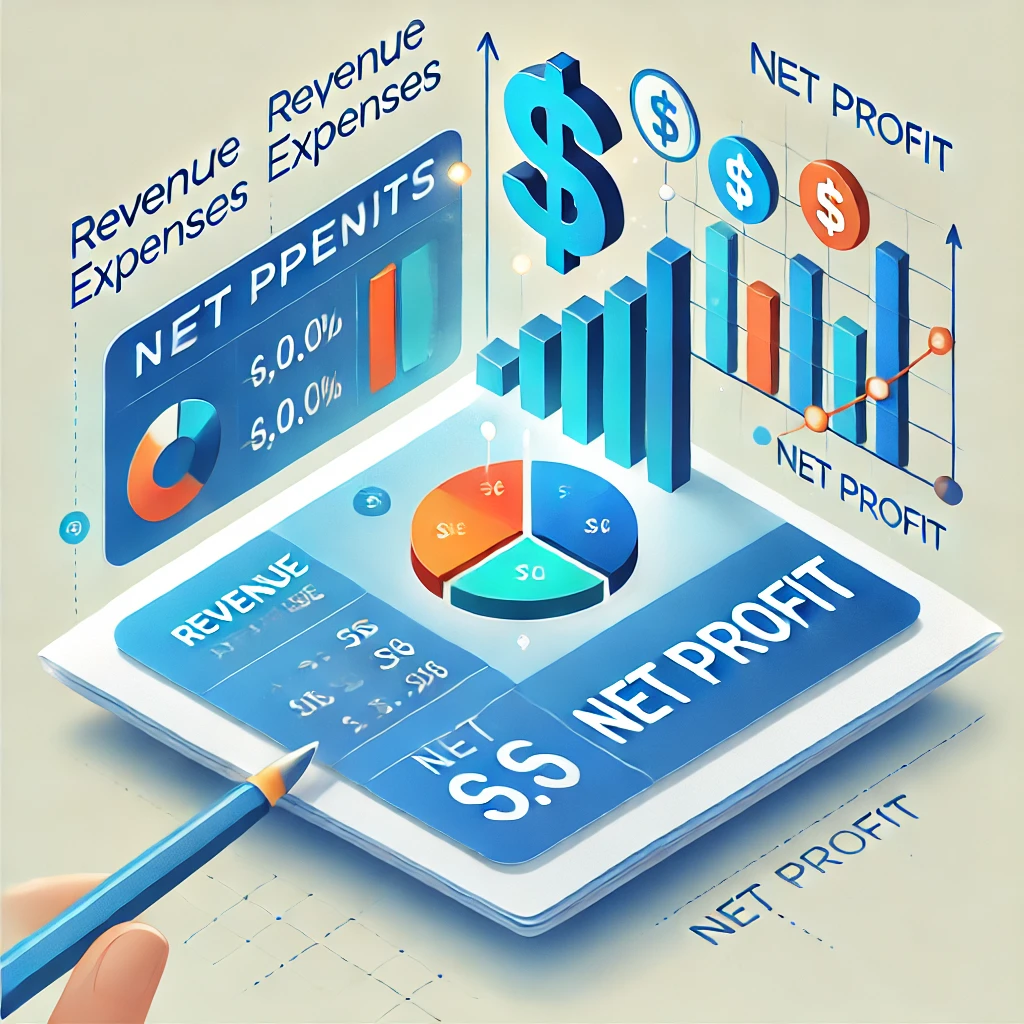
Net profit, often referred to as the “bottom line,” is one of the most important financial metrics in business. It represents the amount of money left over after all expenses, taxes, and costs have been subtracted from total revenue. In other words, net profit is what remains after a company has paid all its bills. This figure is critical for assessing the profitability and financial health of a business, as it shows how much profit a company is actually generating from its operations.
In this article, we’ll take an in-depth look at what net profit is, how it is calculated, why it’s important, and how it differs from other profit metrics like gross profit. We’ll also explore ways to improve net profit and its significance in business decision-making.
What is Net Profit?
Net profit, also known as net income, is the amount of money that a business has left after it has paid all operating expenses, interest, taxes, and other costs. It’s essentially the final figure that represents a company’s profitability over a specific period, typically a month, quarter, or year.
The formula for calculating net profit is:Net Profit=Total Revenue−Total Expenses\text{Net Profit} = \text{Total Revenue} – \text{Total Expenses}Net Profit=Total Revenue−Total Expenses
Total expenses include all the costs a business incurs, such as:
- Cost of goods sold (COGS): The direct costs associated with producing or delivering a product or service, such as materials and labor.
- Operating expenses: General and administrative costs like salaries, rent, utilities, and marketing.
- Interest: Costs related to any debt the company holds, such as loan interest.
- Taxes: The company’s tax obligations, including income tax.
- Depreciation and amortization: The allocation of the cost of a company’s fixed assets (like machinery or buildings) over their useful lives.
The result of subtracting all these expenses from the company’s revenue is the net profit. If the result is positive, the business has made a profit. If it’s negative, the company has incurred a net loss.
Why is Net Profit Important?
Net profit is a crucial indicator of a company’s financial performance. Here’s why it matters:
- Measure of Profitability: Net profit shows how effectively a company is managing its resources to generate profits. It provides insight into the company’s efficiency in turning revenue into actual profits, after covering all costs.
- Key Indicator for Investors: Investors closely examine net profit to assess the profitability of a company. A growing net profit over time typically signals a healthy, growing business, while declining profits may indicate financial trouble or inefficient operations.
- Essential for Business Decisions: Business owners and managers use net profit as a basis for making critical decisions, such as whether to expand operations, invest in new projects, or cut costs. It’s also essential for determining dividend payouts to shareholders.
- Evaluation of Business Performance: Comparing net profit over time (month-to-month or year-to-year) helps track a company’s performance. Additionally, comparing net profit with competitors can provide insights into how a business is performing relative to its industry.
- Helps in Tax Planning: Since net profit is used to determine how much income tax a business must pay, it’s a key figure in tax planning and compliance.
Net Profit vs. Gross Profit
While both net profit and gross profit are important metrics, they represent different aspects of a company’s financial performance.
- Gross Profit: This figure represents the profit a company makes from its core operations before deducting operating expenses, taxes, and interest. It’s calculated as:
Gross Profit=Revenue−Cost of Goods Sold (COGS)
Gross profit only takes into account the costs directly associated with producing goods or delivering services. It does not consider operating costs or other expenses. Gross profit provides insight into how efficiently a company is producing its products or delivering its services, but it doesn’t give a complete picture of profitability.
- Net Profit: As mentioned earlier, net profit includes all expenses, taxes, and interest, giving a more comprehensive view of the company’s profitability. While gross profit is focused on production efficiency, net profit reflects overall business health.
In short, gross profit shows how well a company is performing in its core operations, while net profit tells the full story of its financial health after all expenses are accounted for.
How to Improve Net Profit
Improving net profit is a primary goal for most businesses. Here are some strategies companies can use to increase their bottom line:
- Reduce Costs: One of the most direct ways to increase net profit is by cutting expenses. This can involve negotiating better deals with suppliers, reducing overhead costs, or streamlining operations to improve efficiency. Cost-saving initiatives can have a significant impact on net profit, even if revenue remains constant.
- Increase Revenue: Growing sales is another straightforward way to boost net profit. This can be achieved through strategies like expanding the customer base, increasing the average transaction value, or introducing new products or services.
- Optimize Pricing: Adjusting pricing strategies can also improve net profit. If a business can increase prices without negatively affecting demand, it will generate more revenue per sale, boosting net profit. However, price changes should be carefully analyzed to avoid losing customers.
- Enhance Operational Efficiency: Streamlining internal processes to reduce waste, improve productivity, or lower the time spent on tasks can help cut operational costs. For instance, adopting automation technology or optimizing supply chain management can significantly enhance efficiency and boost net profit.
- Manage Debt: High interest payments on loans can significantly eat into net profit. Reducing debt, refinancing at lower interest rates, or avoiding unnecessary borrowing can help minimize interest expenses and increase profitability.
- Tax Planning: Effective tax planning strategies, such as taking advantage of available tax deductions, credits, and incentives, can help businesses reduce their tax liabilities and improve net profit.
Net Profit Margin: A Related Metric
While net profit is an absolute figure, it’s also useful to look at the net profit margin, which expresses net profit as a percentage of total revenue. This ratio provides a more relative measure of profitability, allowing you to compare performance across companies or industries, regardless of size.
The formula for net profit margin is:
Net Profit Margin=(Net Profit/Revenue)×100
For example, if a company has $500,000 in revenue and $50,000 in net profit, its net profit margin would be:
Net Profit Margin=(50,000/500,000)×100=10%
A higher net profit margin indicates a more efficient company that can convert revenue into actual profit. Companies with high margins are typically more financially stable and capable of weathering economic downturns.
Examples of Net Profit in Action
- Retail Business: A clothing retailer generates $1 million in sales over the year. After deducting the cost of goods sold (such as fabric and production costs), operating expenses (including rent, salaries, and marketing), taxes, and interest on loans, the retailer’s net profit is $100,000. This means the retailer has a 10% net profit margin, indicating that for every dollar in sales, the company earns $0.10 in profit.
- Tech Start-Up: A software company generates $2 million in revenue from selling subscriptions to its SaaS product. After accounting for expenses such as development costs, employee salaries, office rent, taxes, and interest, the company reports a net profit of $200,000. This gives the company a 10% net profit margin, reflecting a healthy balance between costs and profitability.
- Restaurant Chain: A restaurant chain earns $5 million in revenue but faces high costs due to ingredients, staff salaries, and overhead. After all expenses are deducted, the net profit is $200,000, resulting in a lower net profit margin of 4%. This signals that the restaurant chain may need to cut costs or increase revenue to improve profitability.
Net profit is one of the most important financial metrics for evaluating the success and profitability of a business. It goes beyond gross profit by accounting for all costs and provides a clear view of how well a company is managing its overall financial performance. Understanding net profit is crucial for business owners, investors, and decision-makers, as it informs strategic planning, operational adjustments, and growth initiatives.
Whether a company is focused on cutting costs, increasing sales, or improving operational efficiency, the goal is always to maximize net profit, ensuring long-term financial stability and success.