


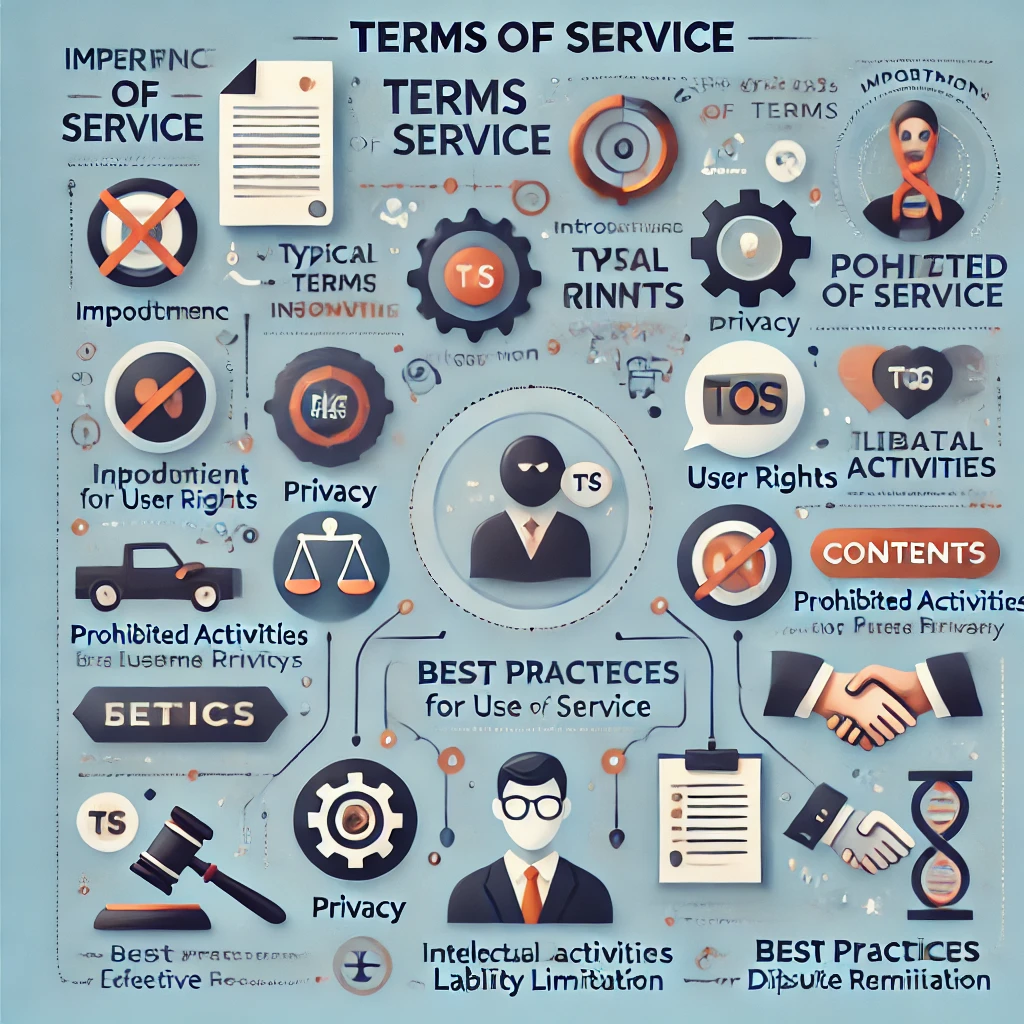
Terms of Service (ToS) are legal agreements that outline the rules, obligations, and responsibilities between a business and its customers. These agreements, also known as Terms and Conditions or Terms of Use, provide essential legal protection and clarify what users can expect from a business’s products or services. In this article, we’ll explore the purpose of Terms of Service, why they’re important, what they typically cover, and best practices for crafting effective and enforceable ToS agreements.
What are Terms of Service?
Terms of Service are legally binding agreements presented by a business to its users. By accepting these terms, usually by checking a box or clicking “Agree,” users acknowledge that they understand and agree to abide by the company’s rules and regulations when using its products or services. ToS agreements are particularly important for online services, apps, and e-commerce businesses, as they define acceptable usage, user responsibilities, and the limitations of the business’s liability.
Why Terms of Service are Important
Terms of Service are fundamental to managing the business-customer relationship for several reasons:
- Legal Protection: ToS agreements protect businesses from liability and legal disputes by defining the limitations of their service and clarifying user responsibilities.
- User Guidance: Terms of Service provide a code of conduct for users, setting clear expectations for acceptable behavior, especially in online communities, forums, or platforms.
- Intellectual Property Protection: ToS agreements help protect a business’s intellectual property, specifying how content, trademarks, and other assets can be used.
- Compliance with Regulations: Well-drafted Terms of Service help businesses comply with legal regulations and policies, including data privacy laws, usage restrictions, and consumer protection laws.
- Dispute Resolution: Terms often include clauses that define how disputes will be handled, whether through arbitration, mediation, or legal action, helping avoid lengthy and costly litigation.
What Terms of Service Typically Cover
While the exact contents of Terms of Service vary by industry and service type, they generally include several standard sections:
- Introduction and Acceptance: This section confirms that users agree to abide by the Terms of Service when using the business’s services or products.
- User Rights and Responsibilities: This outlines what users are allowed to do (and not do) on the platform, setting guidelines for acceptable behavior and usage.
- Prohibited Activities: Lists specific activities that are not permitted, such as illegal behavior, abuse, unauthorized data scraping, or misuse of the platform.
- Account Management and Security: For platforms requiring accounts, this section explains user responsibilities for maintaining secure accounts and what happens if a user breaches the terms.
- Privacy and Data Collection: Provides a summary of the data collected from users and links to the company’s Privacy Policy, explaining how data is used and shared.
- Intellectual Property Rights: States that the business retains ownership of its intellectual property, trademarks, logos, and other proprietary content, with limitations on user rights to reproduce or distribute these materials.
- Termination of Service: Explains under what circumstances the business can terminate a user’s access to the service, such as for violating the terms or engaging in prohibited activities.
- Limitation of Liability: Limits the business’s liability for issues like service interruptions, data loss, or damages resulting from service use, protecting it from certain legal claims.
- Dispute Resolution: Outlines how disputes between the business and users will be resolved, specifying a jurisdiction, arbitration process, or legal venue.
- Modifications to Terms: Specifies that the business reserves the right to update or modify the Terms of Service and informs users of how these updates will be communicated.
- Contact Information: Provides users with a way to contact the business if they have questions or concerns about the Terms of Service.
Each of these sections serves a specific purpose in defining the relationship between the business and its users, minimizing the potential for misunderstandings or legal issues.
Steps to Create Effective Terms of Service
- Tailor Terms to Your Business Model: Avoid using generic templates. Instead, customize your ToS to reflect the unique aspects of your business, such as user-generated content or location-based services.
- Consult Legal Professionals: Drafting enforceable Terms of Service requires legal expertise. Consulting a lawyer ensures the document is legally sound and compliant with applicable laws.
- Use Clear and Simple Language: While ToS agreements are legal documents, they should be easy for users to understand. Avoid overly technical or legal jargon to ensure users grasp their rights and obligations.
- Incorporate a Privacy Policy Link: If your business collects user data, include a section linking to your Privacy Policy, explaining how you handle personal information.
- Include a Disclaimer and Limitation of Liability: To protect the business from lawsuits, add disclaimers for service errors, interruptions, or external content that may affect users’ experiences.
- Make Terms Easily Accessible: Place links to your ToS on your website footer, sign-up forms, or app store listings so that users can review them before interacting with your product or service.
- Obtain User Consent: Enforceable ToS require active consent from users. Use a check box or button to confirm acceptance of the terms rather than relying on passive methods like pop-up notices.
- Update Regularly and Notify Users: Update the ToS as your business grows and legal regulations evolve. Notify users of any substantial changes, especially if these modifications impact their rights or responsibilities.
Example of Terms of Service in Action
Imagine a social media platform where users create and share content. Here’s how their Terms of Service might be structured:
- Introduction: Welcomes users to the platform and states that by creating an account, they agree to follow the Terms of Service.
- Acceptable Use Policy: Lists prohibited activities, such as posting harmful or inappropriate content, spamming, or using bots.
- Intellectual Property Rights: Explains that the platform owns all branding and design elements, while users retain rights to the original content they create.
- Data Collection: Summarizes what user data is collected and directs users to the Privacy Policy for more details on data usage.
- Account Termination: Describes when and why the platform might terminate a user’s account for violating the terms.
- Limitation of Liability: Disclaims liability for content posted by users or for interruptions to the service.
This clear structure protects both the platform and its users, ensuring that both parties understand the rights and responsibilities associated with using the service.
Best Practices for Terms of Service Enforcement
- Prompt Users to Review Terms During Registration: To avoid disputes, require users to review and accept the ToS upon registration or sign-up.
- Make Terms Available Across All Platforms: Whether on a website or mobile app, ensure the ToS is accessible and easily readable on all devices.
- Monitor Compliance: Regularly review user activities to detect potential violations of the terms, and take corrective actions when necessary.
- Communicate Policy Changes Clearly: If changes to the ToS are necessary, notify users clearly and provide a summary of the updates.
- Establish Fair and Transparent Enforcement Procedures: Be transparent about enforcement actions, such as suspending accounts or issuing warnings, to build trust and consistency.
Future Considerations: Privacy Laws and ToS Compliance
With global data privacy regulations evolving, ToS agreements increasingly need to incorporate data protection compliance. Laws like GDPR in Europe and CCPA in California are prompting businesses worldwide to rethink their approach to user rights and data handling. Future-proofing Terms of Service means ensuring compliance with:
- Data Privacy Rights: Clearly explain how users’ data is used, stored, and shared, and provide options for data requests or deletion as required by law.
- Increased Transparency: As consumers grow more privacy-conscious, transparency in ToS around data usage, cookies, and third-party tracking becomes essential for trust.
- Customizable User Preferences: Offering users the ability to tailor settings for privacy, communication, and other preferences will be an essential feature of ToS in the future.
Terms of Service are vital for setting expectations, safeguarding intellectual property, and defining the legal framework of the customer-business relationship. By thoughtfully crafting, updating, and enforcing Terms of Service, businesses create a foundation of trust and accountability with their users, ensuring clear communication of rights and responsibilities. In an era of increasing regulatory oversight and consumer awareness, having robust, transparent, and compliant Terms of Service has become indispensable for any successful business.