Close Menu
Marketingino.comMarketingino.com
    What's Hot

    Decision-Making Under Uncertainty: What Marketing Leaders Get Wrong and How to Fix It

    28. 4. 2026

    GEO: What Is Generative Engine Optimization and Why It Matters in 2026

    28. 4. 2026

    How to Optimize Your Website for AI Search: A Practical Guide to Getting Cited by ChatGPT, Claude, and Perplexity

    28. 4. 2026
    Facebook X (Twitter) Instagram
    Facebook Instagram LinkedIn YouTube Bluesky
    Marketingino.comMarketingino.com
    • Home
    • Entrepreneurship
      1. Business Models
      2. Side Hustles
      3. Small Business
      4. Venture Capital
      5. Sustainability & Impact
      6. Startups
      7. Legal & Compliance
      Featured
      Side Hustles

      Scaling Your Side Hustle: When and How to Turn It Into a Full-Time Business

      6. 2. 2026
      Recent

      Scaling Your Side Hustle: When and How to Turn It Into a Full-Time Business

      6. 2. 2026

      From Freelance to Founder: Turning Services into a Scalable Product

      18. 12. 2025

      Don’t Skip the Fine Print: The Most Important Clauses in Business Contracts

      15. 12. 2025
    • Marketing
      1. Marketing Strategy
      2. AI & Automation
      3. Social Media
      4. Branding
      5. Content Marketing
      6. SEO & GEO
      7. Growth Marketing
      8. Digital Marketing
      9. Data & Analytics
      10. Customer Experience
      11. Vocabulary
      Featured
      SEO & GEO

      GEO: What Is Generative Engine Optimization and Why It Matters in 2026

      28. 4. 2026
      Recent

      GEO: What Is Generative Engine Optimization and Why It Matters in 2026

      28. 4. 2026

      How to Optimize Your Website for AI Search: A Practical Guide to Getting Cited by ChatGPT, Claude, and Perplexity

      28. 4. 2026

      AI and PPC: Why Artificial Intelligence Is Rewriting the Rules of Paid Media

      28. 4. 2026
    • Leadership
      1. Coaching & Mentoring
      2. Conflict & Crisis Management
      3. Emotional Intelligence
      4. Executive Mindset
      5. Remote & Hybrid Teams
      6. Team Building
      7. Vision & Strategy
      Featured
      Conflict & Crisis Management

      Decision-Making Under Uncertainty: What Marketing Leaders Get Wrong and How to Fix It

      28. 4. 2026
      Recent

      Decision-Making Under Uncertainty: What Marketing Leaders Get Wrong and How to Fix It

      28. 4. 2026

      Stay Interviews: Proactively Addressing Employee Needs Before They Leave

      19. 2. 2026

      Internship Programs: A Pipeline for Future Talent at Your E-commerce Business

      19. 2. 2026
    • Ecommerce
      1. Conversion Optimization
      2. Cross-Border Ecommerce
      3. Customer Retention
      4. D2C & Brands
      5. Ecommerce Marketing
      6. Marketplaces
      7. Online Stores
      8. Payments & Logistics
      Featured
      D2C & Brands

      Recommerce: Why Selling Used Is the Fastest-Growing Channel in E-Commerce

      20. 4. 2026
      Recent

      Recommerce: Why Selling Used Is the Fastest-Growing Channel in E-Commerce

      20. 4. 2026

      Agentic Commerce: How AI Is Taking Over the Shopping Cart

      20. 4. 2026

      The D2C Loyalty Playbook: 6 Tactics That Don’t Require a Single Promo Code

      11. 3. 2026
    • Life
      1. Business Stories
      2. Lifestyle
      3. Net Worth
      4. Travel
      Featured
      Lifestyle

      10 Powerful Reasons 2025 Proved Life Is Getting Better

      31. 12. 2025
      Recent

      10 Powerful Reasons 2025 Proved Life Is Getting Better

      31. 12. 2025

      12 Books to Understand Everything: A Foundation for Universal Knowledge

      3. 12. 2025

      Running in Zone 2: The Secret to Enhanced Work Performance and Productivity

      28. 11. 2025
    Marketingino.comMarketingino.com
    Home»Vocabulary»Understanding the Supply Chain: From Raw Materials to Customer Delivery
    Vocabulary

    Understanding the Supply Chain: From Raw Materials to Customer Delivery

    11. 11. 20243 Mins Read
    Facebook Twitter Pinterest LinkedIn Tumblr Email
    DALL·E
    Share
    Facebook Twitter LinkedIn Pinterest Email

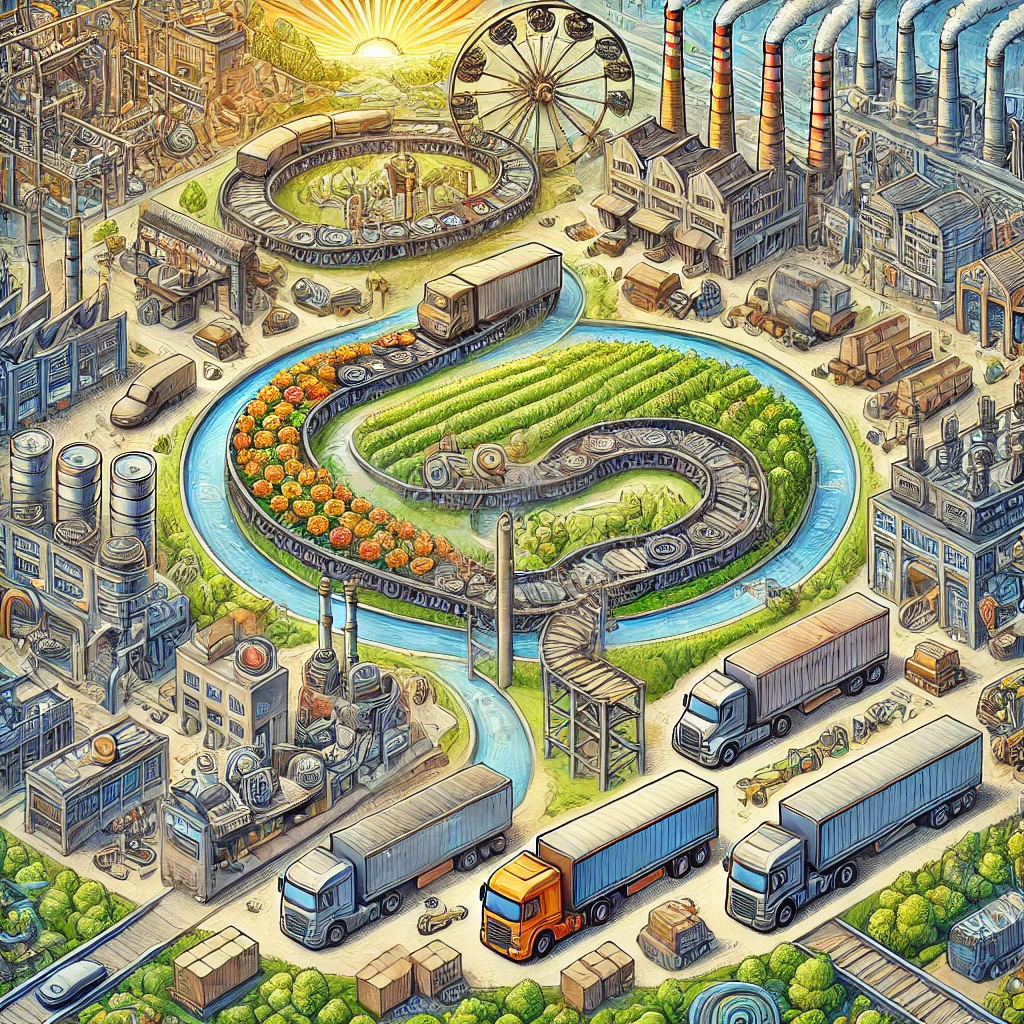
    A supply chain encompasses the entire journey of a product, from the initial sourcing of raw materials to the final delivery of the finished product to the customer. This complex network of activities involves various entities including suppliers, manufacturers, and distributors. Effective supply chain management is crucial for businesses to ensure efficiency, cost-effectiveness, and customer satisfaction. This article explores the various components of the supply chain, challenges faced, and strategies for optimization.

    Components of the Supply Chain

    1. Sourcing of Raw Materials: The supply chain begins with the procurement of raw materials. Suppliers must be carefully selected based on criteria such as price, quality, and reliability.
    2. Manufacturing and Production: Raw materials are transformed into products through manufacturing processes. This stage may involve multiple manufacturing sites and require sophisticated production planning and control.
    3. Distribution: Once products are manufactured, they need to be transported to distribution centers and stores. This involves logistics planning, warehousing, and inventory management.
    4. Delivery to Customers: The final stage of the supply chain is delivering the product to the customer, which can involve shipping to individual homes, retail locations, or other end points.
    5. Customer Service and Returns: Post-delivery services such as customer support, returns, and exchanges are also considered part of the supply chain and crucial for maintaining customer satisfaction and loyalty.

    Challenges in Supply Chain Management

    • Complexity: Managing a supply chain involves coordinating many interconnected activities, often globally. This complexity can lead to difficulties in synchronization and increased vulnerability to disruptions.
    • Demand Forecasting: Accurately predicting customer demand is crucial but challenging. Misjudgments can lead to overproduction or stockouts.
    • Cost Control: Balancing cost-efficiency with quality and speed is a constant challenge in supply chain management.
    • Regulatory Compliance: Supply chains often span multiple countries, each with its own regulatory environment, adding to the complexity of operations.
    • Sustainability Concerns: Consumers and governments are increasingly demanding sustainable practices, forcing companies to reconsider their supply chain strategies.

    Strategies for Supply Chain Optimization

    1. Technology Integration: Implementing advanced technologies like IoT, AI, and blockchain can enhance visibility across the supply chain, improve efficiency, and reduce errors.
    2. Agile Practices: Adopting flexible and adaptive supply chain practices helps companies respond swiftly to market changes and disruptions.
    3. Supplier Relationships: Building strong relationships with suppliers ensures reliability and quality in the sourcing of materials.
    4. Lean Management: Employing lean management techniques can minimize waste and maximize efficiency within the supply chain.
    5. Risk Management: Developing robust risk management strategies is essential for mitigating the impacts of potential disruptions.

    The Future of Supply Chain Management

    The future of supply chain management is likely to be shaped by digital transformation, increased focus on sustainability, and the need for greater resilience against disruptions. Technologies like AI and blockchain will play significant roles in automating processes and securing data, while practices such as circular supply chains will become more prevalent to meet sustainability goals.

    The supply chain is a critical component of business operations that requires strategic planning and management to ensure it functions smoothly and efficiently. By understanding and optimizing each component of the supply chain, businesses can enhance their operational efficiency, reduce costs, and improve customer satisfaction. As global dynamics and consumer expectations evolve, so too must supply chain strategies, adapting to new challenges and opportunities for innovation and growth.

    Share. Facebook Twitter Pinterest LinkedIn Tumblr Email

    Related Posts

    What is “Autonomous Campaigns”?

    29. 5. 2025

    What is “Prompt Engineering”?

    29. 5. 2025

    What is “Ethical AI Marketing”?

    29. 5. 2025

    What are “Synthetic Data”?

    29. 5. 2025
    Add A Comment
    Leave A Reply Cancel Reply

    Trending

    Decision-Making Under Uncertainty: What Marketing Leaders Get Wrong and How to Fix It

    28. 4. 2026

    GEO: What Is Generative Engine Optimization and Why It Matters in 2026

    28. 4. 2026

    How to Optimize Your Website for AI Search: A Practical Guide to Getting Cited by ChatGPT, Claude, and Perplexity

    28. 4. 2026

    AI and PPC: Why Artificial Intelligence Is Rewriting the Rules of Paid Media

    28. 4. 2026

    Recommerce: Why Selling Used Is the Fastest-Growing Channel in E-Commerce

    20. 4. 2026

    Agentic Commerce: How AI Is Taking Over the Shopping Cart

    20. 4. 2026
    About Us

    Marketingino is a modern business magazine for founders, marketers, e-commerce leaders, and innovators who are building what’s next.

    We cover the tools, tactics, and stories driving today’s most ambitious ventures—from early-stage startups to scaling e-shops, from breakthrough marketing strategies to the frontier of AI and automation.

    Email Us: info@marketingino.com

    Marketingino.com
    Facebook Instagram LinkedIn YouTube Bluesky
    • Home
    • Privacy Policy
    • Cookie Policy (EU)
    • Disclaimer
    © 2026 Marketingino.com, © 2026 Vision Projects, s. r. o.

    Type above and press Enter to search. Press Esc to cancel.

    Manage Consent
    To provide the best experiences, we use technologies like cookies to store and/or access device information. Consenting to these technologies will allow us to process data such as browsing behavior or unique IDs on this site. Not consenting or withdrawing consent, may adversely affect certain features and functions.
    Functional Always active
    The technical storage or access is strictly necessary for the legitimate purpose of enabling the use of a specific service explicitly requested by the subscriber or user, or for the sole purpose of carrying out the transmission of a communication over an electronic communications network.
    Preferences
    The technical storage or access is necessary for the legitimate purpose of storing preferences that are not requested by the subscriber or user.
    Statistics
    The technical storage or access that is used exclusively for statistical purposes. The technical storage or access that is used exclusively for anonymous statistical purposes. Without a subpoena, voluntary compliance on the part of your Internet Service Provider, or additional records from a third party, information stored or retrieved for this purpose alone cannot usually be used to identify you.
    Marketing
    The technical storage or access is required to create user profiles to send advertising, or to track the user on a website or across several websites for similar marketing purposes.
    • Manage options
    • Manage services
    • Manage {vendor_count} vendors
    • Read more about these purposes
    View preferences
    • {title}
    • {title}
    • {title}