


Versace, the epitome of luxury and Italian glamour, has built a strong and enduring brand through a well-crafted marketing strategy that blends tradition with modernity. Known for its bold designs and opulent lifestyle, Versace has successfully navigated the changing landscape of fashion marketing by staying true to its brand DNA while embracing new technologies and trends. This article explores the key components of Versace’s marketing strategy, highlighting how the brand has maintained its position as a global fashion powerhouse.
1. Brand Identity and Heritage
At the core of Versace’s marketing strategy is its strong brand identity, deeply rooted in Italian heritage and the bold vision of its founder, Gianni Versace. The brand is synonymous with luxury, sensuality, and opulence, often drawing inspiration from classical art, mythology, and the rich cultural history of Italy.
Versace’s iconic Medusa logo, inspired by Greek mythology, represents power, beauty, and an irresistible allure. This logo is a key element in Versace’s branding, featured prominently on their products and in their marketing materials. The Medusa emblem has become one of the most recognizable symbols in fashion, embodying the brand’s identity and reinforcing its luxurious image.
2. Celebrity Endorsements and the Red Carpet
Versace has a long history of leveraging celebrity endorsements to amplify its brand. Gianni Versace was a pioneer in building relationships with celebrities, creating iconic moments with stars like Madonna, Elton John, and Princess Diana. These high-profile connections helped to establish Versace as a go-to brand for the rich and famous, creating a halo effect that extended to a broader audience.
The brand’s presence on the red carpet has been a crucial element of its marketing strategy. Versace gowns are frequently worn by A-list celebrities at major events like the Oscars, the Met Gala, and the Grammy Awards. These appearances generate significant media coverage and social media buzz, showcasing the brand’s latest designs to a global audience. The iconic green dress worn by Jennifer Lopez at the 2000 Grammy Awards, for example, not only became a cultural phenomenon but also led to the creation of Google Images due to the overwhelming number of search queries.
3. Runway Shows and Fashion Week
Versace’s runway shows are known for their high-energy, theatrical presentations that embody the brand’s glamorous and daring spirit. These shows are a key part of Versace’s marketing strategy, serving as both a showcase for new collections and a powerful branding tool. The brand often incorporates elements of art, music, and popular culture into their shows, creating a spectacle that resonates with both the fashion industry and the public.
The use of supermodels in Versace’s runway shows, particularly during the 1990s, helped to cement the brand’s status as a leader in high fashion. The 1991 “Freedom!” runway show, featuring supermodels like Naomi Campbell, Linda Evangelista, and Cindy Crawford, is still regarded as one of the most iconic moments in fashion history. Donatella Versace has continued this tradition, using runway shows to celebrate the brand’s legacy while introducing contemporary and forward-thinking designs.
4. Digital and Social Media Strategy
In the digital age, Versace has effectively embraced social media and digital marketing to connect with a younger, tech-savvy audience. The brand maintains a strong presence on platforms like Instagram, Facebook, and Twitter, where it shares campaign imagery, behind-the-scenes content, and user-generated content. Versace’s Instagram account, in particular, is a key platform for showcasing its latest collections, collaborations, and brand lifestyle.
Versace also uses social media to engage directly with its audience, creating a sense of community and fostering brand loyalty. The brand frequently collaborates with influencers and digital creators to reach new audiences and amplify its message. These collaborations often include exclusive content, product launches, and digital campaigns that resonate with younger consumers.
In 2019, Versace launched a successful social media campaign for its Spring/Summer collection, featuring a recreated version of Jennifer Lopez’s iconic green dress. The campaign went viral, generating millions of impressions and demonstrating Versace’s ability to blend nostalgia with modern digital marketing techniques.
5. Product Diversification and Brand Extensions
Versace’s marketing strategy also includes product diversification and brand extensions, allowing the brand to reach different market segments while maintaining its luxury image. In addition to its main ready-to-wear and haute couture collections, Versace offers a wide range of products, including accessories, footwear, fragrances, eyewear, and home furnishings.
Each of these product lines is marketed with the same attention to detail and brand identity, ensuring consistency across all categories. Versace’s fragrance line, for instance, has been a major success, with scents like “Versace Eros” and “Bright Crystal” becoming best-sellers. These products are promoted through dedicated campaigns that often feature celebrities and iconic imagery, reinforcing the brand’s luxurious and glamorous image.
6. Collaborations and Limited Editions
Versace frequently engages in high-profile collaborations and limited edition releases to create buzz and drive demand. These collaborations often involve other luxury brands, artists, or cultural icons, resulting in unique, collectible pieces that appeal to fashion enthusiasts and collectors.
One of the most notable collaborations was with H&M in 2011, which made Versace’s designs more accessible to a broader audience while maintaining the brand’s exclusivity. The collection sold out almost immediately, highlighting the power of collaboration in generating excitement and reaching new customers.
In 2023, Versace partnered with pop star Dua Lipa to launch a collaborative collection, “La Vacanza,” which was showcased in Cannes. This collaboration not only appealed to Dua Lipa’s fan base but also reinforced Versace’s connection to contemporary music and culture, making the brand relevant to a younger generation.
7. Retail Experience and Flagship Stores
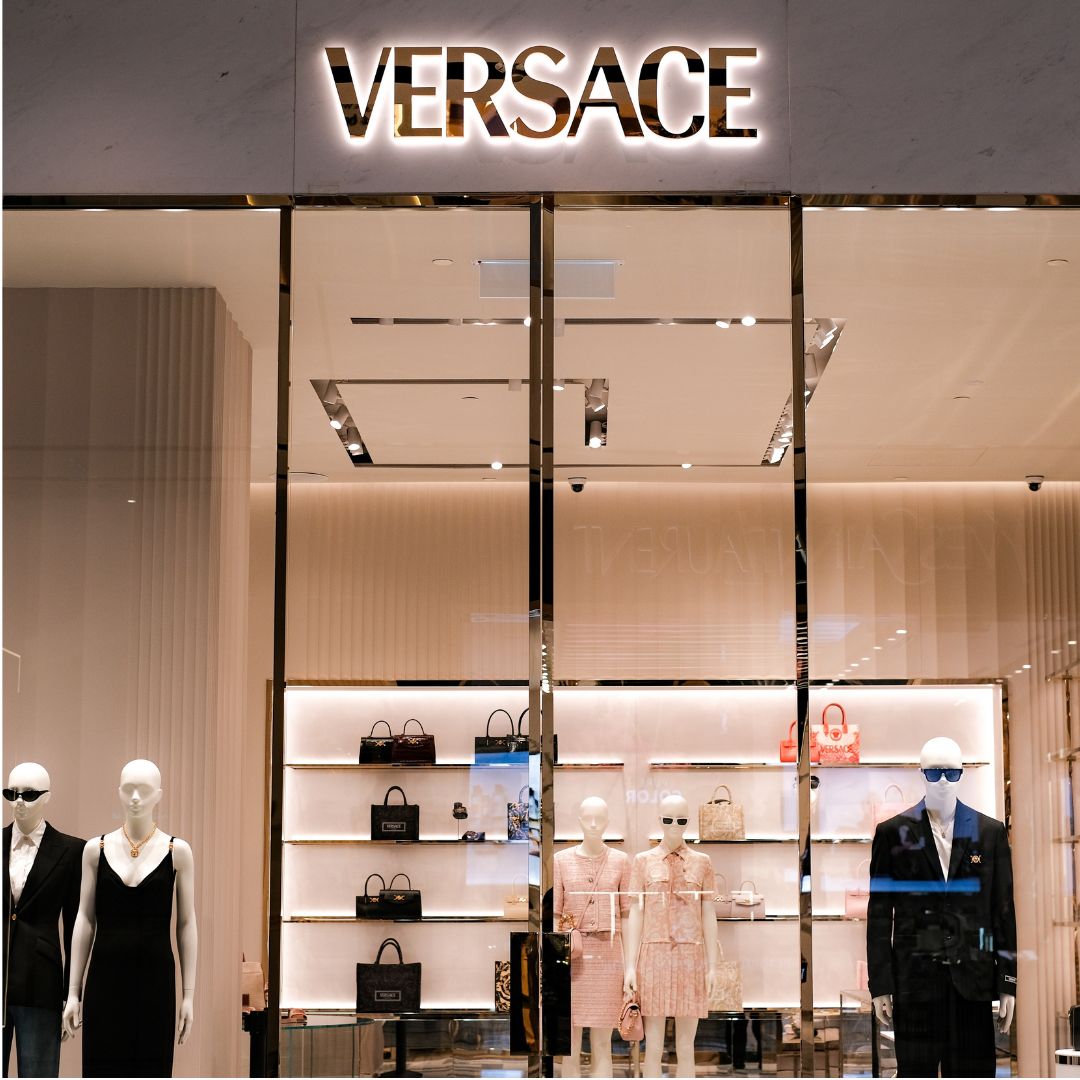
Versace’s retail strategy is designed to offer an immersive brand experience that reflects the brand’s luxurious and glamorous identity. Their flagship stores, located in fashion capitals like Milan, New York, and Paris, are architectural masterpieces that combine opulent design with cutting-edge technology.
These stores are not just retail spaces; they are destinations where customers can experience the Versace lifestyle firsthand. The interiors often feature the brand’s signature motifs, such as the Medusa head and Greek key pattern, creating a cohesive brand experience. Personalized service, exclusive products, and bespoke experiences are key elements of Versace’s retail strategy, ensuring that customers feel valued and connected to the brand.
8. Cultural and Artistic Integration
Versace has a long history of integrating art and culture into its marketing strategy, a tradition that began with Gianni Versace’s love for the arts. The brand often collaborates with artists, photographers, and filmmakers to create campaigns and collections that blur the line between fashion and art.
For example, Versace has worked with renowned photographers like Richard Avedon, Steven Meisel, and Bruce Weber to create iconic advertising campaigns that are as much art as they are marketing. These campaigns often feature bold, provocative imagery that challenges conventions and pushes the boundaries of fashion advertising.
In recent years, Versace has continued this tradition by collaborating with contemporary artists and designers, further cementing its reputation as a brand that values creativity and innovation. These artistic collaborations not only enhance the brand’s image but also attract a culturally aware audience that appreciates the fusion of fashion and art.
9. Handling Controversies and Brand Resilience
Like many high-profile brands, Versace has faced its share of controversies, including cultural missteps and public relations challenges. However, the brand has demonstrated resilience by quickly addressing these issues and learning from them. For example, following a 2019 controversy involving a T-shirt design that offended Chinese consumers, Versace issued a public apology and took steps to improve its understanding of cultural sensitivities in global markets.
This ability to navigate challenges and adapt to changing cultural landscapes is a testament to Versace’s strong brand management and commitment to maintaining its reputation as a global luxury leader.
Versace’s marketing strategy is a masterful blend of heritage, innovation, and strategic risk-taking. By staying true to its bold and glamorous identity while embracing new trends and technologies, Versace has maintained its position as one of the world’s leading fashion brands. Through celebrity endorsements, digital engagement, product diversification, and cultural integration, Versace continues to captivate and inspire a global audience, ensuring its legacy as a symbol of luxury and Italian excellence.