Close Menu
Marketingino.comMarketingino.com
    What's Hot

    Decision-Making Under Uncertainty: What Marketing Leaders Get Wrong and How to Fix It

    28. 4. 2026

    GEO: What Is Generative Engine Optimization and Why It Matters in 2026

    28. 4. 2026

    How to Optimize Your Website for AI Search: A Practical Guide to Getting Cited by ChatGPT, Claude, and Perplexity

    28. 4. 2026
    Facebook X (Twitter) Instagram
    Facebook Instagram LinkedIn YouTube Bluesky
    Marketingino.comMarketingino.com
    • Home
    • Entrepreneurship
      1. Business Models
      2. Side Hustles
      3. Small Business
      4. Venture Capital
      5. Sustainability & Impact
      6. Startups
      7. Legal & Compliance
      Featured
      Side Hustles

      Scaling Your Side Hustle: When and How to Turn It Into a Full-Time Business

      6. 2. 2026
      Recent

      Scaling Your Side Hustle: When and How to Turn It Into a Full-Time Business

      6. 2. 2026

      From Freelance to Founder: Turning Services into a Scalable Product

      18. 12. 2025

      Don’t Skip the Fine Print: The Most Important Clauses in Business Contracts

      15. 12. 2025
    • Marketing
      1. Marketing Strategy
      2. AI & Automation
      3. Social Media
      4. Branding
      5. Content Marketing
      6. SEO & GEO
      7. Growth Marketing
      8. Digital Marketing
      9. Data & Analytics
      10. Customer Experience
      11. Vocabulary
      Featured
      SEO & GEO

      GEO: What Is Generative Engine Optimization and Why It Matters in 2026

      28. 4. 2026
      Recent

      GEO: What Is Generative Engine Optimization and Why It Matters in 2026

      28. 4. 2026

      How to Optimize Your Website for AI Search: A Practical Guide to Getting Cited by ChatGPT, Claude, and Perplexity

      28. 4. 2026

      AI and PPC: Why Artificial Intelligence Is Rewriting the Rules of Paid Media

      28. 4. 2026
    • Leadership
      1. Coaching & Mentoring
      2. Conflict & Crisis Management
      3. Emotional Intelligence
      4. Executive Mindset
      5. Remote & Hybrid Teams
      6. Team Building
      7. Vision & Strategy
      Featured
      Conflict & Crisis Management

      Decision-Making Under Uncertainty: What Marketing Leaders Get Wrong and How to Fix It

      28. 4. 2026
      Recent

      Decision-Making Under Uncertainty: What Marketing Leaders Get Wrong and How to Fix It

      28. 4. 2026

      Stay Interviews: Proactively Addressing Employee Needs Before They Leave

      19. 2. 2026

      Internship Programs: A Pipeline for Future Talent at Your E-commerce Business

      19. 2. 2026
    • Ecommerce
      1. Conversion Optimization
      2. Cross-Border Ecommerce
      3. Customer Retention
      4. D2C & Brands
      5. Ecommerce Marketing
      6. Marketplaces
      7. Online Stores
      8. Payments & Logistics
      Featured
      D2C & Brands

      Recommerce: Why Selling Used Is the Fastest-Growing Channel in E-Commerce

      20. 4. 2026
      Recent

      Recommerce: Why Selling Used Is the Fastest-Growing Channel in E-Commerce

      20. 4. 2026

      Agentic Commerce: How AI Is Taking Over the Shopping Cart

      20. 4. 2026

      The D2C Loyalty Playbook: 6 Tactics That Don’t Require a Single Promo Code

      11. 3. 2026
    • Life
      1. Business Stories
      2. Lifestyle
      3. Net Worth
      4. Travel
      Featured
      Lifestyle

      10 Powerful Reasons 2025 Proved Life Is Getting Better

      31. 12. 2025
      Recent

      10 Powerful Reasons 2025 Proved Life Is Getting Better

      31. 12. 2025

      12 Books to Understand Everything: A Foundation for Universal Knowledge

      3. 12. 2025

      Running in Zone 2: The Secret to Enhanced Work Performance and Productivity

      28. 11. 2025
    Marketingino.comMarketingino.com
    Home»Marketing»Marketing Strategy»Tactic: An Action a Marketer Takes to Achieve a Marketing Goal
    Marketing Strategy

    Tactic: An Action a Marketer Takes to Achieve a Marketing Goal

    12. 11. 20246 Mins Read
    Facebook Twitter Pinterest LinkedIn Tumblr Email
    DALL·E
    Share
    Facebook Twitter LinkedIn Pinterest Email

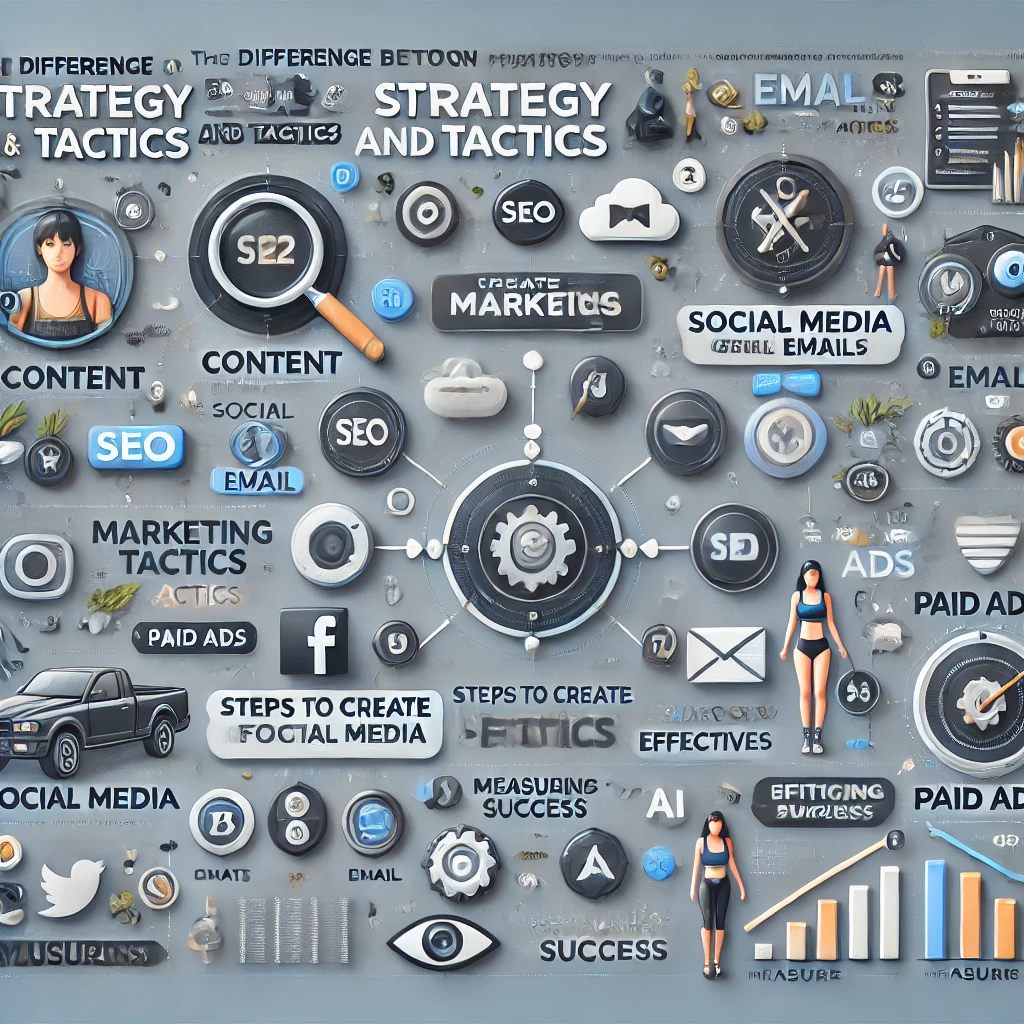
    In marketing, tactics are the specific actions that marketers execute to achieve broader strategic goals. While strategies provide the overall direction, tactics break down that direction into actionable steps, enabling marketers to transform goals into measurable outcomes. A tactic might involve a single action, like launching a campaign, or it may be a series of steps that build upon each other. This article will explore the concept of marketing tactics, how they differ from strategies, and why they are essential for successful marketing campaigns.

    1. The Difference Between Strategy and Tactics

    Strategy defines the overarching vision and the long-term plan for achieving business goals, such as building brand awareness or increasing market share. Tactics, on the other hand, are the precise actions marketers use to carry out this strategy. A simple way to differentiate them is:

    • Strategy: “We want to increase our market share among millennials by 15%.”
    • Tactic: “Run a social media campaign on Instagram and TikTok targeting millennial users with specific brand messages.”

    Where a strategy outlines what a brand hopes to achieve and who it intends to reach, tactics define how to reach them.

    2. Why Tactics Matter in Marketing

    Marketing tactics are essential because they provide a tangible plan of action. Even the most well-crafted strategies are ineffective without specific tactics to bring them to life. Tactics bridge the gap between big-picture planning and hands-on execution, enabling marketers to adapt and respond to changes in the market. They are also critical for:

    • Flexibility and Agility: Tactics can be adjusted quickly if a particular approach isn’t resonating with the audience.
    • Resource Allocation: With clear tactics, marketers can allocate resources (budget, time, and personnel) more effectively.
    • Measurable Outcomes: Tactics, unlike strategies, lend themselves to specific KPIs, making it easier to measure success.

    3. Types of Marketing Tactics

    Marketing tactics vary widely depending on the campaign, platform, audience, and overall goals. Below are some core categories of marketing tactics:

    • Content Marketing Tactics
      Tactics in content marketing include creating blog posts, videos, infographics, or other media that educates or engages audiences. For instance, a company aiming to boost brand authority might use tactics like:
      • Publishing blog posts or guides on industry-relevant topics
      • Launching a webinar series
      • Collaborating with influencers for guest blog posts or takeovers
    • Social Media Marketing Tactics
      Social media tactics are aimed at boosting engagement and building a community. Examples include:
      • Running paid ads with targeted messaging
      • Engaging with followers through comments and direct messages
      • Hosting live events, Q&A sessions, or AMAs (Ask Me Anything)
    • Email Marketing Tactics
      Email tactics focus on nurturing leads and increasing conversions. Examples include:
      • Segmenting audiences for personalized email campaigns
      • Creating automated email sequences for onboarding new customers
      • Sending targeted promotional offers to high-intent customers
    • Search Engine Optimization (SEO) Tactics
      SEO tactics are aimed at improving organic search rankings. Examples include:
      • Keyword research and on-page optimization
      • Building high-quality backlinks
      • Creating content around long-tail keywords
    • Paid Advertising Tactics
      Paid advertising tactics focus on gaining visibility and driving conversions. Examples include:
      • Running Google Ads with specific targeting criteria
      • Retargeting past website visitors with display ads
      • Testing different ad creatives to optimize click-through rates

    4. Building an Effective Marketing Tactic

    To create effective tactics, marketers need to focus on certain key elements, which include alignment with the target audience, message clarity, timing, and tracking. Below are the steps to build an effective tactic:

    1. Define Clear Goals and KPIs
      Identify what you hope to achieve with the tactic and how you will measure success. Whether it’s the number of leads generated or website visits, define KPIs that match the goal.
    2. Audience Segmentation and Targeting
      Make sure the tactic speaks directly to the intended audience segment. Personalization based on audience insights leads to higher engagement.
    3. Platform Selection
      Choose the right platform for execution. For instance, LinkedIn is suitable for B2B campaigns, while Instagram and TikTok are more effective for B2C campaigns targeting younger demographics.
    4. Crafting the Message
      The message should align with the brand voice and resonate with the audience. It should be simple, compelling, and aligned with the marketing goal.
    5. Timing and Frequency
      Consider when and how often to deploy the tactic. For instance, email campaigns for B2B may perform better on weekday mornings, while B2C social media campaigns may thrive on weekends.
    6. Testing and Iteration
      Test variations of the tactic (e.g., A/B testing for ads) to refine your approach. Make adjustments based on performance metrics to optimize outcomes.
    7. Measure, Analyze, and Report
      After deployment, analyze the results to understand the tactic’s effectiveness. If it met the goals, consider scaling it; if not, re-evaluate and refine your approach.

    5. Case Study: Applying Tactics to a Marketing Campaign

    Imagine a new fitness brand, FitLife, aiming to increase brand awareness among young adults. Here’s how they might deploy a mix of marketing tactics to achieve this goal:

    • Strategy: “Increase awareness among young adults (18-34) in the U.S.”
    • Tactics:
      • Social Media: Run a series of Instagram and TikTok ads featuring testimonials from young adults using FitLife products.
      • Influencer Collaboration: Partner with popular fitness influencers on YouTube to review the products and share workout tips.
      • Email Marketing: Send a welcome email series to new subscribers with a discount on their first purchase.
      • SEO: Publish blog posts optimized for keywords like “best fitness products for young adults.”
      • Paid Advertising: Run Google Ads targeting keywords related to fitness and health.

    Through these tactics, FitLife can reach a broad audience while targeting specific segments on platforms where young adults spend the most time.

    6. Measuring the Success of Marketing Tactics

    Once tactics are in motion, measuring their effectiveness is key to understanding their contribution to the overall marketing goals. Marketers should focus on performance metrics, such as:

    • Engagement Rate (e.g., likes, comments, shares on social media)
    • Click-Through Rate (CTR) (e.g., percentage of people who clicked on an ad)
    • Conversion Rate (e.g., percentage of users who completed a desired action)
    • Return on Investment (ROI) (e.g., revenue generated relative to the cost of the tactic)

    These metrics allow marketers to understand which tactics are most effective and make data-driven decisions for future campaigns.

    7. The Future of Marketing Tactics: Automation and AI

    Marketing tactics are evolving as technology advances. Automation tools and AI allow marketers to refine tactics in real-time. For instance:

    • AI-Powered Personalization: AI enables ultra-targeted messaging based on individual user behaviors.
    • Predictive Analytics: AI can predict trends and suggest the best tactics based on historical data.
    • Automation: Automating email sequences, social media posts, and ad management saves time and ensures consistent communication.

    Marketing tactics are the building blocks that turn strategic visions into reality. Each tactic serves as a stepping stone towards reaching broader goals, providing a clear path for marketers to follow. By planning, executing, and measuring these tactics, businesses can engage audiences more effectively, optimize their resources, and achieve measurable growth. With technology’s continual advancement, marketing tactics will only become more precise, allowing brands to connect with their audiences in increasingly meaningful ways.

    Share. Facebook Twitter Pinterest LinkedIn Tumblr Email

    Related Posts

    The Marketing Strategy of Pantone: How a Color System Became a Cultural Icon

    16. 1. 2026

    LA vs. NYC Real Estate: Two Cities, Two Marketing Strategies

    11. 12. 2025

    Red Bull’s Content Empire: How an Energy Drink Became a Media Company

    6. 12. 2025

    Lidl’s Marketing Strategy: How a German Discount Retailer Challenged Premium Supermarkets Across Europe

    5. 12. 2025
    Add A Comment
    Leave A Reply Cancel Reply

    Trending

    Decision-Making Under Uncertainty: What Marketing Leaders Get Wrong and How to Fix It

    28. 4. 2026

    GEO: What Is Generative Engine Optimization and Why It Matters in 2026

    28. 4. 2026

    How to Optimize Your Website for AI Search: A Practical Guide to Getting Cited by ChatGPT, Claude, and Perplexity

    28. 4. 2026

    AI and PPC: Why Artificial Intelligence Is Rewriting the Rules of Paid Media

    28. 4. 2026

    Recommerce: Why Selling Used Is the Fastest-Growing Channel in E-Commerce

    20. 4. 2026

    Agentic Commerce: How AI Is Taking Over the Shopping Cart

    20. 4. 2026
    About Us

    Marketingino is a modern business magazine for founders, marketers, e-commerce leaders, and innovators who are building what’s next.

    We cover the tools, tactics, and stories driving today’s most ambitious ventures—from early-stage startups to scaling e-shops, from breakthrough marketing strategies to the frontier of AI and automation.

    Email Us: info@marketingino.com

    Marketingino.com
    Facebook Instagram LinkedIn YouTube Bluesky
    • Home
    • Privacy Policy
    • Cookie Policy (EU)
    • Disclaimer
    © 2026 Marketingino.com, © 2026 Vision Projects, s. r. o.

    Type above and press Enter to search. Press Esc to cancel.

    Manage Consent
    To provide the best experiences, we use technologies like cookies to store and/or access device information. Consenting to these technologies will allow us to process data such as browsing behavior or unique IDs on this site. Not consenting or withdrawing consent, may adversely affect certain features and functions.
    Functional Always active
    The technical storage or access is strictly necessary for the legitimate purpose of enabling the use of a specific service explicitly requested by the subscriber or user, or for the sole purpose of carrying out the transmission of a communication over an electronic communications network.
    Preferences
    The technical storage or access is necessary for the legitimate purpose of storing preferences that are not requested by the subscriber or user.
    Statistics
    The technical storage or access that is used exclusively for statistical purposes. The technical storage or access that is used exclusively for anonymous statistical purposes. Without a subpoena, voluntary compliance on the part of your Internet Service Provider, or additional records from a third party, information stored or retrieved for this purpose alone cannot usually be used to identify you.
    Marketing
    The technical storage or access is required to create user profiles to send advertising, or to track the user on a website or across several websites for similar marketing purposes.
    • Manage options
    • Manage services
    • Manage {vendor_count} vendors
    • Read more about these purposes
    View preferences
    • {title}
    • {title}
    • {title}